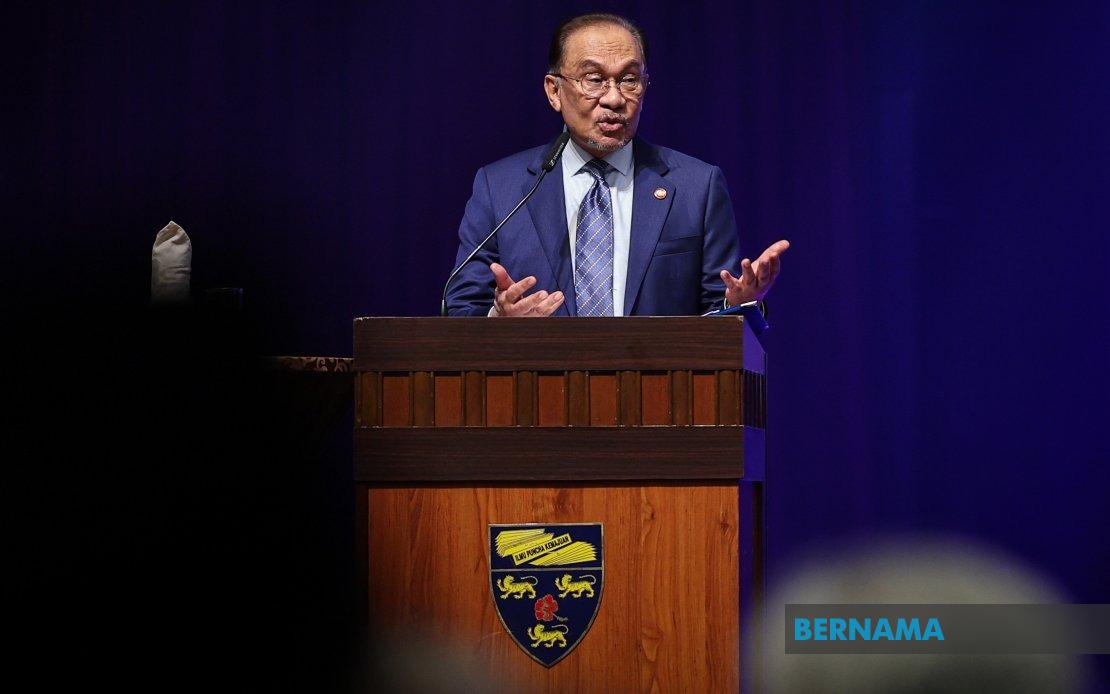
Prime Minister Datuk Seri Anwar Ibrahim has extended financial assistance to Rosli Abdullah, a 52-year-old gravedigger from Kuala Terengganu, who has been waging a three-year battle against mouth cancer. The RM2,000 contribution, presented on July 9, represents an intervention at a critical moment in the man's medical journey, as he faces imminent surgical intervention to address the deteriorating condition.
The donation was delivered through the Implementation Coordination Unit (ICU) of the Prime Minister's Department, with the presentation made by Azhar Abd Hamid, deputy director of the Terengganu Federal Development Department. The timing of the assistance reflects growing awareness of Rosli's precarious health situation, which has progressively worsened over recent months and now threatens his ability to perform basic functions including eating and speaking.
Beyond the immediate cash aid, officials have identified a significant gap in the social safety net. Rosli was not previously registered as an e-Kasih recipient, despite meeting the eligibility criteria for this government welfare programme. Azhar indicated that immediate steps would be taken to enrol him in the scheme, unlocking access to sustained financial support beyond the one-time donation. This administrative intervention represents an important recognition that vulnerable individuals sometimes fall through bureaucratic cracks despite qualifying for assistance.
The gravedigger's situation reflects the precarious circumstances facing informal and low-income workers in Malaysia who lack robust financial buffers. Rosli has spent over three decades in the Flat Batas Baru surau in Kuala Terengganu, where he earned a modest livelihood through gravedigging and mosque maintenance work. His health deterioration has progressively eroded his capacity to generate income, creating a compounding crisis where medical expenses mount precisely when earning power diminishes.
Documentation of his medical history reveals a pattern of escalating severity. He underwent surgery twice previously, but the illness recurred and has now reached a stage requiring specialist intervention. The Sultanah Nur Zahirah Hospital in Terengganu has referred his case to the Universiti Sains Malaysia Hospital in Kubang Kerian, Kelantan, indicating the complexity of his condition exceeds available local resources. This referral underscores how serious illnesses among lower-income Malaysians can impose logistical burdens beyond purely financial considerations.
The physical manifestations of his illness have become acutely severe. Swelling in his mouth and right cheek has rendered him unable to speak for the past month, fundamentally isolating him from normal social interaction. More critically, the condition has prevented him from consuming solid food for two weeks, forcing reliance on nutritional intake through a feeding tube. These symptoms signal advanced pathology requiring urgent intervention to prevent further deterioration or life-threatening complications.
Rosli's personal circumstances compound his vulnerability. He lives alone and has never married, meaning he lacks the family safety net that provides crucial support during health crises in Malaysian society. This isolation places him entirely dependent on institutional goodwill and formal charitable mechanisms. The surau management, recognising his desperate situation, has become his de facto support system, providing shelter and initiating community fundraising to bridge the gap between his medical needs and available resources.
The mosque authorities have launched their own donation campaign to finance both medical treatment and surgical costs, but collections remain insufficient relative to the expenses ahead. This experience mirrors broader challenges facing Malaysian civil society organisations in addressing welfare gaps. Mosques and religious institutions often serve as frontline responders to community hardship, yet their resources cannot comprehensively substitute for systematic social protection mechanisms, particularly in managing chronic illnesses requiring expensive specialist care.
The involvement of the Prime Minister's office signals a shift toward more personalised interventions for individuals whose circumstances gain public or administrative attention. While such direct assistance provides immediate relief, it raises broader questions about consistency in social protection. The fact that discovery of Rosli's situation required high-level intervention, rather than being identified through routine welfare assessment processes, suggests gaps in how Malaysia identifies and supports vulnerable populations.
For Terengganu and other Malaysian states with significant informal labour sectors, Rosli's case illustrates the fragility facing workers without formal employment protections or occupational insurance schemes. Gravediggers and similar informal service providers remain outside conventional employment frameworks, exposing them to health risks and income volatility. As Malaysia ages and chronic disease prevalence increases, these structural vulnerabilities will likely intensify unless addressed through more comprehensive social insurance mechanisms.
The registration of Rosli in the e-Kasih system represents an opportunity to establish sustainable support rather than relying solely on episodic charitable intervention. The programme provides recurring assistance calibrated to recipient circumstances, potentially covering both immediate medical needs and longer-term welfare support. However, the episode also highlights that reactive discovery through high-profile cases is an inefficient mechanism for identifying eligible individuals, suggesting that outreach and assessment processes could be substantially strengthened.
This situation underscores persistent inequalities in healthcare access and financial resilience within Malaysian society. While the nation has achieved significant development gains, individuals in vulnerable occupational categories remain exposed to catastrophic health shocks without adequate protective mechanisms. The convergence of serious illness, low income, social isolation, and occupational precarity creates acute hardship that strains both individual wellbeing and community resources.

