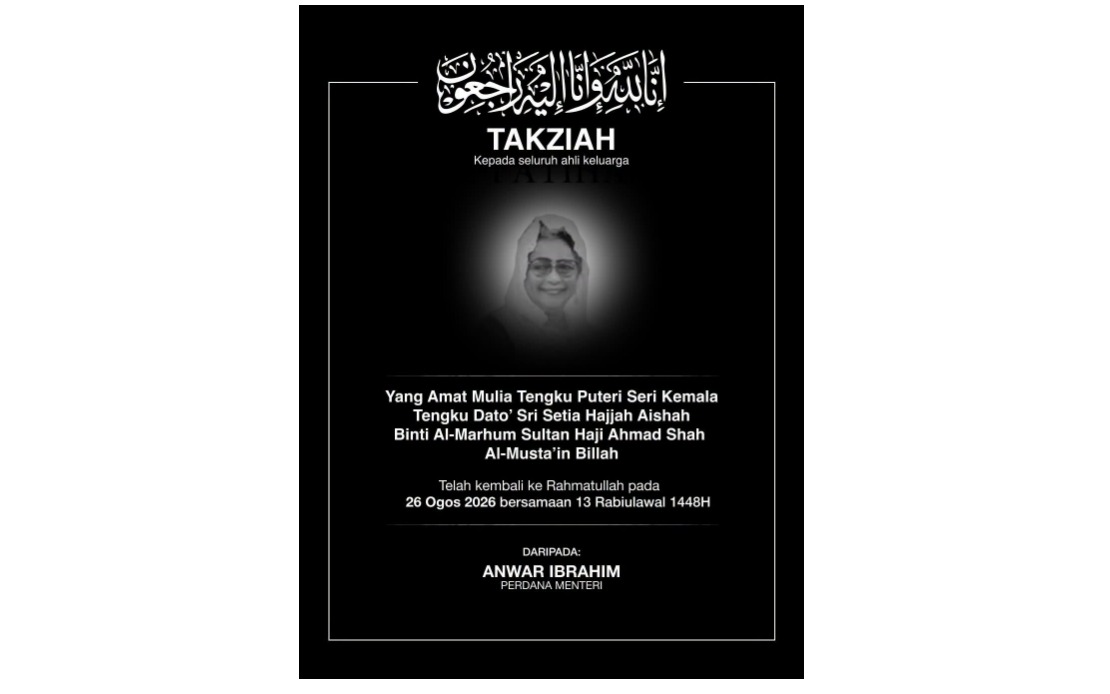
Prime Minister Datuk Seri Anwar Ibrahim has expressed his condolences to Al-Sultan Abdullah Ri'ayatuddin Al-Mustafa Billah Shah and members of the Pahang Royal Family following the death of the Sultan's elder sister, Tengku Puteri Seri Kemala Tengku Datuk Seri Aishah Almarhum Sultan Ahmad Shah, on August 26.
In a statement posted on social media, the Prime Minister offered prayers for the departed soul, seeking divine mercy and forgiveness for Tengku Datuk Seri Aishah and asking that she be placed among the righteous in the afterlife. This public gesture of respect reflects the significance of the occasion and the deep bonds between Malaysia's political leadership and the royal institutions that form the backbone of the nation's constitutional framework.
Anwar also extended his prayers to the bereaved family, specifically requesting that Allah SWT grant Al-Sultan Abdullah, Tengku Ampuan of Pahang Tunku Azizah Aminah Maimunah Iskandariah, and the wider Pahang Royal Family the strength and resilience needed to navigate their period of grief. Such gestures of solidarity from the highest levels of government serve an important ceremonial function in Malaysian society, where the relationship between the executive and the monarchy remains constitutionally and culturally significant.
Tengku Datuk Seri Aishah passed away at a private hospital in Kuala Lumpur at 9.15 pm on August 26. The funeral arrangements proceeded swiftly according to Islamic tradition, with her remains laid to rest at the Pahang Royal Mausoleum in Pekan on August 27. This location holds particular significance for the royal family, serving as the final resting place for members of Pahang's royal lineage and underscoring the family's deep historical roots in the state.
The passing of senior members of Malaysia's royal families attracts considerable national attention, not merely as matters of personal loss but as events that reflect the broader fabric of the nation's institutional life. The Pahang Sultanate occupies a prominent position among Malaysia's nine hereditary monarchies, and the death of close relatives to the reigning Sultan inevitably carries implications for the state's symbolic and ceremonial functions.
Tengku Datuk Seri Aishah, as the elder sister of the current Sultan, would have occupied a respected position within palace circles and Malaysian royal society more broadly. The timing and circumstances of her death, occurring in a Kuala Lumpur hospital, suggest she may have been undergoing medical treatment, though no details regarding her age or cause of death were disclosed in official statements. Such restraint in the release of personal information is typical of Malaysian royal protocol, which tends to preserve the privacy of family matters even as public acknowledgment of significant events is extended.
The Prime Minister's response demonstrates the customary protocols observed at the highest levels of Malaysian government when members of the royal families pass away. These acknowledgments serve multiple functions: they provide formal recognition of the loss, demonstrate respect for constitutional institutions, and signal to the broader public the values of dignity, faith, and family solidarity that Malaysian leadership wishes to emphasize during moments of national importance.
For the Pahang Royal Family, the period following such a loss involves both private grief and the management of public ceremonial duties. The swift arrangement of funeral rites according to Islamic law reflects the family's commitment to religious observance, a principle that carries particular weight within Malaysian royal circles where Islam holds a constitutionally enshrined position.
The death also underscores the reality that Malaysia's royal families, despite their institutional prominence, remain subject to the same vulnerabilities and sorrows that affect all families. The passing of Tengku Datuk Seri Aishah serves as a poignant reminder of the human dimension beneath the formal regalia and ceremonial roles that characterize Malaysia's monarchy. In Malaysian society, where respect for the royal institution remains deeply embedded in both law and custom, such moments of loss are observed with genuine sympathy and recognition of shared human experience across all segments of society.

