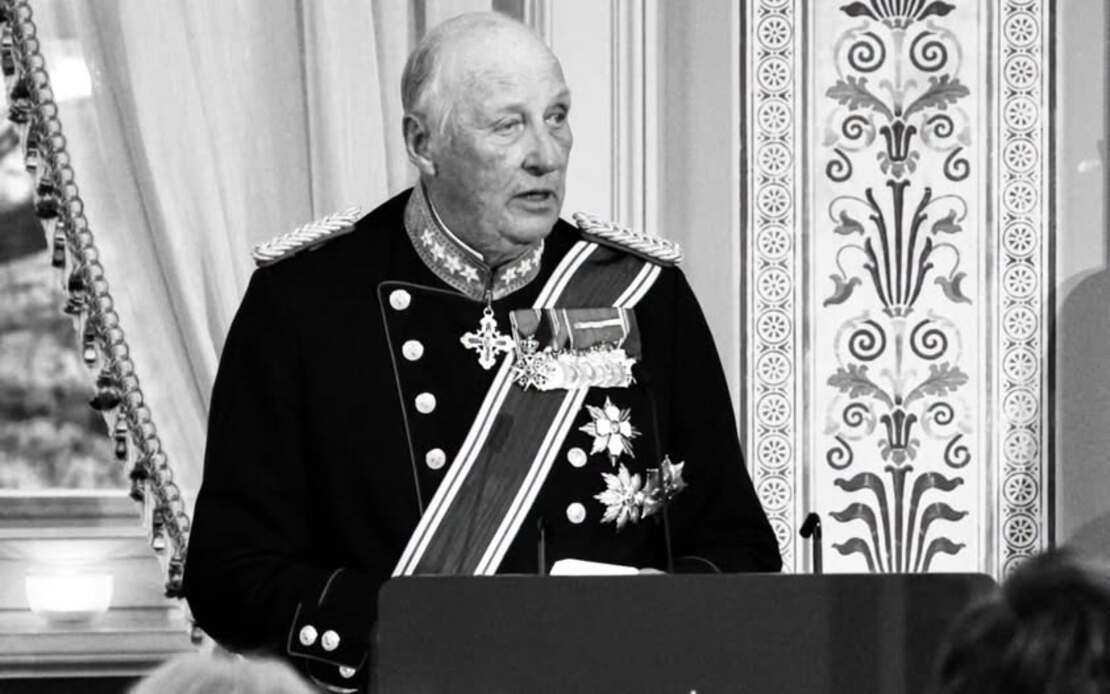
Prime Minister Datuk Seri Anwar Ibrahim has formally conveyed Malaysia's condolences to the Norwegian government and people following the death of King Harald V, who passed away on Friday at the age of 89. The monarch, who had been hospitalised at the National Hospital in Oslo since August 17, succumbed to complications related to hemolytic anemia, for which he had been receiving cortisone treatment in his final days.
In a statement posted through his official Facebook account, Anwar reflected on the legacy of Norway's longest-reigning monarch, drawing particular attention to Harald's progressive stance on national identity and social cohesion. The Malaysian Prime Minister highlighted how the late king had articulated a vision of Norway as an inclusive nation, one that embraced citizens whose families originated from across the world, whether from Afghanistan, Pakistan, Poland, or numerous other countries.
Anwar underscored the significance of Harald's public affirmations that these diverse populations were equally Norwegian, viewing such inclusive rhetoric as fundamental to the strength of a modern state. The Prime Minister's statement positioned the late monarch's words as a philosophical reminder that nations derive their true power not from homogeneity, but from the dignity and respect they extend to all their inhabitants, regardless of ethnic or cultural background.
The timing of Anwar's statement reflects Malaysia's diplomatic engagement with Nordic nations and highlights the bilateral relationship between Kuala Lumpur and Oslo. While Malaysia and Norway maintain relatively modest diplomatic ties compared to Malaysia's relationships with larger European powers, the formal expression of condolences underscores the importance of maintaining courteous state-to-state relations across different regions and political systems.
King Harald V's reign, which began in 1991 following the death of his father King Olav V, was marked by his modernisation of the Norwegian monarchy and his efforts to make the institution more accessible and relevant to contemporary society. His emphasis on inclusivity and integration resonated across Nordic democracies and influenced broader European conversations about immigration and national belonging, particularly as Norway grappled with demographic changes in the decades following the Cold War.
Anwar's particular emphasis on Harald's understanding of oath-taking and commitment to constitutional duties also carries significance for Malaysian audiences. The Prime Minister appeared to draw a parallel between the Norwegian king's dedication to his formal responsibilities and the importance of institutional integrity, a theme that has featured prominently in Anwar's own political messaging since assuming office.
The passing of King Harald V marks the end of an era in Norwegian history and leadership. His successor, Crown Prince Haakon, will now assume the throne as King Haakon VII, continuing the Norwegian royal line's commitment to constitutional monarchy and democratic governance. The transition underscores the stability and institutional continuity that characterises Nordic political systems, aspects that Malaysian leaders frequently reference when discussing good governance and institutional resilience.
For Malaysian observers, the death of King Harald also represents a symbolic moment in the broader evolution of European monarchies and their role in increasingly diverse, multicultural societies. The late king's willingness to publicly champion immigrant integration and challenge narrow definitions of national identity stands in contrast to xenophobic movements that have gained traction in some Western democracies, offering an alternative model for how traditional institutions can adapt to demographic change.
Anwar's statement reflects Malaysia's interest in positioning itself as a nation that values cross-cultural understanding and multi-faith cooperation, themes central to the current government's domestic and foreign policy agenda. By highlighting Harald's vision of inclusive nationality, the Prime Minister implicitly connects Malaysia's own pluralistic society to broader international values championed by respected world leaders.
The formal condolence also demonstrates Malaysia's participation in the global community of nations and its respect for the protocols of international statecraft. Such gestures, though seemingly ceremonial, maintain the diplomatic channels and goodwill that facilitate cooperation on trade, tourism, technology, and other matters of mutual interest between Malaysia and European Union members like Norway.

