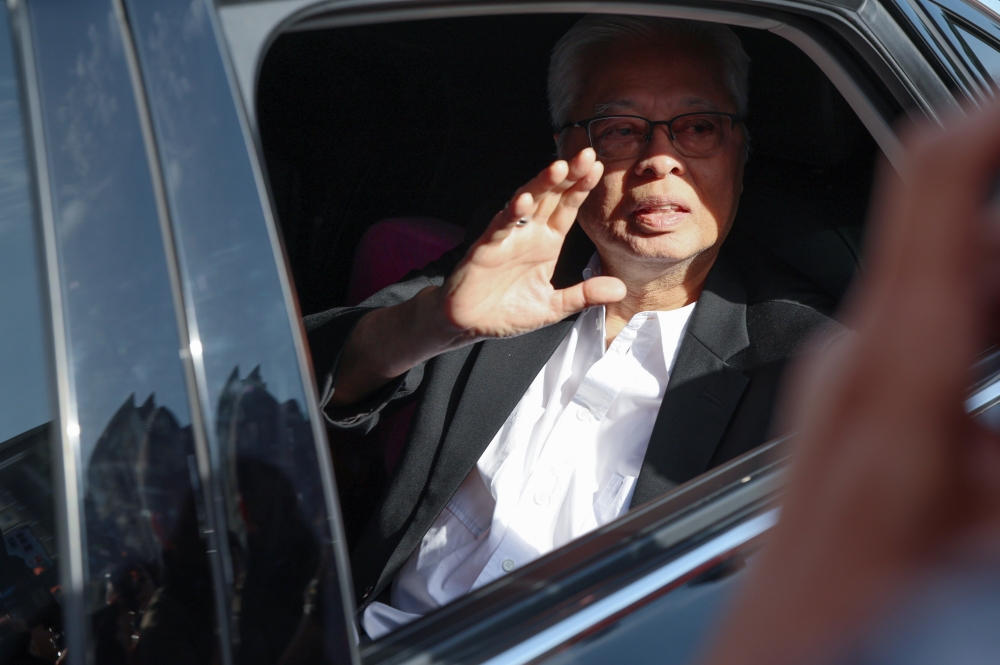
Prime Minister Datuk Seri Anwar Ibrahim made a significant gesture of cross-party goodwill by visiting Deputy Prime Minister Datuk Amar Fadillah Paharuddin and former Prime Minister Datuk Seri Ismail Sabri Yaakob at the National Heart Institute in Kuala Lumpur. The simultaneous visits underscored the political maturity and collegial bonds that persist among Malaysia's senior leadership, transcending the often contentious nature of contemporary politics. Such acts of courtesy during moments of health vulnerability carry symbolic weight in Malaysian public discourse, where they are frequently interpreted as affirmations of national unity and shared concern for leaders across ideological divides.
The Prime Minister's decision to visit both officials at the same institution reflects the significant positions each occupies within Malaysia's political hierarchy. As Deputy Prime Minister, Fadillah Paharuddin holds one of the nation's highest offices and plays a crucial role in government functioning and succession planning. His counterpart in the previous administration, Ismail Sabri, remains a prominent figure in the political landscape despite his transition to the opposition benches following the 2022 election outcome. The presence of Anwar at both bedsides conveyed recognition of their respective standing in national affairs, regardless of their current partisan positions.
The National Heart Institute, Malaysia's premier cardiac care facility, regularly treats senior government officials and prominent citizens. Its reputation for excellence in cardiovascular treatment has made it a destination of choice for high-profile patients requiring specialised care. That both officials sought treatment at this institution speaks to its standing within the nation's healthcare ecosystem and the confidence placed in its medical expertise by those at the highest levels of government.
Anwar's public expression of hopes for their speedy recovery carried beyond mere courtesy. In the Malaysian political context, where parliamentary alliances and government stability often hinge on the health and availability of key figures, the condition of such officials carries implications for governance continuity. The Prime Minister's supportive messaging implicitly affirmed the importance of both men's eventual return to active political duty, signalling to observers that despite their different political trajectories, their contributions to national affairs remain valued.
The visits also reflected broader Southeast Asian traditions of political civility, where respect for rank and acknowledgment of shared national interests frequently supersede party rivalry. Malaysian politics has increasingly demonstrated this capacity for bipartisanship when personal or national welfare issues arise. Such moments provide rare glimpses into the human dimension of political leadership, stripping away the adversarial rhetoric that typically characterises parliamentary debate and public campaigning.
For the Malaysian public and international observers monitoring domestic political developments, these visits offered reassurance regarding the stability of the government's upper echelon. The smooth functioning of governance requires not only institutional frameworks but also the health and presence of experienced hands at the helm. Anwar's actions implicitly communicated confidence in the government's continuity and his own secure position, allowing him to extend magnanimous gestures toward those outside his immediate circle.
The optics of such visits merit careful consideration in Malaysia's contemporary political environment. Following several years of governmental instability and coalition realignments, public and institutional confidence in political leadership remains an ongoing concern. When senior officials demonstrate capacity for genuine concern toward political opponents during moments of vulnerability, it contributes incrementally to perceptions of institutional stability and the health of democratic norms.
Fadillah Paharuddin, as Deputy Prime Minister and a key ally of Anwar's coalition, represents continuity in the current administration. His health status carries direct ramifications for portfolio management and succession arrangements within the executive branch. Ismail Sabri, conversely, remains an influential figure capable of shaping opposition strategy and coalition dynamics from the backbenches. Both men occupy positions where their wellbeing holds significance for Malaysia's political trajectory.
These personal encounters between senior leaders also serve a constituency relations function. Malaysian voters frequently view their leaders' character and relationships through the lens of personal gestures and displays of mutual respect. Political rivals who maintain civility during times of crisis communicate to constituents that national interest transcends partisan calculation. Such behaviour, when genuine, strengthens public faith in democratic institutions and the integrity of political actors.
The visits concluded with Anwar's public remarks extending wishes for speedy recovery, framing both officials' medical treatment as a matter of collective national interest. This rhetorical positioning, subtle though it may appear, reinforces the concept that Malaysia's political leaders, regardless of their partisan affiliations, occupy roles of public trust that transcend individual ambition. As both officials navigate their health challenges and eventual recovery, Anwar's demonstrated solidarity provides a constructive example of political conduct in an increasingly polarised regional environment.

