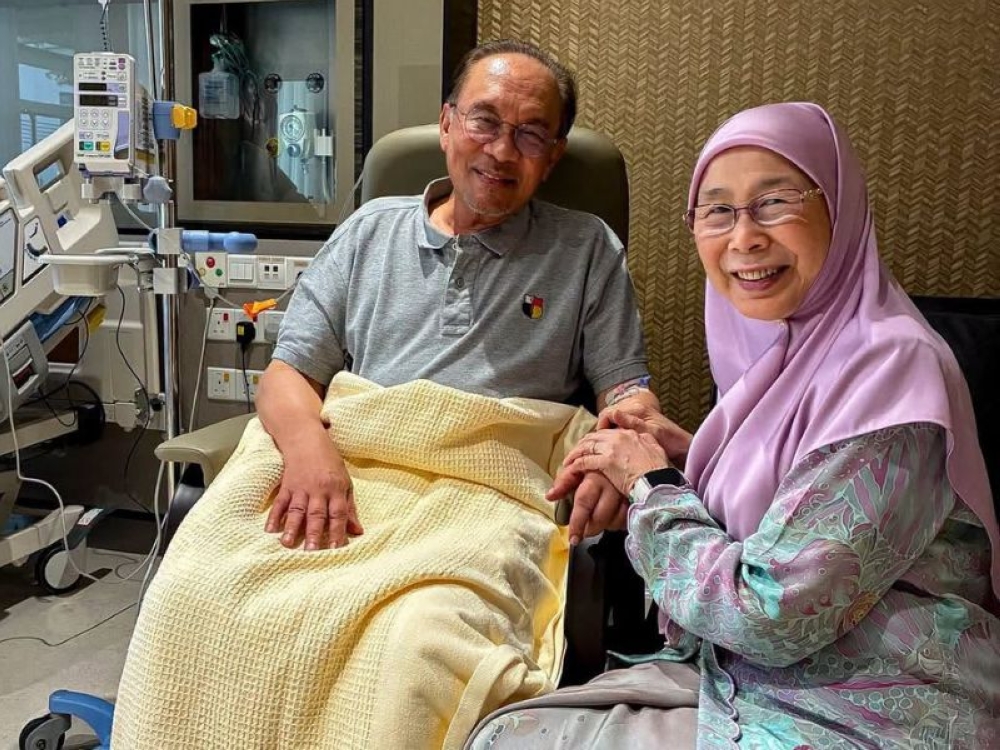
Prime Minister Datuk Seri Anwar Ibrahim is set to return home today following a successful hernia procedure, with his wife Datin Seri Dr Wan Azizah Wan Ismail confirming that his hospital discharge is imminent. The announcement comes after the Prime Minister underwent the surgical intervention, marking a brief interruption to his official duties at the helm of the government.
Datin Seri Dr Wan Azizah provided the update regarding her husband's medical status, indicating that the procedure had progressed as planned and that the recovery trajectory remained positive. The disclosure of the Prime Minister's hospitalisation represents a relatively rare public acknowledgement of health matters involving the nation's top political leader, reflecting the government's commitment to transparency with the Malaysian public regarding matters affecting the continuity of governance.
The timing of the hernia procedure and subsequent discharge raises questions about the Prime Minister's schedule and his ability to resume full engagement with his ministerial portfolio. While hernia surgery is generally considered a routine procedure, the recovery period typically requires modified activity levels during the initial post-operative phase. This necessitates careful management of the Prime Minister's commitments to ensure both his recuperation and the uninterrupted functioning of the country's executive apparatus.
The healthcare intervention underscores the importance of maintaining the health and fitness of senior government officials, particularly those holding executive positions. In Malaysia's context, where the Prime Minister shoulders considerable responsibility across multiple policy domains, ensuring adequate medical attention and recovery time has implications for the stability and effectiveness of government operations. The swift handling of the situation reflects the institutional protocols established for managing the health and availability of the nation's top leadership.
The Prime Minister's expected discharge aligns with typical recovery timelines for minimally invasive hernia repair procedures. Modern surgical techniques employed in such interventions generally permit relatively rapid patient mobilisation and return to normal activities, though the intensity and duration of resuming full professional responsibilities typically require gradual progression. Medical guidance for such procedures typically recommends several weeks of modified activity before returning to unrestricted duties.
The government's management of the Prime Minister's medical absence has included the implementation of delegated responsibilities to ensure that critical functions continue without disruption. Such arrangements are commonplace in parliamentary systems and reflect established protocols for maintaining executive continuity during periods when the head of government requires medical attention. The smooth coordination of these responsibilities demonstrates the maturity of Malaysia's governmental institutions in handling leadership transitions, even temporary ones.
For the broader political landscape, the Prime Minister's swift recovery and discharge carry significance for the timing and pace of policy initiatives and legislative agendas. Any extended absence or complications could have ripple effects across government operations, particularly for programmes and reforms prioritised by Datuk Seri Anwar Ibrahim's administration. The apparent uncomplicated nature of the procedure and rapid recovery trajectory therefore provide reassurance to stakeholders across the political spectrum regarding the continuity of governmental functions.
The public announcement by the First Lady reflects a contemporary approach to political communication in Malaysia, where greater openness regarding the personal circumstances of senior leaders has become increasingly normalised. This contrasts with historical practice in the country, where information about the health status of high-ranking officials was often compartmentalised or withheld from public discourse. The transparency demonstrated in this instance may set expectations for similar future disclosures and contributes to building public confidence in the accessibility and accountability of elected leadership.
From a constitutional standpoint, the Prime Minister's absence during hospitalisation does not trigger any formal transfer of executive authority, as hernia surgery is neither incapacitating nor constitutionally significant. However, the incident serves as a reminder of the importance of succession planning and the clarification of protocols for scenarios involving more prolonged or serious medical developments affecting the Prime Minister's capacity to discharge his duties. Such contingencies remain matters of institutional significance within any parliamentary democracy.
The expected return of Datuk Seri Anwar Ibrahim to his official residence and subsequent resumption of duties represents a return to normalcy for the government apparatus. His team will likely have prepared briefing materials and scheduled his re-engagement with critical portfolio matters, ensuring minimal loss of momentum on priority initiatives. The Prime Minister's recovery also provides an opportunity for reflection within government circles regarding health and wellness protocols for senior officials, who frequently operate under demanding schedules that can compromise their personal wellbeing.

