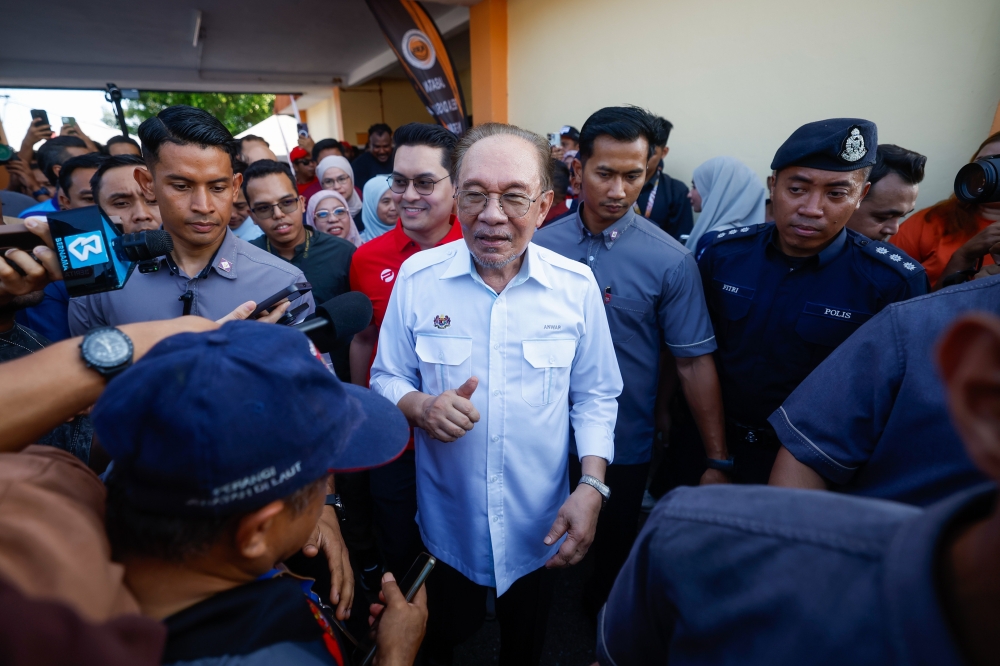
Prime Minister Datuk Seri Anwar Ibrahim has successfully completed an elective laparoscopic surgical procedure, according to a statement from his medical team released in Kuala Lumpur. The operation was conducted as planned, with attending physicians confirming that no complications arose during the procedure. Anwar has since been transferred to a monitored recovery setting where he will remain under constant medical supervision in the coming days.
The decision to proceed with the elective surgery reflects the Prime Minister's commitment to maintaining his health while managing the demands of his high-office position. Elective procedures of this nature are typically scheduled well in advance to minimise disruption to critical government functions, suggesting that appropriate measures have been put in place to ensure continuity of executive responsibilities during his recovery phase.
While specific details regarding the medical indication for the procedure have not been disclosed publicly, the use of laparoscopic technique—a minimally invasive surgical approach—indicates an effort to reduce recovery time and associated complications compared to traditional open surgery. This method has become standard practice for many abdominal procedures and generally allows patients to resume normal activities more quickly than conventional surgical approaches.
The medical team's statement emphasising strict observation protocols underscores the standard precautionary measures taken with high-ranking government officials. Such close monitoring is routine following any surgical intervention, particularly for individuals in positions requiring sustained cognitive function and physical stamina. The monitoring will likely continue until medical professionals are confident that recovery is progressing without incident.
This development comes at a time when Malaysia's government has been navigating complex political and economic challenges. The Prime Minister's temporary medical leave will require delegation of certain ministerial duties to other cabinet members, a process that government sources suggest has been carefully coordinated to avoid any legislative or administrative gaps. The Prime Minister's Office has not indicated any expected timeline for his return to full duties.
From a constitutional perspective, Malaysia's system provides mechanisms to temporarily transfer executive authority when the Prime Minister is medically incapacitated, though officials have indicated that this situation does not trigger such formal procedures. Instead, designated ministers will assume specific responsibilities during the recovery period, allowing Anwar to focus entirely on his recuperation without concerns about critical decisions requiring his immediate attention.
The timing of elective surgeries for high-level officials typically reflects careful coordination with security agencies, hospital administration, and key government departments to ensure that the nation's executive capacity remains fully operational. In Malaysia's context, where the Prime Minister serves as both head of government and leader of the ruling coalition, such planning requires additional layers of consultation with senior party officials.
Public confidence in the Prime Minister's health management and transparency regarding his medical status remains important for political stability. By releasing prompt and detailed information about the successful completion of the procedure, the government has sought to reassure both parliamentary colleagues and the broader public that Anwar's recovery is expected to be straightforward and that no underlying health concerns threaten his ability to lead the nation.
For Malaysia's economy and international standing, any brief interruption in the Prime Minister's full engagement is typically managed through deputy ministers and senior advisors who maintain continuity of policy implementation. The government has indicated that all scheduled ministerial meetings, policy initiatives, and international engagements will proceed according to plan, with responsibilities distributed among cabinet members as needed.
The medical profession's emphasis on strict post-operative monitoring reflects international best practices for surgical recovery, particularly in cases involving individuals whose cognitive alertness and decision-making capacity are essential to their roles. This extended observation period provides assurance that Anwar can return to full duties only when he has demonstrated complete recovery without complications.
As the Prime Minister begins his recovery process, government operations will continue under the oversight of designated ministers and permanent secretaries, a routine administrative arrangement that ensures Malaysia's governance machinery functions seamlessly. The Prime Minister's Office has communicated that updates regarding Anwar's condition will be issued periodically, maintaining the transparency that has characterised government communications on this matter.

