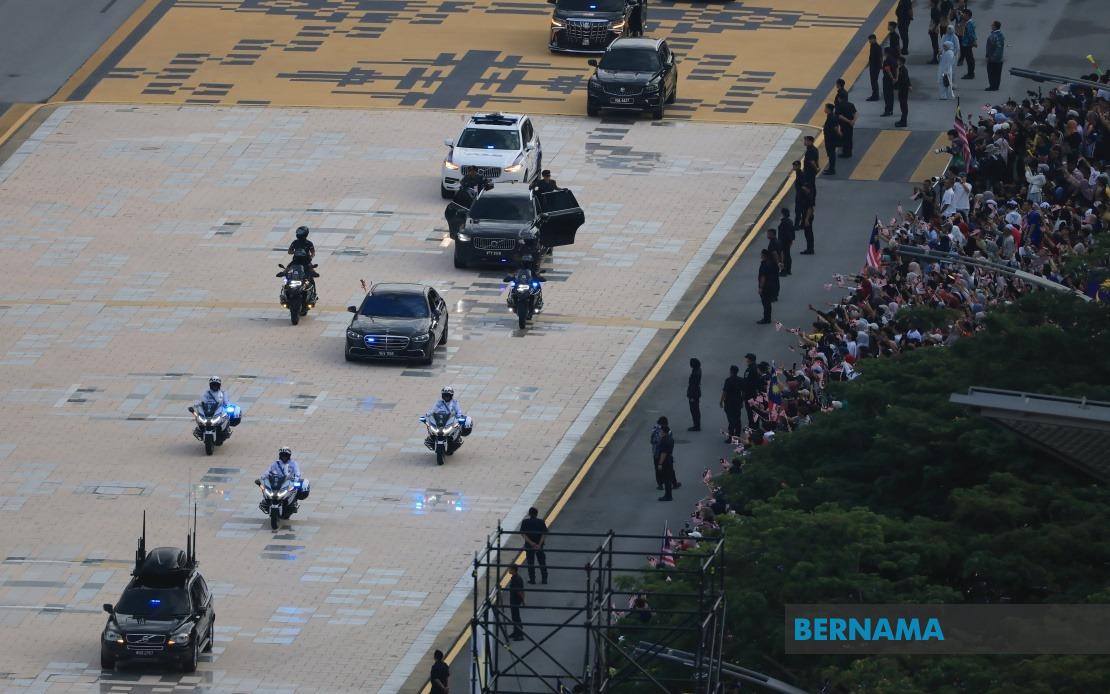
Malaysia's 69th National Day celebrations unfolded at Dataran Putrajaya on August 31, with Prime Minister Datuk Seri Anwar Ibrahim and his Cabinet taking centre stage in the nation's most significant annual observance. The Finance Minister arrived at the royal stage at 7.53 am alongside his wife Datuk Seri Dr Wan Azizah Wan Ismail, as the Hormat Perdana anthem resonated through the venue, setting a solemn and dignified tone for the proceedings.
The presence of top government officials underscored the administration's commitment to the occasion. Deputy Prime Minister Datuk Seri Dr Ahmad Zahid Hamidi had arrived earlier, at 7.45 am, paving the way for the formal ceremony. The attendance of senior ministers including Communications Minister Datuk Seri Fahmi Fadzil, Home Minister Datuk Seri Saifuddin Nasution Ismail, and Defence Minister Datuk Seri Mohamed Khaled Nordin demonstrated unified representation across key portfolios, sending a message of national cohesion during a period when political stability remains central to Malaysia's development agenda.
The scale of this year's celebration reflected significant organisational effort and investment. The event drew together 10,819 participants representing 76 different contingents, creating a diverse tapestry of Malaysia's many communities and institutions. Twenty-two marching bands provided musical accompaniment throughout the day, contributing to the ceremonial grandeur that characterises these observances. The parade itself incorporated 11 specially decorated vehicles that carried symbolic representations of national identity and achievement.
The security and logistical dimensions of the celebration were equally impressive. A total of 328 land, sea, and air assets were deployed to ensure both the spectacle and safety of the event, reflecting the comprehensive nature of national day planning in Malaysia. The inclusion of 112 working animals and 22 electric vehicle assets demonstrated an effort to blend traditional and modern elements, possibly signalling the government's direction towards contemporary modes of transport and environmental consciousness.
This year's celebration operated under the thematic banner of "Malaysia MADANI: Kesejahteraan Dinikmati," which translates to "Malaysia MADANI: Prosperity Shared." This theme encapsulates the administration's broader policy direction centred on inclusive development and equitable growth. The Malaysia MADANI framework has become increasingly central to how the government frames its vision for the nation's future, suggesting that national day celebrations serve not merely as ceremonial occasions but as platforms for reinforcing government narratives and policy aspirations.
Communications Minister Datuk Seri Fahmi Fadzil's presence carried particular significance, given his dual role as chairman of the main committee responsible for organising both the 2026 National Day and Malaysia Day celebrations. This appointment indicates forward-looking preparations already underway for future commemorations. The structure of this oversight position reflects the government's recognition that these annual observances require sustained institutional attention and coordination across multiple government agencies and private sector partners.
The attendance of deputy ministers, dignitaries from various sectors, and foreign delegates broadened the celebration's reach and diplomatic dimensions. International participation in these events carries symbolic weight, representing Malaysia's standing within the global community and its interest in projecting a united, stable image to the international audience. Such diplomatic representation enhances the soft power dimensions of national day celebrations, particularly in a region where Malaysia competes for regional leadership and influence.
For Malaysian readers, these celebrations hold deep cultural and political significance. National Day commemorates Malaysia's independence and serves as an annual recalibration of national identity, particularly important in a multiethnic, multireligious society where unity narratives require constant reinforcement. The scale and formality of government participation signals official commitment to national cohesion at a time when economic pressures and political dynamics can strain social bonds.
The emphasis on environmental considerations, evident in the inclusion of electric vehicle assets, also reflects evolving governmental priorities around sustainability. This detail, though seemingly minor, indicates how traditional state ceremonies are being adapted to incorporate contemporary concerns about climate and environmental responsibility—a shift that resonates with regional and global conversations about sustainable development.
From a regional perspective, Malaysia's national day celebrations demonstrate how Southeast Asian nations continue to invest significantly in ceremonial and symbolic expressions of statehood and sovereignty. These events serve functions beyond mere commemoration; they are occasions for government messaging, national branding, and the reinforcement of political legitimacy. The integration of technology, environmental consciousness, and inclusive participation reflects Malaysia's self-positioning as a modern nation navigating between traditional identity and contemporary governance challenges.

