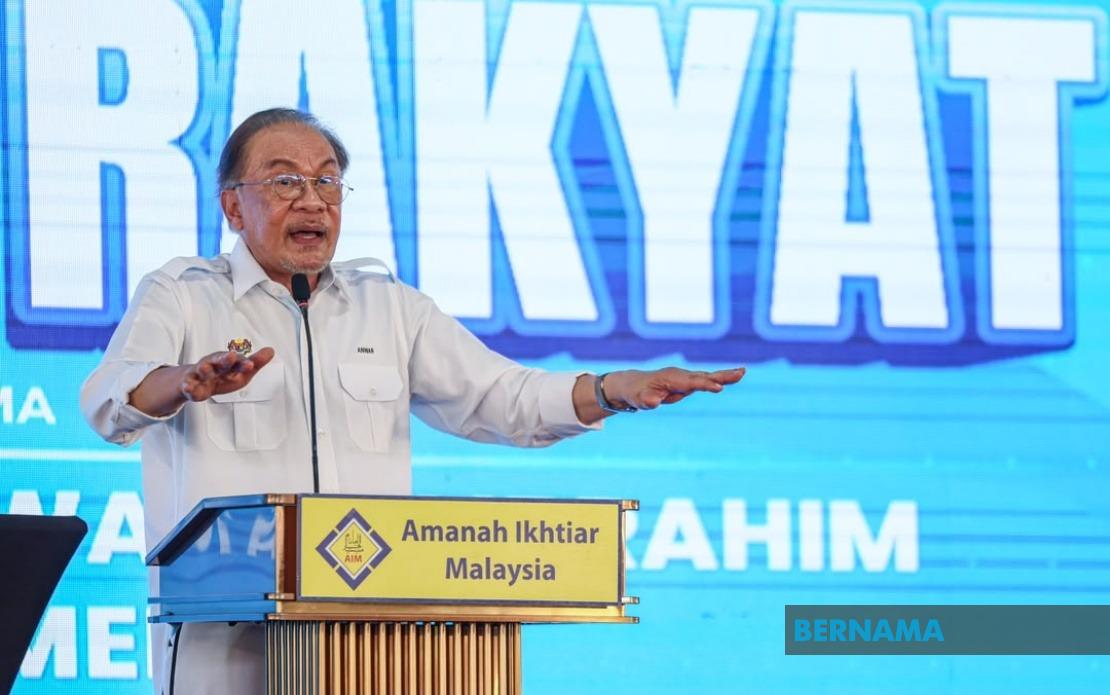
Prime Minister Datuk Seri Anwar Ibrahim has attributed the coordinated political opposition his government faces to its unwavering commitment to combating corruption and the abuse of power. Speaking at a campaign event in Batu Pahat during the lead-up to the Johor state election, the Pakatan Harapan chairman asserted that rival parties have united specifically because they recognise the MADANI Government's determination to hold public officials accountable for misappropriating funds or exploiting their positions for personal advancement.
Anwar's remarks reflect the intensifying political dynamics surrounding the Johor state election, scheduled for July 11, which will determine control of 56 seats across the state. The timing of his comments—made while campaigning in the Senggarang constituency—underscores the high stakes involved as PH seeks to expand its influence beyond federal governance into one of Malaysia's most significant states. The Prime Minister's framing of opposition as a consequence of his government's integrity measures represents a strategic political narrative that aims to position PH as the guardian of clean governance, contrasting its approach with what he characterises as the practices of rival factions.
Central to Anwar's argument is the principle that Malaysia's leaders must demonstrate personal integrity by refusing to exploit their positions for financial gain. He cited his own track record, noting that despite numerous visits to Johor as Prime Minister, he has refrained from acquiring land, securing business projects, or obtaining shareholdings in the state. This personal testimony serves as a tangible example of the ethical standard he believes should govern all elected representatives. By publicly declaring what he has not done, Anwar attempts to establish a benchmark for accountability that extends beyond rhetoric to concrete behavioural expectations for political leaders at all levels.
The anti-corruption messaging also forms a critical component of PH's broader electoral strategy in Johor. The coalition is urging voters to grant it the opportunity to govern the state, framing this as essential for implementing comprehensive reforms that would benefit ordinary Malaysians. PH's campaign narrative emphasises that federal-state alignment is necessary for maximising the effectiveness of development initiatives and welfare programmes, suggesting that the state's current administration has fallen short in translating the substantial investments flowing into Johor into tangible improvements in citizens' lives.
Anwar's observations about Johor's development paradox—that billions of ringgit have been invested in infrastructure projects while basic necessities remain beyond the reach of ordinary households—touches on a fundamental concern animating Malaysian politics. The Prime Minister's articulation of this contradiction, in which economic growth has concentrated wealth among a narrow segment while housing affordability and access to essential services remain inadequate for the majority, reflects a populist strain within PH's messaging. This framing invites Johor voters to consider whether current governance structures are serving their interests or primarily benefiting entrenched economic elites.
A significant dimension of Anwar's political positioning involves defending PH's partnership with the Democratic Action Party (DAP), a component of the ruling coalition. He emphasised that throughout his three-and-a-half years as Prime Minister, DAP ministers within the Cabinet have consistently supported programmes benefiting Malays and Islam, without staging opposition or obstruction. This clarification addresses long-standing concerns, particularly among Malay-Muslim constituencies, that DAP's participation in government might compromise policies affecting Islam or Malay interests. By highlighting the historical voting record of DAP Cabinet members on such issues, Anwar seeks to neutralise a potential vulnerability in PH's appeal to these demographic groups during the Johor campaign.
The rally itself, featuring the PMX Meet-and-Greet programme in Senggarang, provided Anwar with a platform to gauge grassroots enthusiasm for PH's agenda. His observation that supporters had endured intense heat to attend the event became part of the narrative he constructed around the strength of public backing for his administration's direction. Communications Minister Datuk Fahmi Fadzil's presence at the programme underscored the coordination between PH's leadership and its media strategy, ensuring consistent messaging across campaign venues.
For Malaysian observers and regional analysts, Anwar's framing of opposition as a consequence of his government's anti-corruption stance represents a calculated political gambit. By positioning himself and PH as targets of coordinated opposition precisely because of their integrity measures, he implicitly challenges other parties to dispute this characterisation or to articulate alternative explanations for their actions. This rhetorical strategy shifts focus from specific allegations or policy disagreements toward a broader narrative about the quality of governance and the moral character of those seeking power.
The Johor state election itself carries implications extending well beyond the state's borders. As one of Malaysia's economically significant regions and a traditional political battleground, the outcome will signal the strength of federal government support at the grassroots level and test whether PH can consolidate power across multiple state administrations. The 172 candidates contesting the 56 available seats will compete against this backdrop of claims and counterclaims about governance quality, with early voting scheduled for July 7 and general polling on July 11.
Anwar's anti-corruption narrative, while central to his political identity and governance philosophy, also reflects the broader challenges confronting Malaysia's reform agenda. The persistence of public concern about corruption and official misconduct, even after years of transition to a new governmental paradigm, suggests that restoring public confidence in institutional integrity remains an ongoing project rather than an accomplished fact. How voters in Johor respond to PH's anti-corruption messaging, and whether they believe the coalition's approach offers genuine improvement over alternatives, will substantially influence both the state election outcome and the broader trajectory of Malaysian politics in the run-up to future electoral contests.

