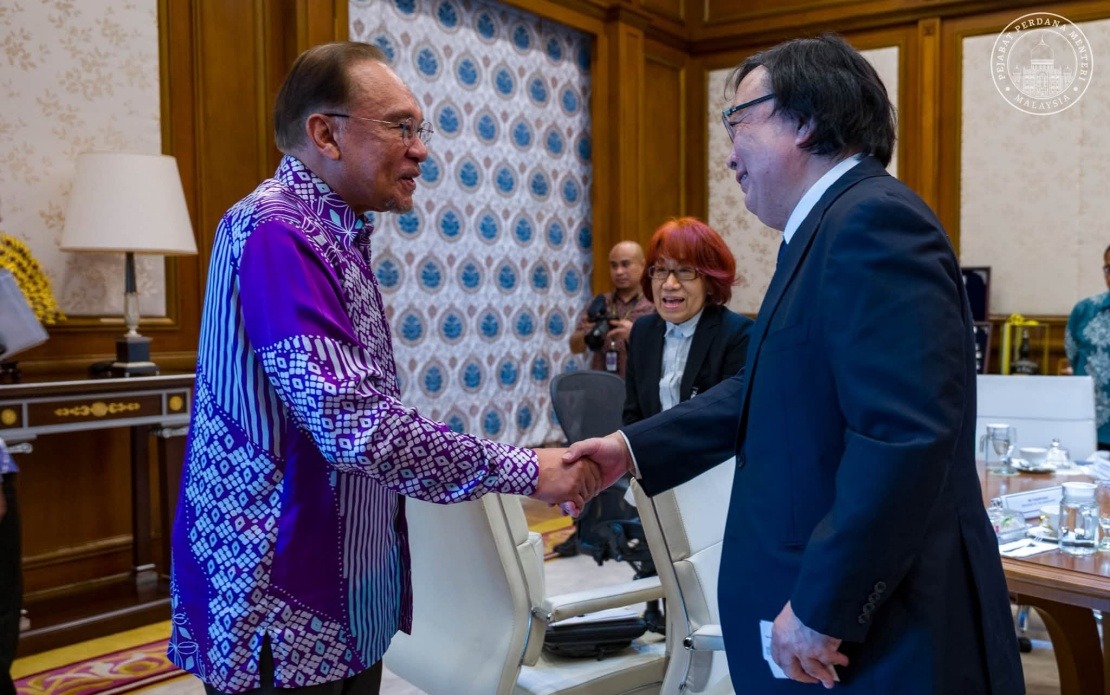
Prime Minister Datuk Seri Anwar Ibrahim received a courtesy visit from The Genron NPO President Yasushi Kudo on July 23, marking another milestone in Malaysia's engagement with influential Japanese policy circles. The discussion focused on deepening the Asia Leaders Roundtable, a multilateral platform designed to foster strategic conversations on pressing regional and global concerns. Through this meeting, both sides underscored their commitment to leveraging intellectual and diplomatic channels to address interconnected challenges facing the Asia-Pacific region.
The Genron NPO, headquartered in Japan, functions as an independent non-profit think tank with considerable influence on policy discourse in Tokyo and beyond. Its establishment of the Asia Leaders Roundtable reflects Japan's broader pivot toward collaborative regional frameworks that extend beyond traditional bilateral arrangements. For Malaysia, engagement with such institutions represents an opportunity to shape conversations on economic cooperation, security architecture, and sustainable development at a high intellectual level, positioning the nation as an active voice in defining Asia's strategic future.
Anwar used the occasion to express Malaysia's deep appreciation for Japan's reception during his official visit in June, highlighting the warmth and hospitality extended by the Japanese government. Such diplomatic courtesies, while ceremonial in nature, carry substantive weight in East Asian statecraft, where relationship-building and trust-establishment remain foundational to long-term partnerships. The Prime Minister's specific acknowledgment of Japan's conduct underscores Malaysia's desire to maintain momentum in bilateral relations at the highest levels of government.
The Comprehensive Strategic Partnership between Malaysia and Japan occupies a prominent position in both nations' foreign policy frameworks. Anwar reiterated Malaysia's assessment that Japan stands among the country's most significant strategic and economic partners, a characterization reflecting decades of trade integration, investment flows, and security cooperation. This partnership encompasses diverse domains, from automotive manufacturing and electronics to energy security and maritime safety, making it economically vital for Malaysia's development trajectory and geopolitical positioning in an increasingly multipolar region.
A notable element of the meeting involved Kudo's invitation to Anwar to participate in the Tokyo Conference 2027, signaling Japan's intention to maintain Malaysia's prominence in future regional forums. Additionally, Anwar expressed gratitude for the opportunity to deliver a video message at the 2026 conference, demonstrating Malaysia's consistent engagement with Japanese-led initiatives despite logistical constraints. These invitations reflect Malaysia's perceived importance as a voice representing Southeast Asian perspectives and interests within broader Asian dialogue mechanisms.
The Asia Leaders Roundtable itself warrants closer examination within Malaysia's broader strategic context. As a non-governmental platform, it provides space for candid discussion unencumbered by official protocol, allowing leaders to explore innovative approaches to transnational problems such as climate change, supply chain resilience, technological governance, and geopolitical tensions. For Malaysia, participation offers avenues to advance national interests while contributing to solutions that benefit the wider region, positioning the country as a constructive actor in multilateral problem-solving rather than a passive observer of global developments.
Japan's emphasis on creating such dialogue platforms reflects its strategic necessity to maintain influence and relevance in an Asia where China's economic and military presence looms large. By fostering intellectual exchange among regional leaders through venues like the Asia Leaders Roundtable, Japan seeks to reinforce soft power and shape the ideological and policy contours of regional governance. Malaysia's receptiveness to these initiatives demonstrates pragmatism—engaging with multiple powers and platforms ensures policy flexibility and prevents over-dependence on any single partnership.
The timing of this meeting holds significance within the broader context of Southeast Asian geopolitics. As tensions persist in the South China Sea and great power competition intensifies, forums emphasizing consensus-building and collaborative problem-solving become increasingly valuable. Malaysia, which navigates complex relationships with multiple external powers while managing internal diversity, benefits from platforms where nuanced dialogue can occur away from adversarial international forums.
Anwar's emphasis on pursuing shared peace, stability, and prosperity through strengthened Malaysia-Japan cooperation reflects a shared commitment to maintaining a rules-based international order in which smaller nations retain agency. Both countries have vested interests in preventing regional conflicts that could disrupt trade, investment, and access to critical sea lanes. The deliberate articulation of these shared goals serves to reinforce public commitment to continued partnership and reassure constituencies in both nations that bilateral relations remain strong despite global uncertainties.
Looking forward, Malaysia's engagement with the Genron NPO and participation in the Asia Leaders Roundtable positions the nation within influential regional conversations that shape policy directions. For Malaysian observers and policymakers, such diplomatic interactions underscore the importance of maintaining active participation in multilateral forums that extend beyond ASEAN, offering opportunities to influence regional outcomes and gain insights into the thinking of major powers. The continued vitality of Malaysia-Japan relations, demonstrated through high-level meetings and intellectual exchange, remains essential for the country's strategic autonomy and economic prosperity in an increasingly complex regional landscape.

