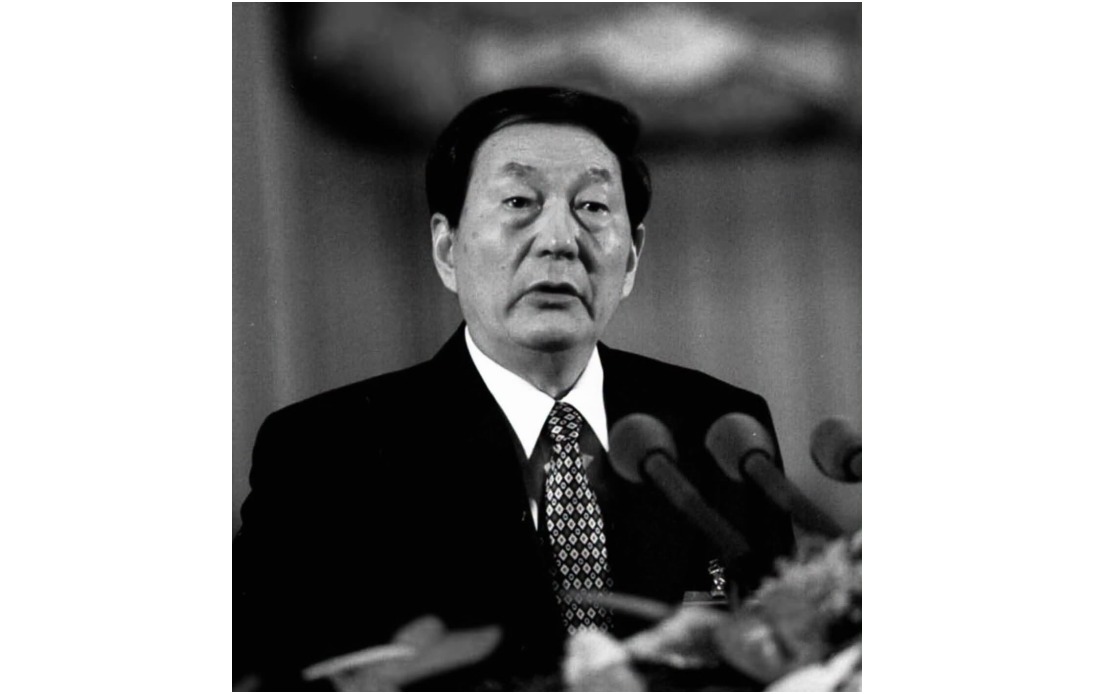
Prime Minister Datuk Seri Anwar Ibrahim has expressed deep condolences following the death of Zhu Rongji, former Premier of the People's Republic of China, who passed away at the age of 97. In remarks shared on social media, Anwar characterised the late statesman as one of the defining figures in modern Chinese history, whose influence extended far beyond Beijing's borders and into the corridors of Southeast Asian diplomacy.
Zhu's tenure as Premier, which spanned from 1998 to 2003, fundamentally reshaped the Chinese economy. He orchestrated sweeping market-oriented reforms that dismantled inefficiencies within state-owned enterprises, positioning China for sustained growth during a critical juncture in its development. Perhaps most significantly, Zhu navigated China's entry into the World Trade Organisation, a achievement that opened vast new opportunities for foreign investment and trade partnerships. His willingness to embrace economic liberalisation at a time when such moves were internally contentious demonstrated both political courage and strategic foresight.
For Anwar personally, Zhu represented more than a high-ranking government official from a major regional power. The Malaysian leader recalled a series of substantive exchanges and cultural visits that underscored the depth of their relationship. Anwar fondly remembered accompanying Zhu to Confucius' ancestral village and to Tai Shan, one of China's five sacred mountains steeped in philosophical and historical significance. These were not mere ceremonial itineraries but meaningful engagements that reflected genuine mutual respect and intellectual curiosity about each other's civilisations.
One particularly memorable encounter that Anwar highlighted involved a private visit to Zhu's personal library. Rather than offering perfunctory gifts befitting diplomatic protocol, Zhu selected several Chinese classical texts by hand and presented them to Anwar. This gesture spoke volumes about how the former Premier viewed his Malaysian counterpart—not as a transactional partner but as an intellectual peer worthy of wisdom from China's literary heritage. Such intimate moments often shape the trajectory of bilateral relations more profoundly than formal agreements.
The 1990s represented a golden period for Malaysia-China engagement under both Anwar and Zhu's stewardship. During this transformative decade, the two countries worked in concert to deepen economic and financial cooperation at multiple levels. Infrastructure projects, trade arrangements, and institutional frameworks were established during that era that continue to buttress the relationship today. This continuity is particularly significant given the geopolitical volatility that has characterised the past two decades, including the 1997 Asian financial crisis and subsequent regional tremors. The foundations laid in the 1990s proved resilient enough to weather successive challenges.
Zhu's ascendancy coincided with Malaysia's own economic ambitions under former Prime Minister Mahathir Mohamad and his successors. The timing created natural synergies—China was beginning its ascent as a manufacturing hub and investment source, while Malaysia positioned itself as a bridge between China and ASEAN. Zhu understood that China's economic transformation required partnerships with dynamic Southeast Asian economies, making Malaysia a strategically important ally. This mutual recognition of complementary interests created the conditions for substantive cooperation rather than competitive antagonism.
The reforms Zhu championed extended beyond merely opening China's economy to foreign capital. He also modernised governance structures, professionalised bureaucratic institutions, and introduced performance-based accountability mechanisms that gradually elevated the competence of China's administrative apparatus. These institutional reforms, though less visible than infrastructure megaprojects or trade statistics, proved foundational to China's sustained development trajectory. Without such administrative evolution, the country's economic gains would have been considerably more fragile.
Anwar's eulogy characterised Zhu not primarily through the lens of his policy achievements, though these were undeniably monumental, but rather as a man of profound character and unwavering devotion to national interest. This framing reveals something important about how regional leaders perceive enduring legacies. Zhu's reforms mattered because they reflected a deep commitment to improving the lives of ordinary Chinese citizens, not because they enriched elites or benefited external powers exclusively. That moral dimension is what distinguished him, in Anwar's assessment, from countless other technocrats and administrators.
For Malaysia, Zhu's passing represents the departure of a generation of leaders who personally shaped China's integration into the regional and global economy. His successors, while capable, inherited rather than built the framework within which modern Sino-Malaysian relations operate. The personal relationships and trust networks that officials like Zhu cultivated with Southeast Asian counterparts created institutional memory and goodwill that sometimes persists even as individual leaders transition. That accumulated trust becomes particularly valuable during moments of regional tension or bilateral disagreement.
The timing of Zhu's death arrives at a moment when Malaysia-China relations are navigating complex currents. Trade dynamics continue to evolve, investment patterns shift, and geopolitical realignments create new opportunities and anxieties. Anwar's respectful acknowledgment of Zhu's role as a bridge-builder between Malaysia and China carries implicit messaging about the value Malaysia places on maintaining constructive engagement with Beijing, even as the country pursues diverse partnerships elsewhere in the region and globally.
Looking forward, Zhu Rongji's legacy extends beyond his formal tenure or even his bilateral relationships with individual leaders. He demonstrated that a major power could pursue economic reforms and integration with global markets while retaining political sovereignty and strategic autonomy. This model—neither Western-style capitalism nor traditional state control, but a distinctive Chinese synthesis—has become increasingly influential across Asia. How regional nations navigate their own economic transformations while maintaining political independence owes much to pathways that figures like Zhu helped pioneer.

