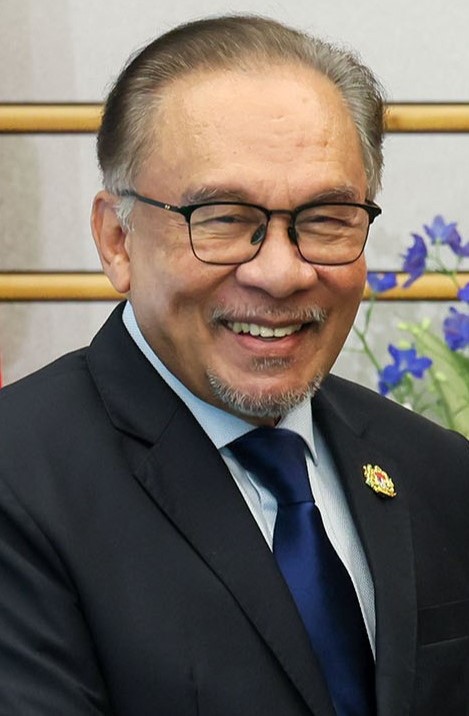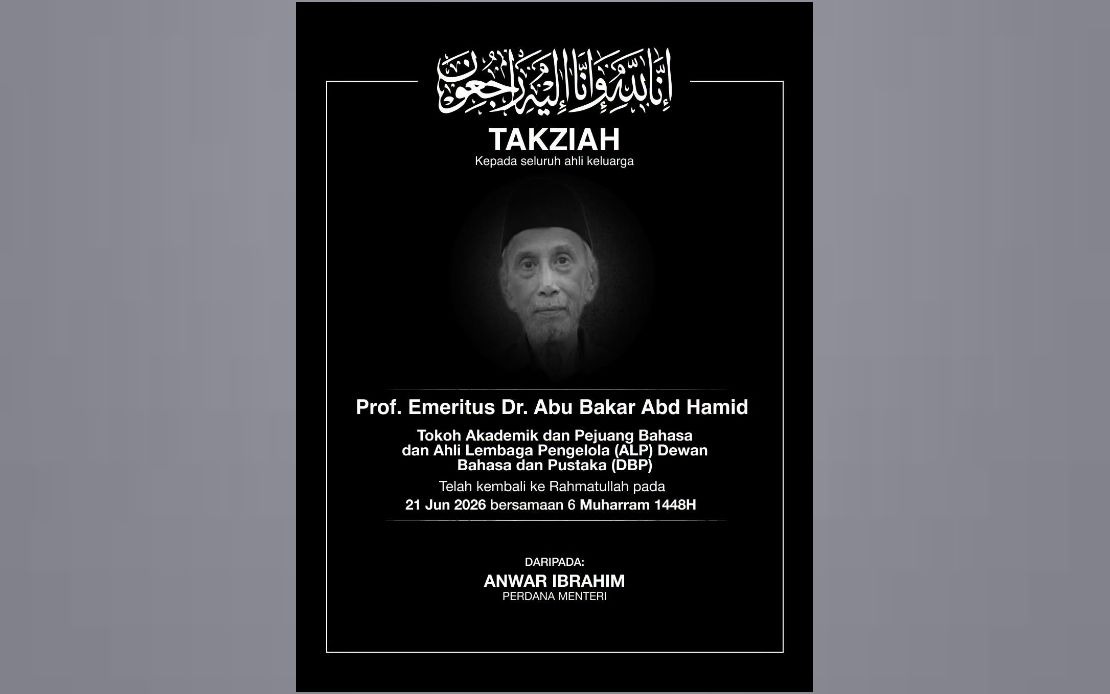
Prime Minister Datuk Seri Anwar Ibrahim has expressed deep sorrow following the death of Professor Emeritus Datuk Abu Bakar Abd Hamid, a distinguished academic and literary scholar whose contributions shaped Malaysia's higher education landscape. The prominent figure passed away last Sunday, June 21, at his residence in Petaling Jaya, Selangor, following a sudden respiratory episode at approximately 10.30pm. Through a Facebook post, Anwar reflected on the loss of a revered mentor whose intellectual legacy continues to influence Malaysia's cultural and academic institutions.
Abu Bakar's death represents a significant loss to Malaysia's literary and intellectual community. As a native of Johor, he rose to become one of the most respected voices in Malay literature, earning recognition across government, academia, and cultural circles for his scholarship and dedication to advancing knowledge in the region. His career spanned several decades during which he held positions of considerable responsibility and influence, shaping institutional frameworks that remain relevant today.
Anwar, who had studied under Abu Bakar, spoke with the candour of a former student reflecting on a transformative teacher. Beyond the formal academic relationship, Anwar emphasised that Abu Bakar's influence extended beyond classroom instruction into the realm of intellectual mentorship. The Prime Minister described him as someone whose passion for knowledge was evident in every interaction, and whose ability to inspire extended to multiple generations of scholars and policymakers. This personal connection underscores how deeply embedded Abu Bakar was in the professional networks of Malaysia's leadership.
Among Abu Bakar's most substantial institutional contributions was his role in establishing Universiti Kebangsaan Malaysia, one of Malaysia's premier national universities. In 1968, he served as joint secretary of the committee tasked with founding UKM, a responsibility that placed him at the centre of post-independence efforts to build a world-class research institution grounded in Malaysian values and priorities. This foundational work earned him recognition as instrumental in shaping Malaysia's trajectory in higher education during a critical formative period.
His administrative experience at the University of Malaya further demonstrated his capabilities in senior academic leadership. Appointed as deputy vice-chancellor in 1987, Abu Bakar navigated the complex demands of managing one of Southeast Asia's oldest and most prestigious universities. His tenure coincided with periods of significant institutional growth and academic expansion, during which he helped position UM as a regional intellectual centre.
Beyond the university environment, Abu Bakar's influence extended into national media governance. He served as chairman of the Board of Governors of the Malaysian National News Agency, Bernama, from 1996 to 2000, a period during which Malaysian journalism was evolving in response to rapid technological and political changes. This appointment reflected his standing as someone trusted to oversee institutions of national importance.
Throughout his lifetime, Abu Bakar accumulated numerous awards and accolades in recognition of his scholarly contributions to Malay literature. These honours reflected not merely academic achievement but broader societal acknowledgement of his role in preserving, advancing, and interpreting Malaysia's literary heritage. In a region where cultural identity remains deeply connected to language and literature, figures like Abu Bakar function as custodians of intellectual tradition.
Anwar's tribute emphasised the emotional dimension of Abu Bakar's leadership style. The Prime Minister noted that affection and respect characterised the relationship between teacher and student, suggesting that Abu Bakar's pedagogical approach transcended conventional transmission of information. His ability to cultivate genuine regard from his students points to a leadership philosophy rooted in authentic engagement rather than formal authority alone.
The scholar's funeral rites were conducted with appropriate ceremony, with Abu Bakar laid to rest at Bukit Kiara Muslim Cemetery on Monday, June 24. The speed with which he was honoured in death reflects the esteem in which he was held across Malaysian society. His passing marks the end of an era for those who knew him directly and serves as a reminder of the contributions made by an earlier generation of nation-builders who shaped post-independence Malaysia.
For Malaysia's literary and academic communities, Abu Bakar's death creates a void unlikely to be easily filled. His knowledge of Malay literature was comprehensive and deeply contextualised within both local and regional intellectual traditions. With fewer senior scholars of his calibre remaining active in the field, the loss gains added significance for ongoing efforts to document, preserve, and interpret Malaysia's cultural heritage.
The Prime Minister's public mourning also carries institutional weight. When sitting leaders acknowledge the passing of historical figures with personal testimony, it affirms the value of long-term institutional memory and the importance of intellectual continuity in governance. Anwar's remarks suggest that Malaysia's current leadership continues to draw inspiration and guidance from the intellectual foundations laid by scholars of Abu Bakar's generation.
As Malaysia navigates contemporary challenges in education, media, and cultural identity, the contributions of figures like Abu Bakar remain relevant. The frameworks he helped establish, the institutional cultures he shaped, and the intellectual standards he upheld continue to influence how Malaysia approaches these fundamental domains of national life. His passing prompts reflection on the need to nurture and support the next generation of literary scholars and academic leaders who will carry forward this legacy.