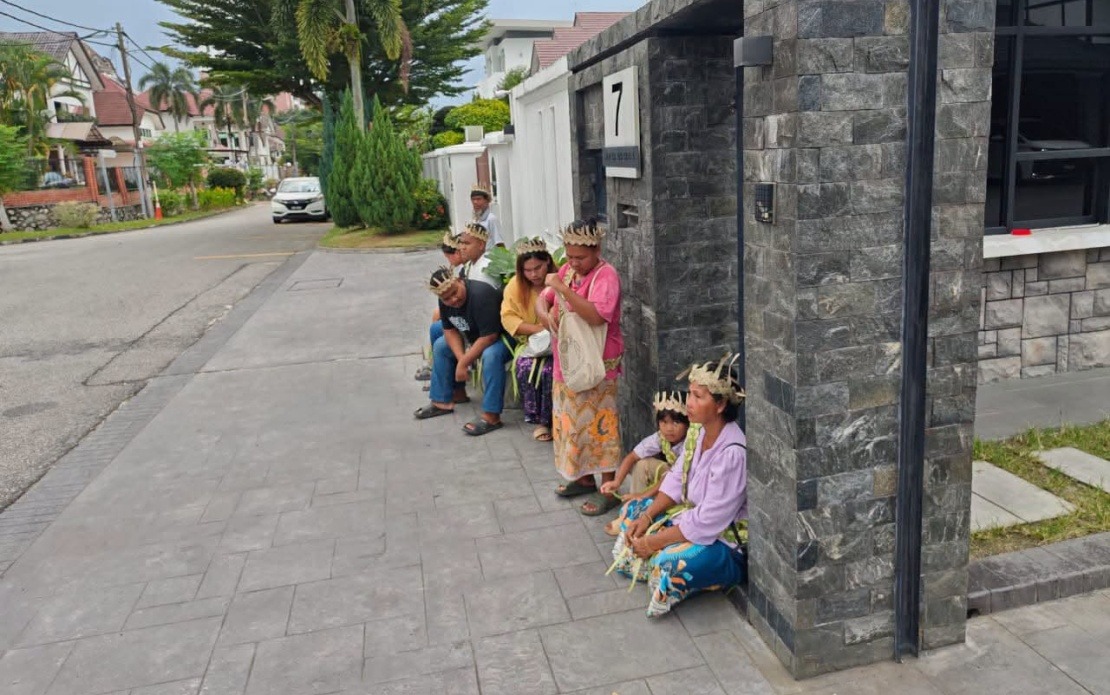
Prime Minister Datuk Seri Anwar Ibrahim has undertaken to escalate the longstanding land dispute affecting the Orang Asli settlement of Kampung Sungai Cot in Maran, Pahang directly to the state government, signalling renewed federal attention to indigenous land rights grievances in the peninsular interior. The commitment came after Anwar received a delegation from the village community at his residence in Kuala Lumpur, where he discussed both the territorial claims and recent detention matters affecting residents.
The Orang Asli representatives briefed the Prime Minister on the multifaceted challenges confronting their community, centering on ongoing disputes over ancestral lands and the temporary detention of three village residents by police. Anwar disclosed in a Facebook statement that he had already been informed of the detained individuals' release, suggesting some immediate progress on the law enforcement dimension of the broader grievance.
The timing of this intervention underscores the persistent friction between Orang Asli communities and state governments over land tenure, a friction that has repeatedly surfaced in recent years as indigenous groups assert claims over territories they have inhabited for generations. Kampung Sungai Cot's case appears emblematic of wider struggles facing Malaysia's aboriginal populations, who often find themselves marginalised in land administration processes dominated by federal and state bureaucracies with competing development and settlement agendas.
Anwar's decision to engage directly with the community representatives reflects a shift in how the federal government is approaching indigenous grievances. Rather than relegating such matters to routine administrative channels, the Prime Minister's personal involvement sends a signal that these issues warrant high-level policy review. This approach aligns with Anwar's broader positioning on human rights and social justice, themes that have featured prominently in his political messaging since his return to power.
The Prime Minister's simultaneous appeal to all stakeholders to refrain from politicising the dispute and to pursue lawful, equitable solutions suggests awareness of the potential for the issue to inflame communal tensions if handled carelessly. His invocation of procedural fairness and legal compliance indicates a desire to navigate the terrain between recognising indigenous claims and respecting the formal legal framework that governs land administration in Malaysia.
For the Pahang state government, Anwar's intervention creates both an opportunity and a pressure point. State authorities must now contend with federal-level scrutiny of how they have managed the Kampung Sungai Cot matter, potentially compelling them to revisit administrative decisions or initiate fresh consultations with the affected community. The prospect of direct federal intervention may incentivise the state to seek negotiated settlements rather than maintaining entrenched positions.
The broader Malaysian context makes this dispute particularly significant. Land issues remain among the most contentious matters in the country's federal structure, with states jealously guarding their constitutional authority over land administration while the federal government exercises influence through policy direction and financial incentives. An Orang Asli land claim that receives Prime Ministerial attention has the potential to reshape precedent and expectations across multiple state jurisdictions where similar disputes simmer.
Orang Asli advocacy groups have long contended that federal policy has inadequately protected indigenous land interests against encroachment from development projects, agricultural schemes, and urban expansion. The constitutional framework theoretically recognises Orang Asli rights, but implementation has frequently fallen short of meeting community expectations or legal guarantees. Cases like Kampung Sungai Cot illustrate the gap between formal recognition and substantive protection.
The detention of the three Orang Asli residents adds a human rights dimension to what might otherwise be framed purely as a technical land dispute. Their release, which Anwar confirmed, suggests that police action was either temporary in nature or responsive to intervention and pressure. However, the underlying question of why residents faced detention in connection with land matters remains significant, pointing to possible tensions between law enforcement operations and indigenous community mobilisation over territorial claims.
Anwar's commitment to raise the matter with Pahang authorities represents a tangible test of his administration's responsiveness to indigenous concerns. Implementation will determine whether this represents genuine progress toward resolution or a holding gesture that leaves the core dispute unresolved. The Prime Minister's insistence on solutions that are fair, prudent, and lawful establishes the criteria by which his government can be measured on follow-through.
The Orang Asli constitute a historically marginalised demographic within Malaysian society, facing persistent socioeconomic disparities and limited political representation despite their status as the peninsula's aboriginal inhabitants. Land rights form the foundation of their economic security and cultural continuity, making territorial disputes existential rather than merely administrative. Any government commitment to address such claims therefore carries weight beyond the immediate parties involved.
Moving forward, attention will focus on the mechanisms by which Anwar engages Pahang's leadership, the timeline for substantive discussions, and whether any meaningful concessions emerge. The case also establishes a potential template for how other indigenous communities with unresolved grievances might seek federal attention and intervention, potentially opening new channels for Orang Asli advocacy.
Ultimately, the Prime Minister's pledge reflects evolving expectations about how federal leadership should respond to indigenous grievances. Whether this represents a durable shift toward greater recognition of Orang Asli rights or a singular gesture of political attention will become apparent through concrete outcomes and implementation by state authorities working in consultation with federal oversight.

