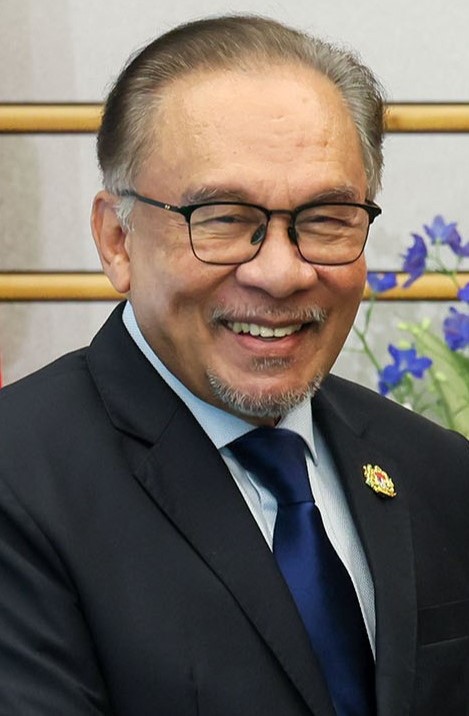
Prime Minister Datuk Seri Anwar Ibrahim is returning to Johor today for a dual-pronged community engagement in Segamat, underlining the coalition's strategy to connect directly with voters ahead of a pivotal state election. The visit marks his second appearance in the state within 72 hours, highlighting the intensity of Pakatan Harapan's ground operations as polling day approaches. Segamat, situated approximately 200 kilometres south of Johor Bahru, has become a focal point in the administration's push to strengthen its support base across the state's interior constituencies.
The centrepiece of today's itinerary is the officiation of the MADANI KITA programme, scheduled for 5 pm at Dataran Segamat in partnership with the local Rukun Tetangga. This grassroots initiative represents a deliberate attempt by the government to deepen community bonds while simultaneously promoting its policy agenda among ordinary Malaysians. By aligning with neighbourhood associations at the most fundamental level, the administration seeks to bypass traditional political structures and appeal directly to residents through their immediate social networks.
MADANI KITA functions as a broader platform designed to achieve multiple objectives simultaneously. Beyond fostering stronger interpersonal relationships within neighbourhoods, the programme explicitly aims to bridge ethnic and communal divides—a critical consideration in Malaysia's diverse urban and rural settlements. The government's framing of the initiative as a tool for spreading its broader policy agenda suggests an integrated approach to political communication, where social cohesion messaging doubles as a delivery mechanism for explaining government priorities to the electorate.
Following the formal programme, Anwar will participate in a more informal gathering, the "Jom! Makan Durian" community meal at the Yayasan Bazaar site at 6.30 pm. This shift in tone and setting represents a calculated political manoeuvre: while MADANI KITA carries official government branding and formality, the durian-eating session creates an accessible, social atmosphere where the Prime Minister can interact with constituents in a relaxed environment. Such dual-track engagement allows the administration to deliver structured messaging while also humanising its leadership through casual, everyday interactions.
Anwar's rapid succession of Johor visits reflects the heightened stakes of the upcoming state election. His previous appearance came on Monday in Bukit Gambir, Tangkak, when he unveiled Pakatan Harapan's complete slate of candidates for all 56 state assembly seats. The coalition fielded 20 candidates from PKR, 19 from Amanah, and 17 from DAP, demonstrating a rebalanced power-sharing arrangement that aims to project unity and prevent the fractionalisation that has plagued opposition coalitions in previous contests.
The Election Commission has established a compressed campaign calendar that intensifies the already frenetic pace of political activity. Nomination day falls on June 27, followed by early voting on July 7 and the main poll on July 11. This abbreviated timeframe compresses what is normally a more extended campaign period, placing a premium on ground organisation and the ability to mobilise supporters quickly. For the government coalition, multiple high-profile visits by the Prime Minister serve not only to generate positive media coverage but also to signal confidence and momentum to party members and floating voters alike.
Johor holds particular strategic importance for Pakatan Harapan and the broader political landscape. As Malaysia's second-largest state and a traditionally competitive electoral arena, results here will offer crucial insights into voter sentiment heading toward potential federal-level contests. The state's economic significance, diverse demographic composition, and history of closely contested elections make it a bellwether for gauging the coalition's performance outside Peninsular Malaysia's urban centres.
The MADANI Rakyat framework more broadly represents an attempt to rebrand governance and political engagement around community-centric initiatives. By subordinating partisan messaging to concepts like neighbourliness and mutual aid, the government positions itself as a facilitator of social cohesion rather than merely a political entity seeking votes. Whether such framing resonates with Johor voters, particularly those in mixed rural-urban constituencies like Segamat, remains to be seen, but the investment of prime ministerial time suggests the administration views this approach as strategically significant.
Segamat itself presents an interesting microcosm of contemporary Malaysian politics. As a district town with significant Chinese and Indian populations alongside Malays and Bumiputera communities, it exemplifies the multi-communal character that demands political parties address diverse economic and social priorities simultaneously. The choice to launch MADANI KITA specifically in such a setting suggests the government's confidence that inclusive messaging around neighbourliness and shared civic responsibility can transcend traditional communal political divides.