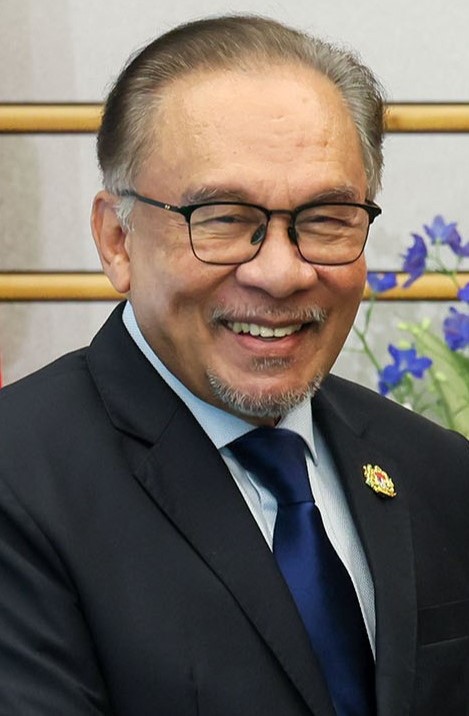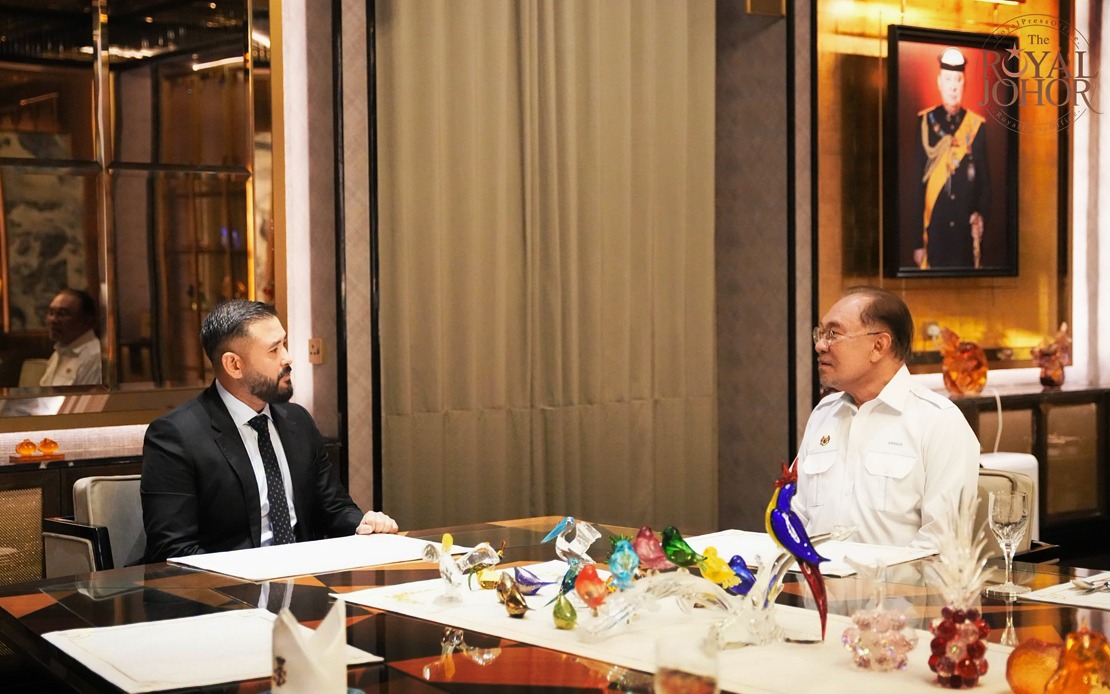
Prime Minister Datuk Seri Anwar Ibrahim seized the opportunity at a Johor state election campaign event to publicly acknowledge the courtesy extended by the Regent of Johor, Tunku Mahkota Ismail, during a recent audience in Kuala Lumpur. Speaking at the Padang Bukit Gambir Extreme Park in Tangkak on June 22, Anwar framed the encounter as a demonstration of goodwill that transcends partisan politics, signalling his administration's commitment to maintaining constructive relationships with the country's Malay Rulers regardless of political differences.
The Prime Minister used his remarks to deliver a pointed critique of opposition parties he suggested were invoking royal names and prestige in their campaign messaging without substantive engagement. Anwar's language—dismissing such tactics as "petty political campaigns"—underscored his view that the monarchy occupies a position above the fray of electoral contestation. By accepting the Regent's invitation and subsequently announcing his decision publicly, Anwar appeared intent on demonstrating that genuine royal engagement can occur on matters of governance rather than partisan advantage, thereby answering critics who question his government's relationship with Johor's traditional authority.
During the audience, Anwar explained to Tunku Mahkota Ismail the developmental initiatives his federal government has undertaken for Johor's residents. This framing shifts the discussion from abstract constitutional principles to concrete governance outcomes, suggesting that Anwar views royal engagement as an opportunity to showcase his administration's track record. The approach reflects a broader strategy of building legitimacy through results rather than rhetoric, particularly important in Johor where the royal institution commands substantial traditional authority and public deference.
Anwar's broader statement about his government's relationship with the Malay Rulers reveals an administration that presents itself as respectful of monarchical prerogatives while maintaining its own executive independence. He articulated a model of governance in which consultation, disagreement, and counter-argument occur within a framework of mutual respect. This formulation is significant for Malaysian governance, as it suggests an interpretation of constitutional monarchy that permits substantive policy debate while preserving the formal dignity and advisory role of the rulers.
The Prime Minister was deliberately emphatic about consulting with Sultan Ibrahim, the King of Malaysia, regarding policy matters. Anwar's statement that the palace "gives his views, we offer our counter views, and we listen to his advice" encapsulates a governing philosophy that treats royal input as valuable without rendering it determinative. This approach has practical relevance for a federation where state sultans retain considerable symbolic authority, particularly in matters touching Islam, Malay customary practice, and land administration.
Anwar's insistence that Pakatan Harapan maintains good relations with the Malay Rulers while accepting their "views, advice and reprimands" carries particular weight coming during a state election campaign in Johor. The Regent's state is governed by a coalition government, and royal sentiment can influence electoral dynamics through both formal constitutional mechanisms and informal social influence. By publicly expressing gratitude for the Regent's gesture, Anwar was signalling to Johor voters that his government enjoys the confidence of traditional authority figures.
The presence of senior Pakatan Harapan figures—DAP secretary-general Anthony Loke Siew Fook, Amanah president Datuk Seri Mohamad Sabu, and other coalition leaders—underscored that respect for the royal institution is not merely Anwar's personal inclination but a coalition-wide commitment. This collective expression is particularly noteworthy given that Pakatan Harapan encompasses parties with different organizational philosophies and historical relationships with traditional authority. The unified message suggests internal coalition discipline on this sensitive matter.
Anwar's remarks carry implications for how federal-state relations will develop in Malaysian governance. By emphasizing consultation, audience-seeking, and receptiveness to royal counsel, he is establishing a precedent that his administration treats the rulers' advisory function seriously. This becomes relevant for future policy disputes, constitutional interpretations, or governance disagreements between federal and state authorities. The Prime Minister is essentially signalling that controversy can be managed through dialogue rather than confrontation.
The electoral context of these statements cannot be overlooked. The announcement of Pakatan Harapan candidates for the 16th Johor state election was proceeding as Anwar publicly celebrated his relationship with Johor's Regent. This sequencing allows the coalition to campaign on the theme that it has both popular democratic legitimacy and traditional institutional legitimacy. For voters who value continuity, institutional stability, and harmony between federal and state authorities, Anwar's remarks offered reassurance that a Pakatan Harapan victory would not herald disruptive change in the balance between executive governance and traditional authority.
The broader significance extends to Southeast Asian governance patterns. Malaysia's constitutional monarchy, operating within a federal system with powerful state sultans, represents a distinctive institutional arrangement. Anwar's articulated approach—respectful engagement coupled with executive independence—models one possible framework for managing relationships between elected leadership and hereditary authority in the region. How successfully this framework operates will have relevance for other democracies grappling with traditional institutions.
For Malaysian readers, particularly those in Johor, Anwar's expressions of gratitude and his emphasis on maintaining royal-government cooperation provide substantive reassurance about governmental continuity and respect for institutional hierarchies. Whether framed as genuine principle or strategic communication, the consistency with which Anwar and his coalition emphasize this relationship suggests it will remain a defining feature of governance during his tenure as Prime Minister.