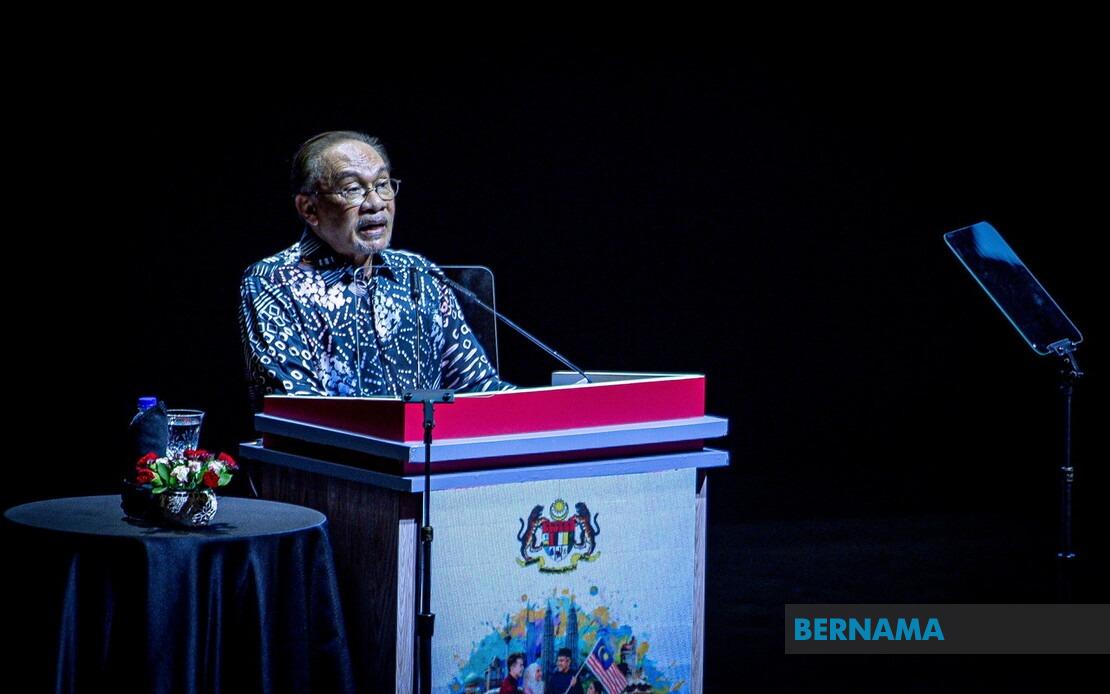
Prime Minister Datuk Seri Anwar Ibrahim announced a suite of six targeted interventions on Friday designed to provide immediate relief to Malaysian households struggling with the rising cost of living, with all measures set to commence on September 1. Speaking at the Putrajaya International Convention Centre during the 2026 National Day Prime Minister's Address, Anwar outlined initiatives spanning fuel subsidies, school maintenance programmes, artificial intelligence deployment, digital healthcare services, electronic invoicing systems and microfinance accessibility as the government's response to persistent economic pressures affecting ordinary Malaysians.
The announcement reflects a broader acknowledgment within the Cabinet that despite previous policy adjustments, significant financial strain continues to weigh on families across the nation. Deputy Prime Minister Datuk Seri Dr Ahmad Zahid Hamidi, Communications Minister Datuk Seri Fahmi Fadzil and senior government officials including Chief Secretary Tan Sri Shamsul Azri Abu Bakar attended the address, underscoring the administration's commitment to the initiative. Anwar emphasised that the government remains acutely aware of ongoing hardship, particularly for schoolchildren, students, housewives and working mothers who bear disproportionate burdens from inflation and reduced household purchasing power.
The fuel subsidy component addresses one of the most direct and visible pressures on household budgets. Petrol and diesel costs have historically driven inflation across multiple sectors, affecting transport expenses, food prices and manufacturing inputs. By maintaining subsidised rates, the government aims to create a stabilising effect that prevents cascading price increases throughout the economy. This measure particularly benefits lower and middle-income earners who allocate substantial portions of monthly income to fuel and transportation, as well as commercial vehicles and public transport operators whose operational costs directly influence consumer prices.
The school maintenance programme targets an often-neglected area of educational infrastructure. Malaysian schools frequently face deteriorating facilities due to budget constraints, creating learning environments that disadvantage students from disadvantaged backgrounds. Enhanced maintenance funding signals commitment to ensuring all students, regardless of socioeconomic status, access adequately maintained institutions. This initiative acknowledges education's foundational role in breaking poverty cycles and its correlation with long-term economic mobility for vulnerable populations.
Healthcare digitalisation represents a strategic modernisation effort with profound implications for accessibility and efficiency. By deploying digital systems across the healthcare landscape, the government can reduce administrative burden on medical facilities, lower patient wait times and improve data accuracy. For Malaysians reliant on public healthcare systems, digitalisation promises faster appointment booking, streamlined pharmaceutical access and better disease tracking. The initiative also positions Malaysia's healthcare sector for technological advancement while reducing operational costs that ultimately influence service quality.
The artificial intelligence inclusion in the package demonstrates forward-looking economic policy. Rather than limiting relief measures to immediate consumption support, the government is investing in technological capabilities that enhance productivity and competitiveness. AI implementation across various sectors can optimise resource allocation, reduce wasteful processes and create higher-value employment opportunities. This bridges short-term relief with medium-term structural improvements in economic efficiency.
Electronic invoicing standardisation simplifies business operations, particularly for small and medium enterprises that represent Malaysia's entrepreneurial backbone. Streamlined invoicing reduces administrative complexity, accelerates cash flow cycles and improves tax compliance. These efficiencies translate to lower business costs, which companies can partially pass to consumers through competitive pricing. For microbusinesses operating with limited resources, e-invoicing reduces the burden of manual record-keeping and regulatory compliance, enabling proprietors to focus on revenue-generating activities.
The microfinancing component directly addresses financing constraints facing aspiring entrepreneurs and small business operators. Malaysia's microfinance sector, though developed, continues to underserve segments of the population excluded from traditional banking channels. Enhanced microfinance accessibility enables individuals to initiate income-generating activities, gradually building wealth and reducing dependency on social support systems. This measure acknowledges that sustainable relief requires enabling productive capacity, not merely distributing temporary assistance.
Anwar's characterisation of these measures as "temporary relief" warrants consideration. The language suggests the government recognises these interventions as bridging mechanisms rather than structural solutions to cost of living challenges. Underlying pressures including global commodity price volatility, currency exchange dynamics and structural economic constraints extend beyond any single policy package's scope. The temporary framing may reflect realistic assessment of what targeted measures can achieve within government's fiscal and administrative capabilities.
The timing around National Day carries symbolic weight beyond mere administrative convenience. Positioning cost-of-living relief announcements during national celebration periods associates government responsiveness with patriotic duty and collective welfare. This communication strategy attempts to frame economic management as fulfilling national obligations to citizen wellbeing, reinforcing social contract concepts.
For Southeast Asian context, Malaysia's approach demonstrates how middle-income nations balance immediate relief provision with longer-term structural improvements. Unlike wealthy economies with substantial fiscal buffers or developing economies focusing purely on basic needs, Malaysia must navigate simultaneous demands for social support and competitive positioning. The package's technological components including AI and healthcare digitalisation reflect efforts to boost productivity alongside consumption support, a balancing act increasingly central to regional competitiveness.
The measures' real impact will emerge only through implementation monitoring. Fuel subsidy effectiveness depends on preventing smuggling and maintaining appropriate subsidy levels. Healthcare digitalisation requires substantial technical infrastructure investment and user adoption across fragmented systems. Microfinance accessibility depends on administrative efficiency and appropriate credit risk assessment. These implementation challenges often determine whether policy intentions translate to genuine relief for intended beneficiaries. The coming months will reveal whether these six measures achieve their stated objectives or require further refinement and additional support.

