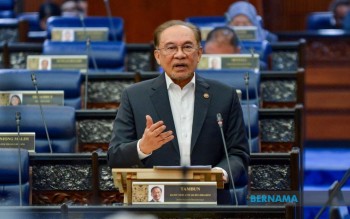
Prime Minister Datuk Seri Anwar Ibrahim has made clear that the government will tolerate no wrongdoing whatsoever in connection with the Retirement Fund (Incorporated) (KWAP) investment decision regarding eFishery, a start-up focused on aquaculture technology. Speaking during parliamentary proceedings this week, Anwar underscored the administration's commitment to maintaining the integrity of retirement savings managed by public institutions, stating unequivocally that any hint of corrupt practices or fraudulent activity would trigger swift and serious consequences.
While initial assessments have suggested no impropriety occurred in the transaction, Anwar has instructed the Malaysian Anti-Corruption Commission (MACC) to conduct a thorough probe into every aspect of the investment process. The Prime Minister, who also holds the Finance Ministry portfolio, emphasized that this precautionary step reflects the government's broader determination to safeguard public trust in how national retirement funds are deployed, particularly given the high stakes involved in managing assets belonging to millions of Malaysian workers.
Anwar revealed that he has personally engaged with KWAP's leadership to stress the paramount importance of their full cooperation throughout the investigation. His direct involvement underscores how seriously the administration views the matter and signals that no institutional barriers will shield any wrongdoers from accountability. The Prime Minister's willingness to intervene at this level suggests concerns about the investment decision may run deeper than initially reported, even as he cautiously noted that preliminary findings do not yet point to corrupt elements.
The focus of the MACC investigation will extend beyond the initial investment approval to encompass the entire chain of decision-making, including the deliberations of the investment panel and the subsequent endorsement by KWAP's board. This comprehensive approach reflects recognition that corruption can infiltrate the process at multiple junctures, whether through the initial proposal stage, due diligence procedures, panel recommendations, or final board ratification. By casting the investigative net widely, the government hopes to either definitively clear the investment process or identify systemic vulnerabilities that enabled improper conduct.
The eFishery investment has drawn scrutiny amid broader questions about how Malaysia's sovereign retirement funds allocate capital in an increasingly complex global landscape. The company operates in the aquaculture technology sector, a domain that presents both significant growth opportunities and elevated risks, particularly for institutional investors managing funds on behalf of individual account holders. The decision to invest KWAP resources in a start-up venture, rather than more established vehicles, has prompted legitimate questions about risk assessment and governance protocols.
Anwar's comments came in response to parliamentary inquiries about how Malaysia's two major retirement funds, KWAP and the Employees Provident Fund (KWSP), can deliver optimal returns to members while navigating mounting geopolitical tensions and economic volatility worldwide. The question touched on a nerve among policymakers and fund managers alike, who face the unenviable task of balancing the imperative for growth against the need for prudent capital stewardship. The eFishery situation has become emblematic of these competing pressures and the governance challenges they create.
Senators also raised concerns about the government's broader investment selection process and what safeguards exist to protect ordinary Malaysians' retirement money from poor allocation decisions. These questions reflect a deeper anxiety about transparency and accountability in how public institutions deploy worker contributions. The government must demonstrate not only that it investigates wrongdoing retroactively but also that it has robust frameworks in place to prevent improper decisions from being made in the first place.
The KWAP investment process, like similar decisions at other major fund managers globally, typically involves multiple approval stages designed to function as checks and balances. Investment committees assess opportunities against established criteria, conduct due diligence, and make recommendations to boards comprising external and internal directors. When a company like eFishery attracts institutional capital, questions naturally arise about whether all parties in the decision chain acted with appropriate rigour and independence. The investigation will likely examine whether panel members had conflicts of interest, whether due diligence was adequately thorough, and whether the investment aligned with KWAP's mandate and risk tolerance.
For Malaysian workers and retirees who depend on KWAP and KWSP for their retirement security, Anwar's firm stance provides some reassurance that their interests will not be sacrificed to protect institutional reputations or powerful interests. Yet the episode also highlights the vulnerability of retirement savings to governance lapses and the need for continuous vigilance. Malaysia's experience mirrors global concerns about how pension funds sometimes make questionable investment decisions that ultimately transfer wealth from ordinary savers to a narrow circle of beneficiaries.
The investigation represents a test of whether Malaysia's institutional safeguards actually function as intended or whether they prove merely cosmetic when significant money is at stake. The MACC's findings will carry implications far beyond the eFishery transaction, potentially influencing how other public institutions approach future investment decisions and whether they face heightened scrutiny. If the investigation uncovers impropriety, it could catalyze broader reforms to investment governance across Malaysia's public sector.
Anwar's uncompromising rhetoric also reflects political calculation. With public confidence in institutions already strained by previous scandals, the government must demonstrate that it takes fiduciary breaches seriously. The Prime Minister's personal involvement and his explicit warnings against wrongdoing send a signal both to potential bad actors and to the Malaysian public that the administration recognises the gravity of safeguarding retirement funds. Whether this translates into meaningful institutional reform or remains largely symbolic will depend on the investigation's trajectory and any ensuing consequences.

