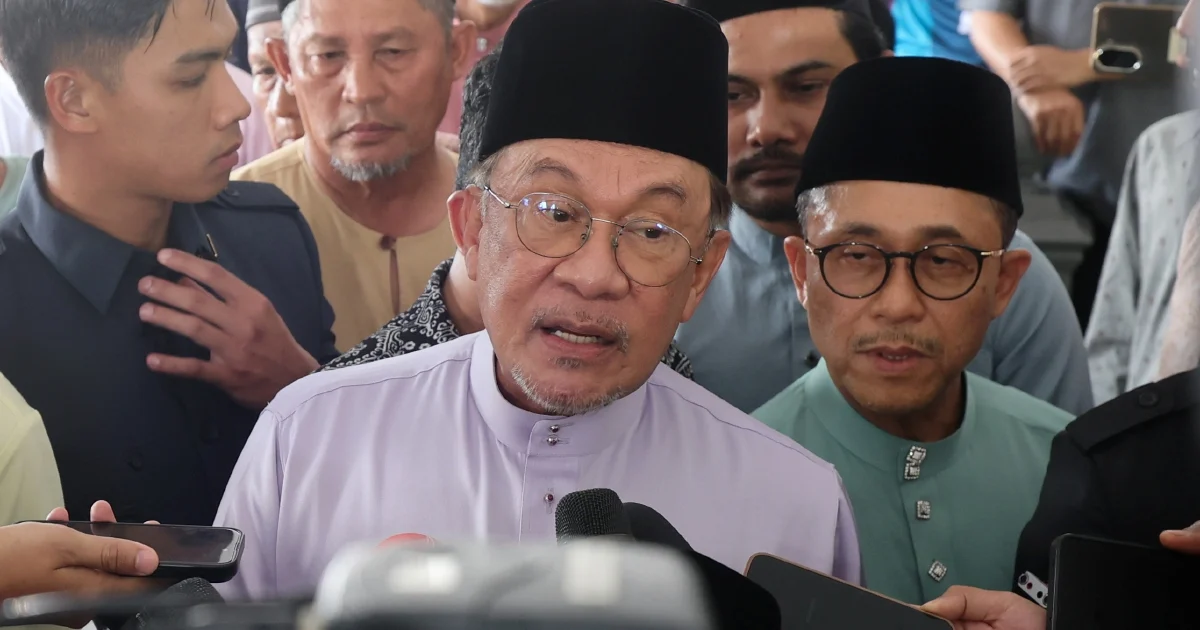
Prime Minister Datuk Seri Anwar Ibrahim has moved to reassure Malaysia's non-Muslim communities that the government's agenda to enhance the Syariah court framework will proceed without encroaching on their fundamental religious liberties. Speaking in Putrajaya, the premier emphasised that institutional strengthening of the Islamic judicial system operates within constitutional boundaries that safeguard the rights of all Malaysians regardless of faith.
The clarification comes as the administration progresses with plans to elevate the standing and capacity of Syariah courts, a development that has prompted scrutiny from non-Muslim groups and observers concerned about potential jurisdictional creep. Malaysia's dual legal system—comprising civil and Syariah courts with defined spheres of operation—has been a recurring flashpoint in national discourse, with periodic proposals to expand Islamic court authority generating tension between different religious communities.
Anwar's statement reflects an attempt to build consensus around judicial reform while acknowledging the sensitivities inherent in any initiative touching religion and law. The prime minister's reassurance underscores a delicate political balance in a constitutionally secular federal system with Islam as the religion of the federation. The Federation provides explicit constitutional protection for non-Muslim citizens to administer their own religious affairs and practise their faiths, a provision that has been central to Malaysia's plural society since independence.
The timing of such public assurances is strategically significant for the administration, which has faced periodic challenges in maintaining cohesion among its diverse coalition partners. Non-Muslim members of parliament and civil society organisations have consistently monitored proposals affecting Islamic law, wary of incremental shifts in judicial authority that could indirectly impact civil law or family law matters affecting citizens of all faiths. The prime minister's intervention appears designed to prevent these concerns from destabilising the coalition's unity.
Syariah courts in Malaysia currently exercise jurisdiction over Muslims in matters of personal law including marriage, divorce, inheritance, and wakaf (religious endowments). Their authority is constitutionally circumscribed and operationally separate from civil courts, though coordination between the two systems occasionally presents practical challenges. Proposals to strengthen these courts typically focus on increasing funding, modernising facilities, enhancing judicial training, and clarifying procedural matters to improve case management and reduce backlogs.
The government's reform agenda reflects broader recognition that Malaysia's Syariah judicial infrastructure requires updating to meet contemporary standards. Court buildings in several states require renovation, case processing timelines have grown lengthy, and judges need access to enhanced professional development opportunities. These are ostensibly technical improvements aimed at functional efficiency rather than jurisdictional expansion, yet even institutional elevation can trigger apprehension given the historical context of debates over religious authority in Malaysia.
For non-Muslim Malaysians—comprising approximately 40 percent of the population—the constitutional framework guaranteeing their religious autonomy remains paramount. Christian, Buddhist, Hindu, and Sikh communities maintain their own dispute resolution mechanisms for internal religious matters, and they expect the state to remain neutral in promoting any single faith. Any perceived shift toward privileging Islamic institutions disproportionately could fracture the careful constitutional compromise that has underpinned Malaysia's religious coexistence.
Anwar's coalition government includes significant non-Muslim representation, and maintaining their confidence is essential for legislative stability. The Prime Minister's explicit statement therefore serves multiple audiences: reassuring non-Muslim citizens and their representatives that reforms remain bounded, signalling to Islamic constituencies that the government remains committed to strengthening the faith's institutional framework, and projecting the image of a government capable of managing plural interests without favouring any single community.
The substance of proposed Syariah court enhancements remains fluid and subject to ongoing consultation with stakeholders across religious communities. Details regarding specific legislative amendments, budgetary allocations, or changes to procedural rules have not yet been formally tabled, allowing space for dialogue before formal proposals crystallise into contentious parliamentary debate. This consultative approach, if genuine, could help prevent the adversarial positioning that has characterised previous constitutional discussions touching religion and law.
Moving forward, the government faces the challenge of advancing legitimate institutional improvements to the Islamic judicial system while maintaining the constitutional protections non-Muslim citizens depend upon. The success of this balancing act will significantly influence social cohesion and the continued viability of Malaysia's pluralistic political arrangement. For the broader Southeast Asian context, where multiple nations grapple with similar questions of religious autonomy and state neutrality, Malaysia's handling of this issue carries instructive weight about managing religious plurality in constitutionally secular democracies.

