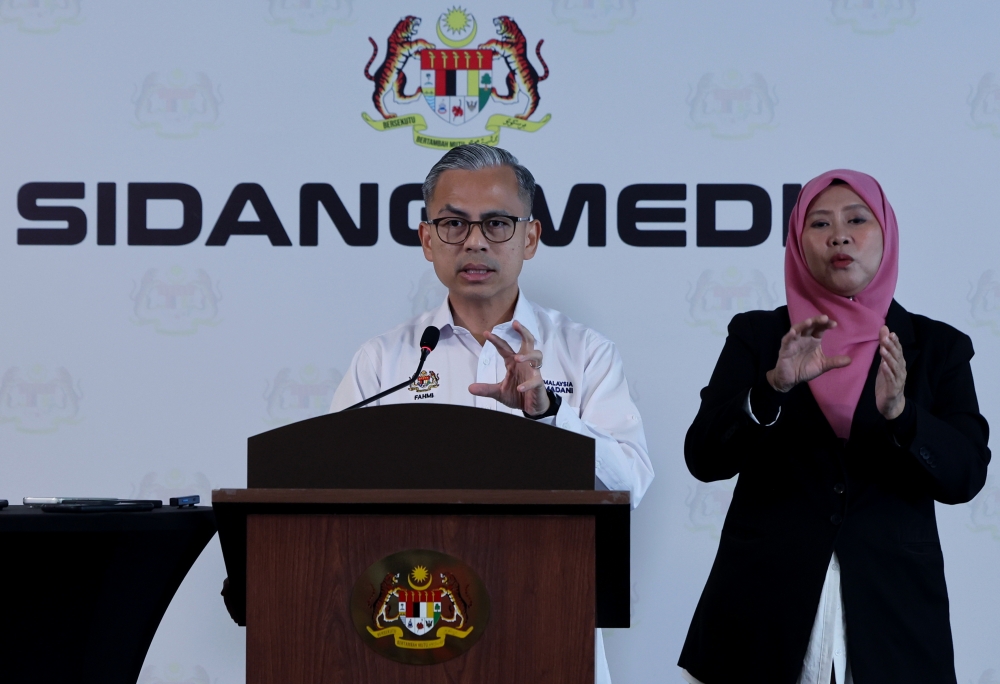
Prime Minister Datuk Seri Anwar Ibrahim has issued a directive to the Ministry of Human Resources to hasten the examination and approval of 15,000 pending foreign worker applications, according to a statement from Communications Minister Fahmi Fadzil. The move reflects mounting pressure on the government to address significant workforce shortages that have constrained growth in sectors ranging from manufacturing to hospitality and domestic care. The accelerated timeline underscores the administration's recognition that delays in foreign labour clearance have begun undermining competitiveness and economic expansion across various industries.
The decision comes as Malaysian businesses have increasingly flagged the bottleneck in approving foreign workers, with numerous employers reporting extended waiting periods that have complicated hiring plans and operational efficiency. The 15,000 applications represent a substantial backlog that has accumulated despite the country's established mechanisms for recruiting migrant labour. By ordering expedited processing, the Prime Minister is signalling that administrative efficiency in labour approvals has become a cabinet-level priority, moving beyond typical ministry-level management. Fahmi's announcement via the Communications Ministry suggests the directive carries significant political weight and is intended for broad public acknowledgement.
Malaysia's dependence on foreign workers has grown considerably over recent years, particularly as demographic trends and education patterns have shifted the domestic labour supply. While some constituencies continue to advocate for stricter limits on migrant workers to protect local employment, the broader business community and major industries have consistently warned that labour shortages would dampen economic prospects and technological adoption. The government faces the delicate task of balancing these competing interests whilst ensuring that approval processes remain rigorous enough to protect worker standards and combat exploitation. The current backlog suggests that administrative capacity—rather than policy resistance—may have become the binding constraint on foreign labour movement into Malaysia.
The healthcare, hospitality, construction, and manufacturing sectors have been particularly vocal about labour scarcity, with some reporting unfilled vacancies that persist despite attempted recruitment efforts. Domestic helper shortages have also emerged as a significant concern for middle-class households and elderly care facilities. These sectoral pressures, multiplied across thousands of employers nationwide, have likely prompted the Prime Minister's intervention. The 15,000 figure, while substantial, may represent only a portion of outstanding applications, suggesting additional waves of processing acceleration may follow if initial targets are met.
The Human Resources Ministry, formally known as Kesuma, will now operate under a compressed timeline to verify credentials, conduct background checks, and issue approvals for the expedited batch. This effort requires coordination between multiple government agencies, including immigration authorities, labour inspectorates, and sectoral regulators, to ensure that speed does not compromise either security protocols or labour protections. The ministry's capacity to deliver results will serve as a barometer for the government's ability to translate high-level directives into operational improvements—a critical test given Malaysia's ongoing reputation challenges regarding migrant worker treatment and rights enforcement.
Regional competitors, particularly Thailand and Vietnam, have worked to streamline their own foreign worker recruitment processes in recent years, sometimes with more favourable terms for employers. Malaysia's previous reputational challenges in labour compliance have made it essential for the country to maintain credible oversight mechanisms even as it accelerates approvals. A poorly managed rush to clear applications could reintroduce compliance failures that have historically subjected Malaysia to international criticism and potential sanctions. The government's challenge is to demonstrate that expedited processing is compatible with maintained standards.
For Malaysian employers and investors, the directive signals that labour accessibility will remain a policy priority throughout the current administration's tenure. This messaging may influence capital allocation decisions, particularly for firms considering whether to expand operations domestically or relocate to jurisdictions with more flexible labour regimes. Manufacturing companies, in particular, may recalibrate their investment timelines based on how quickly the foreign worker application queue is reduced. The symbolic importance of the Prime Minister's personal involvement should not be underestimated—it conveys that labour market functionality ranks among top-tier governance concerns.
The timing of the announcement also reflects broader economic pressures facing Southeast Asia as global growth moderates. Malaysia, as a mid-income economy with significant reliance on exports and tourism, cannot afford sustained productivity drags from labour constraints. The 15,000 applications represent untapped productive capacity that, once mobilised, could contribute measurably to output growth and tax revenue. From a macroeconomic perspective, clearing this backlog is as much about economic stimulus as it is about responding to immediate sectoral demands.
Looking forward, the government's capacity to execute this directive efficiently will likely inform subsequent policy decisions regarding foreign worker quotas, sectoral allocations, and intake mechanisms. If the accelerated processing succeeds in reducing wait times without compromising oversight, the precedent may encourage expansion of annual foreign worker recruitment targets in coming years. Conversely, if the effort reveals capacity constraints or creates new bureaucratic bottlenecks, the experience could reshape thinking about how Malaysia structures its entire foreign labour admission system. The 15,000 applications thus represent not merely administrative clearing work, but a potential inflection point in how the government manages its relationship with the migrant labour economy.

