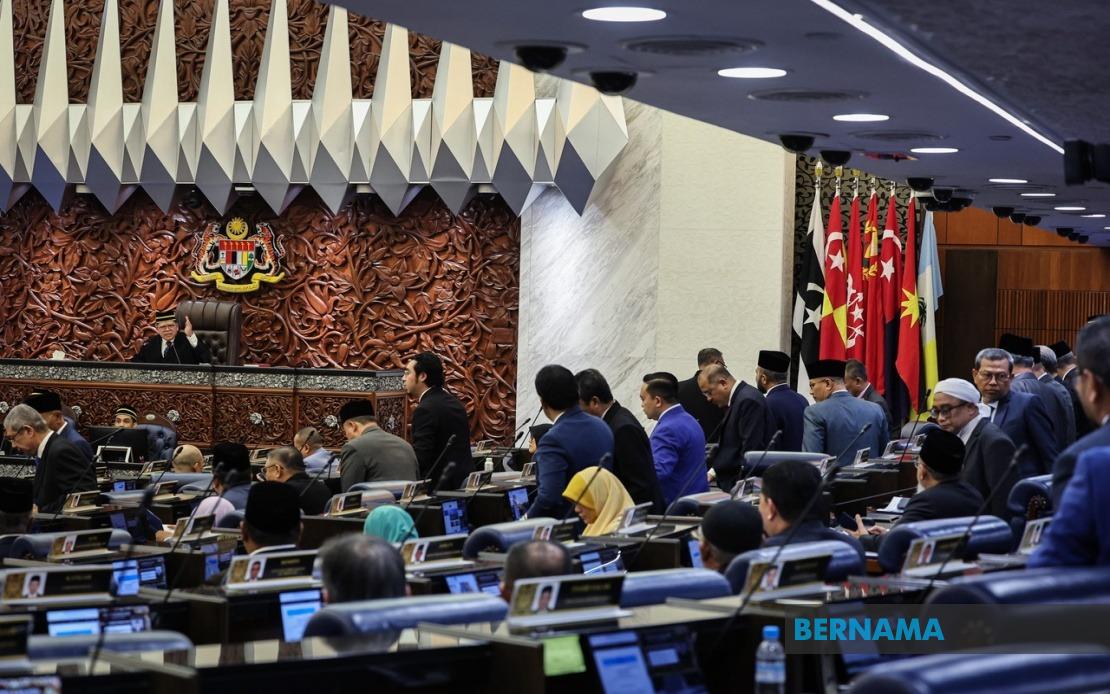
The Prime Minister's non-attendance at Parliament's special sitting to debate the Royal Commission of Inquiry report on Tabung Haji should not serve as justification for MPs to abandon their parliamentary duties, according to Tengku Datuk Seri Zafrul Tengku Abdul Aziz, the Prime Minister's Senior Political Adviser. His remarks came in response to the decision by several lawmakers to stage a walkout during the sitting, which was convened specifically to discuss the 211-page RCI report into the fund's operations.
In a statement posted on social media, Tengku Zafrul highlighted the significance of the matter at hand, noting that the parliamentary session concerned Muslim savings deposited with Tabung Haji rather than serving as a personal forum for scrutinising the Prime Minister's conduct. He emphasised that lawmakers have a responsibility to remain engaged with substantive policy issues regardless of whether the head of government is physically present in the chamber. His intervention underscores an ongoing tension within Parliament regarding the distinction between partisan opposition and serious legislative oversight.
Opposition figures, including Perikatan Nasional leader Datuk Seri Hamzah Zainudin, chose to exit the Dewan Rakyat while the RCI findings were being explained by Minister in the Prime Minister's Department (Religious Affairs) Dr Zulkifli Hasan. The walkout also included PN chief whip Datuk Seri Takiyuddin Hassan and party chairman Datuk Seri Dr Samsuri Mokhtar, suggesting a coordinated stance among the opposition coalition rather than isolated individual decisions. This collective departure highlighted deep divisions within the legislature over how Parliament should engage with contentious governance issues.
Tengku Zafrul called upon MPs to exercise their parliamentary prerogatives with greater responsibility, urging them to utilise the opportunity for rigorous questioning and factual debate rather than performative gestures. He contended that if lawmakers believed certain government actions were misguided, they possessed multiple avenues for dissent within the chamber—from raising critical queries to launching substantive rebuttals grounded in evidence. His argument attempted to redirect the discussion from what he characterised as empty political theatre toward substantive parliamentary discourse.
The adviser's remarks carry particular weight given the magnitude of the Tabung Haji issue within Malaysia's economic and social landscape. The fund represents one of the most significant mechanisms through which Malaysian Muslims accumulate savings, with hundreds of thousands of contributors depending on its financial soundness and transparent governance. The RCI report, which examined TH's management and operational decisions spanning 2014 to 2020, thus touches upon wealth preservation for a substantial segment of the Malaysian population, extending beyond partisan political considerations.
The government's decision to make the RCI report publicly available on July 29, after initially considering its classification as confidential, reflected broader pressure for transparency regarding the fund's troubled history. That decision represented a significant acknowledgment that matters affecting millions of Malaysians' retirement security demanded open parliamentary and public scrutiny. By walking out during the debate, opposition MPs arguably surrendered an opportunity to place crucial questions on the official legislative record regarding how funds were mismanaged and what safeguards would prevent future failures.
Tengku Zafrul's intervention essentially articulated a defence of parliamentary procedures and institutional norms in the face of what he characterised as insufficient legislative diligence. His position suggested that opposition parties bore responsibility not merely for contrasting sharply with government policies, but for engaging seriously with matters of national importance, particularly those affecting vulnerable economic constituencies. The broader implication was that parliamentary walkouts, while politically dramatic, potentially serve the interests of neither the opposition nor the constituents whose welfare the legislature ostensibly protects.
The special parliamentary sitting represented a notable institutional moment for Malaysian governance. Rather than relegating the RCI findings to a ministerial briefing room or cabinet discussion, Parliament had opened its proceedings to examine a report concerning mismanagement affecting millions of ordinary Malaysians. This transparency mechanism, though limited compared to some democratic jurisdictions, demonstrated at least nominal commitment to legislative oversight of major governance failures. The opposition's decision to absent itself potentially undermined the legitimacy and efficacy of this transparency exercise.
Since the collapse of Tabung Haji's investment in Felda Global Ventures and subsequent revelations of questionable fund management decisions, Malaysian Muslims and the broader public have maintained significant interest in accountability mechanisms. The RCI represented one such institutional response to demands for explanation. Whether such inquiries produce meaningful reform depends partly on whether Parliament treats their findings with appropriate seriousness rather than as fodder for partisan positioning. Tengku Zafrul's argument implicitly called for MPs to rise above short-term tactical calculations toward engagement with long-term institutional credibility.
The Tabung Haji controversy exemplifies the broader challenges facing Malaysia's governance structures when major institutional failures intersect with religious, communal, and socioeconomic sensitivities. The fund's troubled history has raised questions not merely about administrative competence but about whether systems designed to serve Muslim economic interests have adequately protected beneficiaries. For Malaysian and Southeast Asian observers, this case study illustrates how institutional design and parliamentary oversight mechanisms prove critical for protecting vulnerable constituencies from financial mismanagement masked by claims of religious or communal purpose.
Moving forward, the RCI report's parliamentary examination will likely determine whether the inquiry produces substantive reform or merely becomes another document filed away after perfunctory discussion. Opposition engagement, despite partisan disagreements, would have strengthened the legislative process and placed critical questions on the permanent parliamentary record. By contrast, the walkout risks reinforcing public perceptions that MPs prioritise partisan advantage over serious engagement with issues affecting millions of ordinary Malaysians' financial security and retirement prospects. The coming months will reveal whether Parliament subsequently translates the RCI findings into meaningful legislative or regulatory changes.

