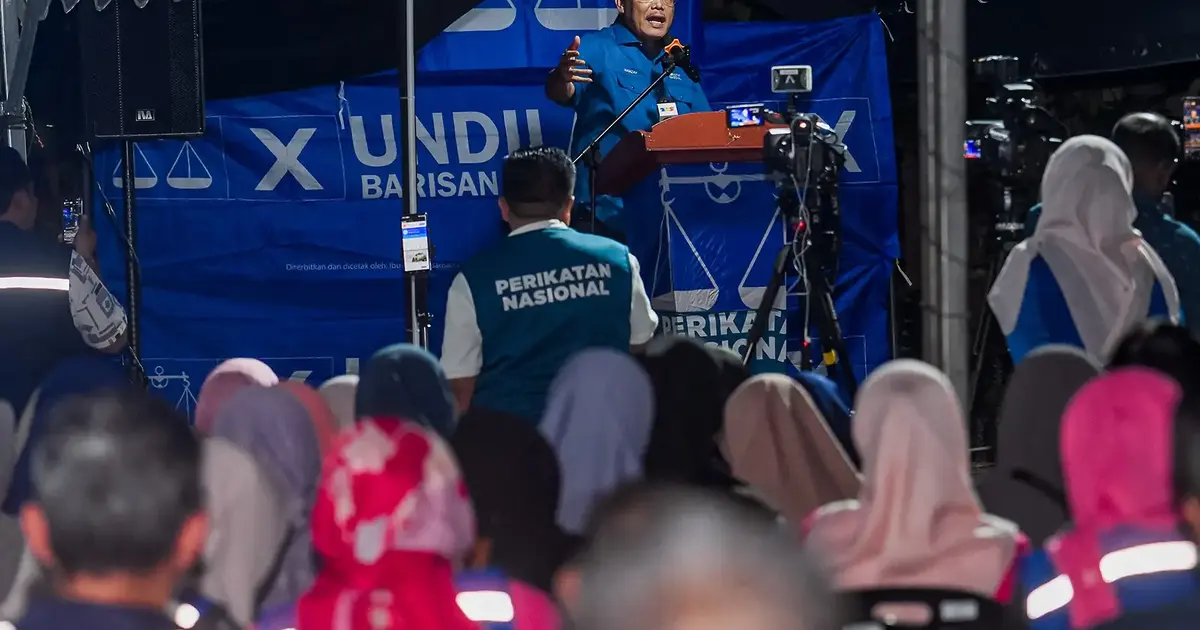
Perikatan Nasional has consented to allow Barisan Nasional to assume the helm of the Negeri Sembilan state administration should their joint electoral alliance secure victory in the August 1 election, according to Perikatan's president. This arrangement represents a carefully calibrated power-sharing agreement between two major political coalitions that have competed against each other in recent electoral contests.
The proposition to rename the combined political entity "Perikatan Barisan Nasional" reflects efforts to create a unified brand identity for what amounts to a significant realignment in Malaysian politics. Rather than operating as rival organisations, the two coalitions are attempting to present themselves as a single political force to voters in Negeri Sembilan, potentially signalling their intention to collaborate beyond this single state election.
This development holds particular importance for Southeast Asia's largest ASEAN economy, as Negeri Sembilan occupies a strategic position in Malaysian federal politics. The state has historically served as a political bellwether, and control of its government can influence broader political calculations at the national level. Should this pact succeed, it would demonstrate that Perikatan Nasional and Barisan Nasional, despite their recent competitive posture, remain capable of reconciling their differences for electoral advantage.
The willingness of Perikatan Nasional to cede the chief minister position to Barisan Nasional suggests that the coalition may be pursuing a longer-term consolidation strategy rather than maximizing immediate gains. This approach indicates pragmatic political calculation, recognising that maintaining unity may prove more valuable than contending for symbolic victory in a single state election. The concession also implies that Perikatan Nasional anticipates receiving meaningful ministerial positions and policy influence within a Barisan Nasional-led government.
For Malaysian voters, particularly those in Negeri Sembilan, this arrangement creates new considerations when approaching the ballot. Constituents must now evaluate whether they prefer representation under a combined Perikatan Barisan Nasional government or whether they wish to support alternative political groupings. The naming convention itself may prove crucial in how voters perceive the legitimacy and coherence of this coalition, particularly in communities where one partner or the other has deeper historical roots.
The timing of this announcement, made ahead of the August 1 election, provides both coalitions with opportunity to consolidate support before campaigning intensifies. By presenting a unified front immediately, they attempt to signal strength and inevitability, potentially discouraging supporters of rival parties from investing resources in Negeri Sembilan. This preemptive framing also allows the coalition partners to negotiate campaign narratives from a position of apparent unity rather than managing perceptions of internal disagreement.
Barisan Nasional's historical dominance in Negeri Sembilan provides an important advantage within this framework. The coalition carries significant organisational infrastructure and voter loyalty accumulated over decades of governance. By maintaining Barisan Nasional as the public-facing leadership entity, the combined pact can tap into existing networks and voter preferences while simultaneously broadening its base through Perikatan Nasional's supporters and grassroots organisations.
Penikatan Nasional's acceptance of a secondary role in Negeri Sembilan contrasts sharply with its more assertive positioning in other states, suggesting sophisticated political calculation tailored to specific regional contexts. The coalition appears willing to adapt its approach based on electoral mathematics and historical political geography, prioritising victory over rigid consistency in approach. This flexibility could serve as a template for coalition management in other contested electoral contests.
The proposed "Perikatan Barisan Nasional" nomenclature warrants closer examination as an indicator of longer-term political intentions. Rather than simply cooperating for this election, the naming suggests consideration of more permanent or extended arrangements between these coalitions. Such developments could reshape Malaysia's political landscape, potentially reducing the number of major competitive blocs and creating new organisational dynamics at federal level.
For observers monitoring Malaysian political stability, this coalition arrangement demonstrates both the fluidity and pragmatism that characterises the country's political system. Traditional rivals can rapidly recalibrate their relationship in response to electoral circumstances, though such arrangements necessarily raise questions about ideological consistency and long-term party positioning. The Negeri Sembilan experiment will likely provide valuable data about whether disparate political coalitions can maintain cohesion beyond election day.
Regional observers note that such coalition arrangements are not uncommon across Southeast Asia, where pragmatic political calculations frequently override ideological differences or historical antagonisms. The Malaysian approach, however, combines this pragmatism with democratic electoral competition, creating a system where coalitions must regularly justify their arrangements to voters and remain responsive to popular preferences regarding governance quality and policy direction.

