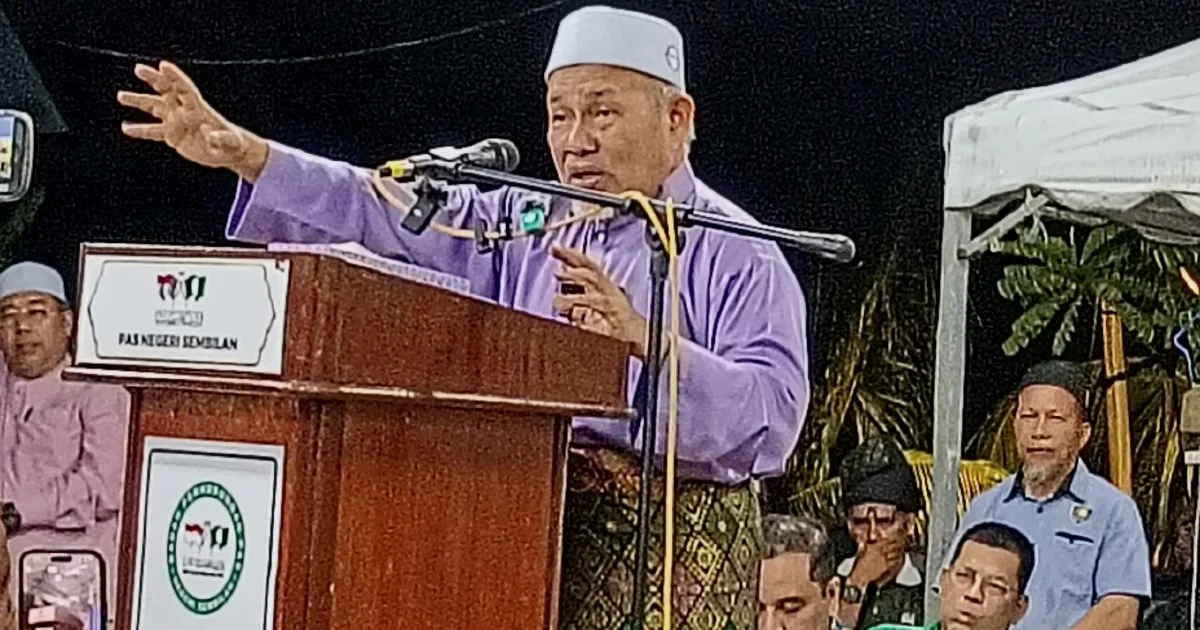
The ownership structure of Perikatan Nasional has become a point of contention within Malaysia's political landscape, with Pas deputy president Datuk Seri Tuan Ibrahim Tuan Man publicly challenging assertions that the coalition functions under Bersatu's singular control. His intervention signals deeper tensions within the opposition alliance regarding leadership authority and the distribution of political power among member organisations.
Tuan Ibrahim's statement represents a direct pushback against what appears to be Bersatu's attempts to consolidate organisational authority within the broader PN framework. The distinction between sole ownership and collective stewardship carries significant practical implications for how decisions are made, resources are allocated, and strategic direction is determined across the coalition's member parties. This clarification suggests that other parties, particularly Pas as the largest component by membership, view themselves as equal stakeholders rather than subordinate entities within the arrangement.
The coalition structure that comprises PN has evolved considerably since its initial formation. Beyond Pas and Bersatu, the alliance encompasses several smaller parties and independent lawmakers who have aligned themselves with the opposition bloc. This multiparty composition theoretically creates a more robust political formation capable of drawing support from diverse voter bases across different regions and demographic segments. However, it also introduces complexity into decision-making processes and necessitates consensus-building among parties with sometimes competing interests and ideological perspectives.
For Malaysian political observers, the debate over PN's ownership reflects broader questions about how opposition coalitions maintain cohesion while respecting the autonomy of member parties. The framework differs fundamentally from the ruling coalition model, where one party historically dominated decision-making structures. Opposition alliances must negotiate power-sharing arrangements that satisfy all partners while projecting sufficient unity to present a credible alternative government. The challenge intensifies when one member perceives itself as the dominant force and attempts to impose its vision on the broader coalition.
Pas, as an Islamic party with extensive grassroots organisation and significant parliamentary representation, commands considerable leverage within PN negotiations. The party brings not only numerical strength in legislative seats but also access to voting blocs in key states and constituencies where its political machinery remains influential. Any attempt by Bersatu to marginalise Pas's role would therefore provoke resistance grounded in substantive political power, not merely principles of coalition etiquette. Tuan Ibrahim's intervention underscores Pas's willingness to defend its standing within the partnership publicly when necessary.
The timing of this dispute deserves scrutiny within the context of Malaysia's broader political trajectory. Recent developments have seen various attempts to reshape coalition alignments, with different parties exploring alternative partnerships depending on changing circumstances and electoral calculations. Coalitions remain inherently fragile arrangements, sustained by mutual interest rather than deep institutional integration. When member parties perceive that their interests are being subordinated or marginalised, tensions surface quickly and can escalate into conflicts that threaten the entire formation's stability.
Bersatu's apparent position, that it possesses primary ownership of PN, may reflect its historical role in initiating the coalition or its status as the party holding the Prime Minister's position when the current government took office. However, political ownership in Malaysia's context extends beyond founding status to encompass ongoing contributions, electoral performance, and organisational capacity. Pas would argue, reasonably, that its contributions across these dimensions entitle it to equal rather than subordinate status within decision-making structures.
The implications of this dispute extend beyond internal coalition management to broader Southeast Asian political dynamics. Opposition alliances across the region face similar challenges in balancing unity with maintaining the distinct identities and interests of component parties. How PN resolves questions of ownership and authority will likely influence how other regional opposition movements structure their own arrangements. The outcome may establish precedents regarding power distribution within multiparty coalitions facing dominant ruling parties.
For the Malaysian electorate, such disputes carry practical consequences regarding which coalition can effectively govern and implement policies. Voters evaluating opposition alternatives naturally assess whether member parties can subordinate internal disagreements sufficiently to execute a coherent governance agenda. Public disputes over ownership and control inevitably raise questions about operational capacity and the likelihood of coalition stability in a post-election environment. These perceptions influence electoral calculations, particularly among swing voters in marginal constituencies.
Tuan Ibrahim's clarification likely represents only an opening volley in what may become a more sustained discussion about PN's organisational structure. The statement signals that Pas intends to defend its institutional position actively rather than acquiescing to any perceived Bersatu dominance. How the coalition navigates this tension, whether through formal restructuring of decision-making mechanisms or through informal understandings between party leaders, will shape its trajectory through upcoming electoral cycles and beyond.
The broader question of coalition legitimacy remains unresolved. In Malaysia's political system, coalitions succeed when their component parties genuinely perceive themselves as equal partners working toward shared objectives rather than as junior partners subordinate to a dominant force. Pas's assertion of PN's collective ownership suggests the party understands this fundamental reality. Whether Bersatu accepts this framing or continues asserting primary control will determine whether PN functions as a genuine multiparty alliance or degenerates into an unstable arrangement prone to defections and fractures.