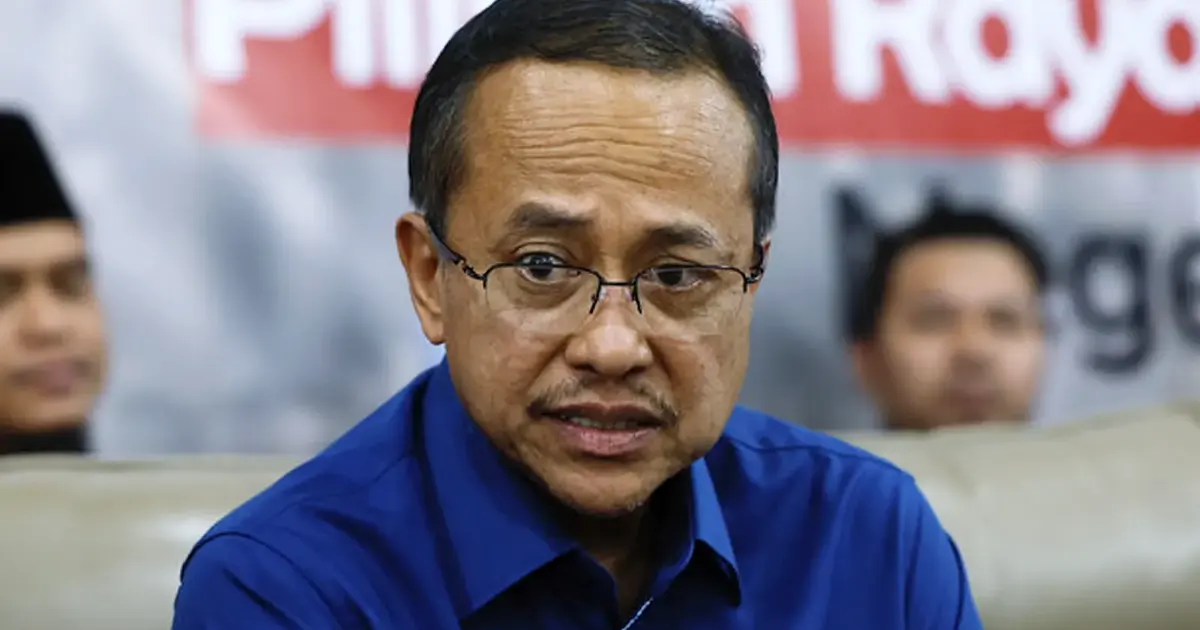
Coalition politics in Malaysia has grown more complex with the emergence of the Perikatan Nasional alliance, and questions about party branding have begun surfacing as the bloc prepares for electoral contests. Samsuri, the coalition chairman, has stepped forward to address mounting concerns about the potential for public confusion stemming from the fact that both PAS and Bersatu—two major components of PN—are permitted to campaign under the shared coalition logo during elections.
The reassurance comes as political observers and analysts have raised legitimate questions about how voters might interpret dual use of the same symbol by different parties competing under a unified banner. In Malaysian electoral history, such arrangements have occasionally proven problematic, particularly in constituencies where messaging clarity becomes crucial to translating party strategy into actual voting outcomes. However, Samsuri's position reflects confidence within the PN leadership that their organisational structure and seat division mechanisms render such concerns largely theoretical rather than practically consequential.
The cornerstone of Samsuri's argument rests on a straightforward but significant operational detail: PAS and Bersatu have negotiated distinct geographical constituencies and electoral territories under PN's broader framework. This arrangement means voters in any given parliamentary or state assembly constituency will encounter only one PN-aligned party on their ballot paper, eliminating the prospect of citizens facing a choice between two parties bearing identical branding at the voting booth. Such cartographic precision in electoral allocation stands as a foundational principle of coalition management, allowing member parties to pursue their own partisan objectives while maintaining overall electoral discipline.
From a structural perspective, this approach reflects lessons learned from earlier coalition experiences in Malaysian politics. The Barisan Nasional system, which dominated Malaysian electoral politics for decades, similarly employed internal seat allocations to prevent direct competition between allied parties. Yet the PN arrangement differs in allowing member parties greater autonomy in branding and campaign messaging, even while they deploy the common logo. This flexibility appeals to parties like PAS and Bersatu, each possessing distinct ideological moorings and voter bases that their individual party brands help mobilise effectively.
For Malaysian voters in Perikatan Nasional-supporting states and constituencies, the practical implication is relatively transparent: the PN logo indicates a vote for the coalition's broader agenda and policy platform, while party-specific branding allows them to express preference for particular organisational cultures and leadership. Bersatu, led by Muhyiddin Yassin, has cultivated an identity centred on reformist credentials and the legacy of internal government transitions, while PAS maintains its established positioning as an Islamic-oriented party with distinct strengths in rural and semi-urban Malay-Muslim demographics.
The coalition chairman's statement also implicitly acknowledges that clarifying communication becomes essential in any democratic system where voters rely on visual symbols and branding to make informed electoral choices. While Samsuri's confidence in the PN organisational framework carries weight, the onus remains on party structures to ensure that campaign materials, election literature, and grassroots messaging all clearly delineate which PN component is contesting in particular areas. This burden of communication falls particularly heavily on local party machinery, where electoral coordinators and grassroots campaigners interact most directly with voters.
For the broader Southeast Asian context, the PN model presents an interesting case study in coalition architecture. Regional neighbours like Thailand and the Philippines have experimented with various coalition configurations, yet Malaysia's more institutionalised approach to seat allocation and branding coordination reflects the country's relatively mature party system and established electoral infrastructure. Observers monitoring coalition stability across the region often point to seat allocation disputes as a primary source of tension; the PN's apparent success in maintaining such agreements—at least in public—suggests some degree of institutional maturity.
PAS and Bersatu's willingness to share branding while maintaining distinct party identities also speaks to pragmatic calculations about electoral mathematics. In an increasingly competitive Malaysian political environment, neither party commands sufficient independent strength to govern alone in most state or national scenarios. Coalition arrangements allow them to aggregate voter support across geographically complementary constituencies, thereby achieving electoral outcomes impossible through unilateral efforts. The shared logo becomes a tool for communicating this pooled strength to voters.
However, the sustainability of such arrangements depends on continued party discipline and clear adherence to agreed territorial boundaries. Malaysian electoral history contains episodes where internal coalition tensions emerged when one member party perceived encroachment on its designated constituencies or felt disadvantaged by logo allocation decisions. Samsuri's current assurances effectively commit PN leadership to maintaining transparent and equitable seat distribution frameworks, with mechanisms for dispute resolution should disagreements arise between PAS and Bersatu.
As PN positions itself as a significant force in Malaysian politics capable of competing across federal and state levels, the management of internal party coordination becomes increasingly important. The coalition's credibility with voters extends beyond policy platforms to encompass demonstrated capacity to manage diverse stakeholder interests and maintain organisational coherence. Samsuri's clarification, whilst addressed to immediate concerns about logo usage, ultimately serves a larger strategic function of projecting PN as a professional and organised political entity.

