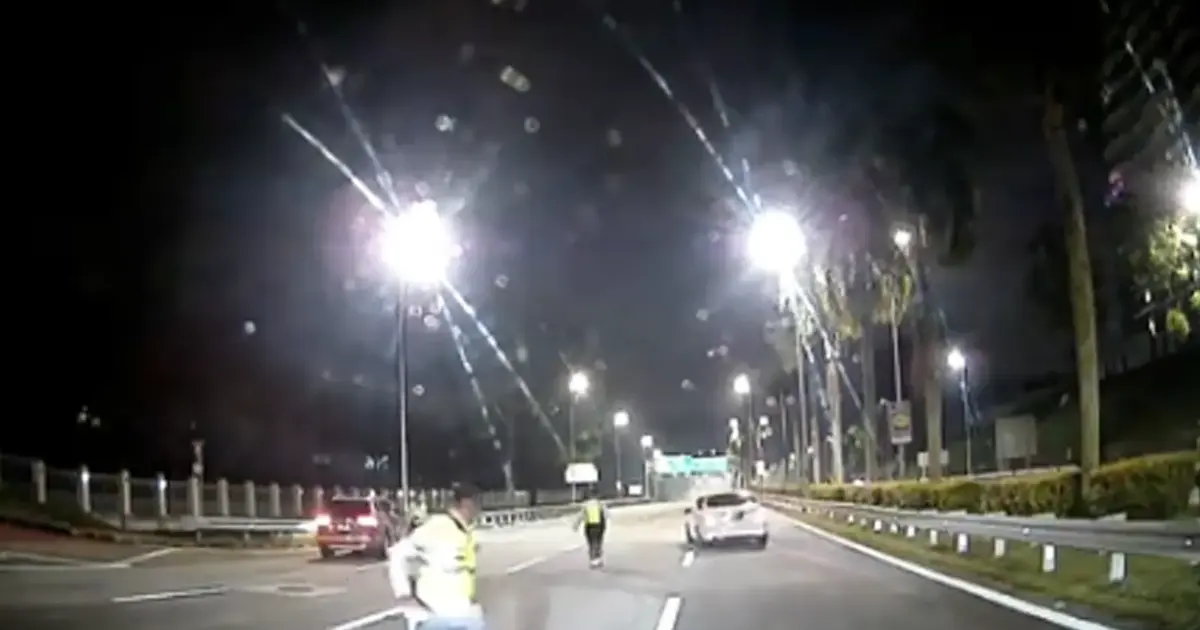
Authorities have detained a young motorist following an incident at a police checkpoint where the driver accelerated through the barrier instead of stopping when signalled by law enforcement personnel. The 20-year-old occupant of the Mercedes was apprehended in connection with his failure to obey instructions issued by a police officer during what appears to have been a routine traffic control operation.
Police roadblocks remain a standard enforcement mechanism across Malaysia, deployed by traffic units and general patrol divisions to monitor vehicle movement, verify documentation, and conduct random checks for compliance with traffic regulations. These checkpoints serve multiple functions within the broader public safety framework, including detection of traffic violations, identification of wanted persons, and assessment of vehicle roadworthiness. The incident highlights ongoing challenges faced by enforcement personnel when motorists elect to evade these checkpoints rather than submit to inspection.
The manner in which the driver conducted himself—reportedly appearing nervous according to witnesses—may have triggered heightened scrutiny from officers present at the scene. Evasive behaviour at checkpoints often signals to police that further investigation is warranted, as such actions can indicate undisclosed violations, outstanding summonses, or other matters requiring clarification. The decision to breach the roadblock rather than halt and present required documents represents a deliberate refusal to cooperate with lawful authority.
Failure to comply with police orders carries serious implications under Malaysian law. Officers are empowered to direct traffic and enforce compliance at designated checkpoints, and motorists are legally obligated to stop and present their driving licence, vehicle registration, and insurance documentation upon request. Circumventing these procedures constitutes a breach of traffic laws and potentially exposes the driver to additional charges beyond the initial non-compliance matter.
This arrest underscores the ongoing tension between enforcement efficiency and public cooperation. While police require the ability to conduct checks unimpeded, the effectiveness of these operations depends substantially on motorist compliance and public understanding of the legal framework governing roadside inspections. Educational initiatives highlighting the importance of checkpoint cooperation remain essential components of traffic safety strategies across the region.
Merchants of high-value vehicles such as Mercedes-Benz models sometimes face particular scrutiny at checkpoints due to the prevalence of vehicle theft rings and the elevated risk profile associated with luxury car ownership. Officers may intensify their attention when encountering such vehicles, particularly if the driver exhibits signs of apprehension or attempts evasion. This case may have involved additional layers of investigation beyond routine traffic oversight.
The timing and location of checkpoint operations vary according to police operational priorities and resource allocation strategies. Authorities typically concentrate enforcement efforts on high-risk routes, during peak traffic periods, and in areas experiencing elevated incident rates. Roadblocks serve as visible deterrents to traffic violations and contribute to broader community safety objectives by maintaining consistent enforcement presence.
For Malaysian motorists, the lesson remains straightforward: cooperation at police checkpoints facilitates smoother traffic flow and expedites the inspection process for all parties involved. Drivers who possess valid documentation and maintain vehicles in compliance with regulatory standards face minimal inconvenience during these encounters. Conversely, attempting to evade checkpoints dramatically increases the likelihood of arrest and exposure to criminal charges.
The consequences extending from checkpoint evasion ripple beyond the immediate enforcement action. A conviction for failing to comply with police instructions can result in fines, potential imprisonment, and a permanent record that may impact future licensing decisions or insurance eligibility. Employment sectors requiring clean driving records—particularly those in commercial transportation or security services—may find such convictions career-limiting.
Southeast Asian nations collectively face challenges in maintaining traffic discipline and public compliance with enforcement operations. Malaysia's approach of establishing visible checkpoints and maintaining active enforcement presence has proven effective in deterring serious violations and apprehending suspects. However, the success of these operations depends on sustained community understanding that police checkpoints exist for collective benefit rather than individual harassment.
The incident also reflects broader questions regarding vehicle security and the enforcement mechanisms protecting high-value assets. Police maintain databases of stolen vehicles and outstanding warrants, making checkpoint stops essential tools for preventing vehicle-related crime. A driver's reluctance to submit to inspection may stem from awareness of existing legal complications, making the evasion itself a critical investigative signal.
Looking forward, this case may serve as a reminder to motorists about the importance of maintaining compliance during routine police interactions. Cooperation with law enforcement during checkpoint procedures typically results in minimal delays and allows legitimate travellers to continue their journeys promptly. The driver's decision to breach the roadblock instead created significantly greater legal complications than would have resulted from standard compliance with officers' instructions, illustrating how momentary decisions can generate lasting consequences.

