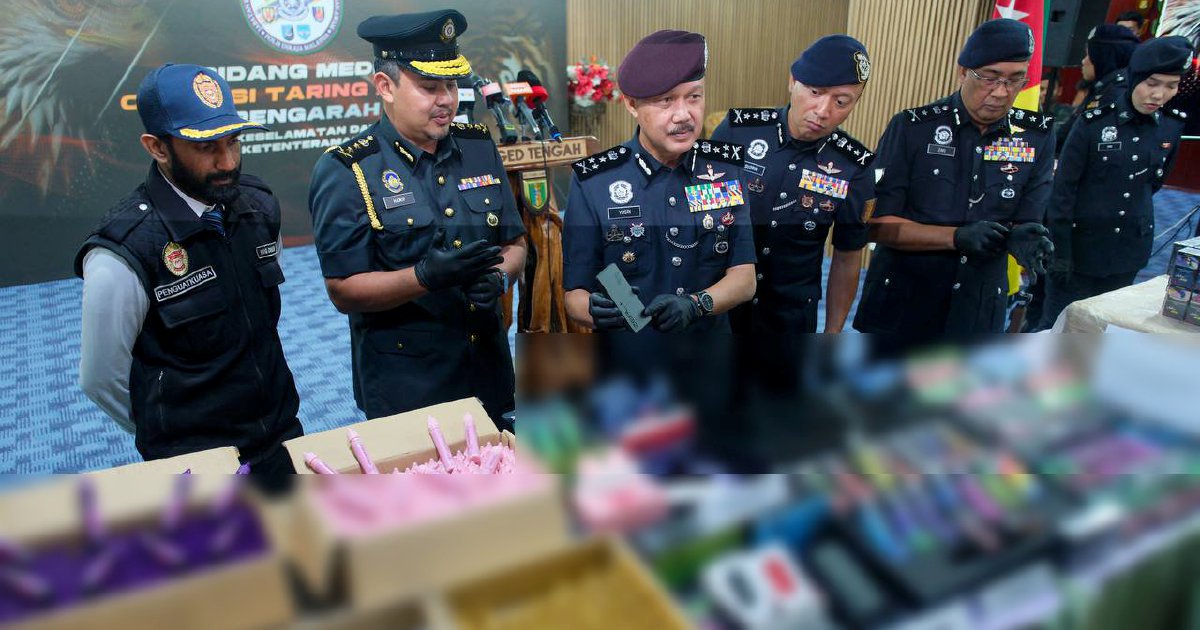
Authorities in Selangor have dealt a substantial blow to contraband trafficking networks, successfully confiscating vaping equipment and smuggled cigarettes worth in excess of RM15.5 million during a concentrated enforcement campaign across the state last month. The dual-pronged operation represents an escalation in police efforts to combat the burgeoning black market in restricted tobacco and nicotine products that has flourished across Malaysia in recent years.
The raids underscore the growing sophistication and profitability of smuggling operations that have increasingly supplanted traditional organised crime ventures. What began as isolated instances of individuals importing small quantities of vaping devices has evolved into a highly coordinated enterprise involving multiple syndicates operating across state lines, with supply chains extending from source countries through Malaysian ports and into distribution networks serving both retail and direct consumer markets.
The value of the confiscated goods—exceeding RM15.5 million—points to the substantial financial motivation driving these criminal ventures. This single operation's haul likely represents only a fraction of the overall contraband flow entering Malaysia annually, as enforcement agencies typically intercept a small percentage of illicit shipments. The profit margins in this sector are considerable, with smugglers exploiting the significant price differential between legitimate regulated products and tax-free contraband alternatives that reach end consumers.
Selangor's prominence as both a logistics hub and consumer market makes it an inevitable focal point for such criminal activity. The state's position as the commercial heart of Malaysia, combined with its extensive port facilities, road networks, and proximity to the Klang Valley's dense urban population, creates ideal conditions for smuggling operations to establish distribution infrastructure. Criminal networks have leverage multiple entry points and storage locations throughout the state, complicating law enforcement efforts that must balance limited resources across vast geographical areas.
The targeting of vaping products alongside conventional cigarettes indicates that authorities are adapting to shifting market dynamics within the illicit tobacco sector. While conventional cigarette smuggling has long been endemic, the explosion of the vaping market globally—and the subsequent introduction of various regulatory frameworks across different jurisdictions—has created new opportunities for smugglers. Products banned or heavily restricted in certain markets can be redirected to jurisdictions with less stringent controls, enabling traffickers to maximise sales volume across multiple territories simultaneously.
Malaysia's regulatory environment, while restrictive, has not eliminated demand for these products among consumers seeking alternatives to conventional smoking or those simply seeking to avoid taxes and excise duties. The illicit market thrives precisely because it offers cost advantages that appeal to price-sensitive consumers, particularly in a challenging economic environment where household budgets face mounting pressures from inflation and rising living costs. This consumer behaviour creates a structural vulnerability that enforcement agencies must continuously address through both supply-side interdiction and demand-side education.
The syndicates operating these networks typically employ sophisticated distribution strategies, fragmenting supply chains to insulate higher-level organisers from direct contact with contraband goods. Operatives at lower tiers—warehouse operators, transport specialists, and street-level retailers—bear heightened legal risk while the network's architects remain partially shielded. This structural compartmentalisation means that even successful raids may arrest peripheral players without substantially disrupting overall operations, requiring sustained, intelligence-driven enforcement to achieve lasting impact.
Regional cooperation remains essential for disrupting these networks, as smuggling routes frequently traverse international borders. Partnerships between Malaysian authorities and counterparts in neighbouring jurisdictions can improve intelligence sharing, coordinate surveillance, and create enforcement pressure that makes sustained operations increasingly costly and risky for criminal networks. Without such coordination, smugglers can simply shift operational bases or supply routes to evade jurisdiction-specific crackdowns.
The financial proceeds from contraband trafficking often fund broader criminal enterprises, from organised gambling syndicates to money laundering operations that infiltrate legitimate businesses. Disrupting tobacco and nicotine smuggling thus yields security benefits beyond health considerations, potentially constraining financial resources available to more violent or destabilising criminal organisations. Law enforcement agencies recognise that supply-chain interdiction represents one lever among many required for comprehensive organised crime suppression.
Looking forward, authorities face mounting challenges as smuggling networks adapt to enforcement strategies and technological developments enable new trafficking methods. The digitalisation of commerce and the rise of e-commerce platforms create additional challenges, as illicit goods can be marketed and distributed through channels that transcend traditional retail frameworks. Effective responses will require sustained investment in intelligence gathering, coordination across agencies and jurisdictions, and regulatory evolution matching the sophistication of criminal innovation.
The Selangor operations serve as a reminder that contraband suppression demands continuous effort and resource commitment. While individual raids generate headline figures that demonstrate enforcement capability, dismantling established smuggling networks requires patience, persistence, and strategic focus over extended periods. The RM15.5 million seizure represents a notable tactical success, yet the underlying challenge of demand management and transnational coordination will persist as long as significant price differentials and consumer demand incentivise criminal activity in this sector.

