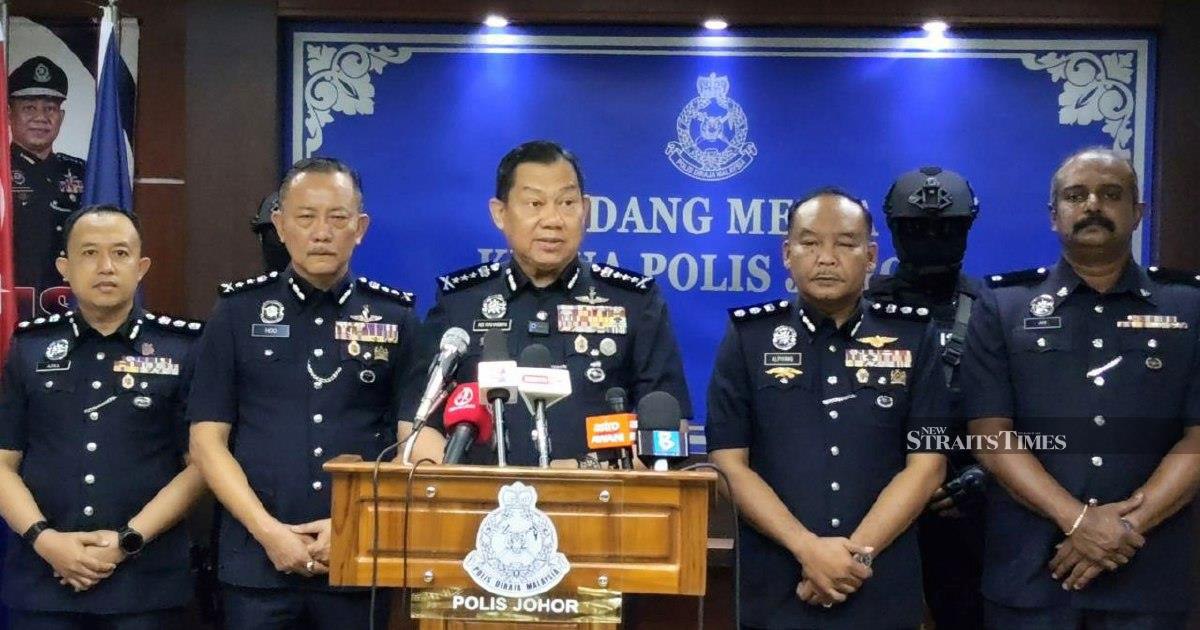
Law enforcement in Johor Baru scored a major victory against drug trafficking on Saturday, successfully dismantling what appears to be a structured methamphetamine operation. The coordinated police raids netted 60.78kg of the illegal stimulant, representing a significant haul with an estimated street value of RM3.04 million. The operation resulted in eight arrests, including individuals across different levels of the suspected distribution network, ranging from operational handlers to street-level transporters.
Most striking among the detainees is a teenager who had abandoned formal education to work as a courier for the ring. The use of young people for drug transportation has become an increasingly alarming trend in Malaysian organised crime, as criminal networks exploit minors' perceived lesser legal culpability and lower visibility to law enforcement. This particular case underscores how vulnerable youth, especially those who have disengaged from school, face exploitation by traffickers seeking to insulate themselves from direct prosecution. The school dropout's arrest signals that authorities are taking a comprehensive approach to dismantling these operations by targeting all levels of involvement, not merely the kingpins.
The quantity of methamphetamine recovered during these raids demonstrates the substantial capacity of distribution networks operating within Johor. At nearly 61kg, this seizure exceeds what would typically be classified as personal consumption, confirming police suspicions of a coordinated supply and delivery system rather than isolated users. The high purity and volume suggest this material was destined for regional distribution, potentially reaching multiple cities across the southern peninsula. Such large quantities often indicate connections to transnational trafficking routes, particularly given Malaysia's geographic position as a transit point for drugs originating from manufacturing hubs in the Golden Triangle region.
The value assessment of RM3.04 million reflects the extreme profitability of methamphetamine trafficking, even at domestic wholesale prices. Street-level retail markups would substantially increase this figure, illustrating why organised crime groups continue investing resources in maintaining these supply chains despite enforcement risks. For context, this single operation's seizure represents more than many monthly drug enforcement tallies across individual districts, highlighting both the scale of organised trafficking and the intermittent but potent nature of law enforcement breakthroughs.
The timing and execution of these raids suggest coordinated intelligence work, likely spanning surveillance and informant networks. Such operations typically require weeks or months of groundwork before police move in, meaning this bust represents culmination of sustained investigative effort rather than a chance discovery. The decision to arrest all eight suspects simultaneously indicates authorities had sufficient evidence to justify charges and sought to prevent any network members from warning others. This coordinated timing is particularly crucial for disrupting mid-level operatives who might otherwise relocate supplies or crucial documents.
For Malaysian readers in the southern region, this arrest underscores ongoing methamphetamine challenges facing Johor. The state has grappled with persistent drug abuse issues, reflected in treatment centre admissions and community health reports. Methamphetamine in particular has become the dominant stimulant of abuse across Malaysia, reflecting both supply availability and user preference for its intense but short-lived effects. Each successful seizure disrupts supply chains temporarily, though traffickers typically adapt by shifting routes or sourcing arrangements relatively quickly.
The inclusion of young offenders in trafficking operations raises broader questions about youth intervention and prevention strategies. Once individuals become involved in courier roles, rehabilitation becomes significantly more complicated. The criminal justice system must balance enforcement with opportunities for younger offenders to exit the network, though few formal rehabilitation pathways exist for adolescents arrested in trafficking contexts. This case potentially represents a critical intervention point where the arrested teenager could either face incarceration that deepens criminal integration or access diversion programmes addressing underlying vulnerabilities.
Regionally, this bust fits into broader Southeast Asian drug enforcement patterns. Thailand, Myanmar, and Laos remain primary production zones, with Malaysia serving as a key transit and distribution hub. Johor's geographic proximity to Singapore and Thailand makes it particularly strategic for traffickers, who exploit porous borders and multiple smuggling routes. International cooperation on drug enforcement remains inconsistent across the region, allowing networks to shift operations when pressure intensifies in one jurisdiction.
Looking ahead, the success of this operation depends partly on prosecution outcomes and asset seizure procedures. Beyond the arrests and drug recovery, authorities must trace financial transactions and seize criminal proceeds to genuinely disrupt network economics. Money laundering through businesses, property, or informal banking systems often allows trafficking organisations to maintain viability even when drug inventories are seized. The Johor police's next phase should focus on financial investigation parallel to criminal prosecution of the eight accused.

