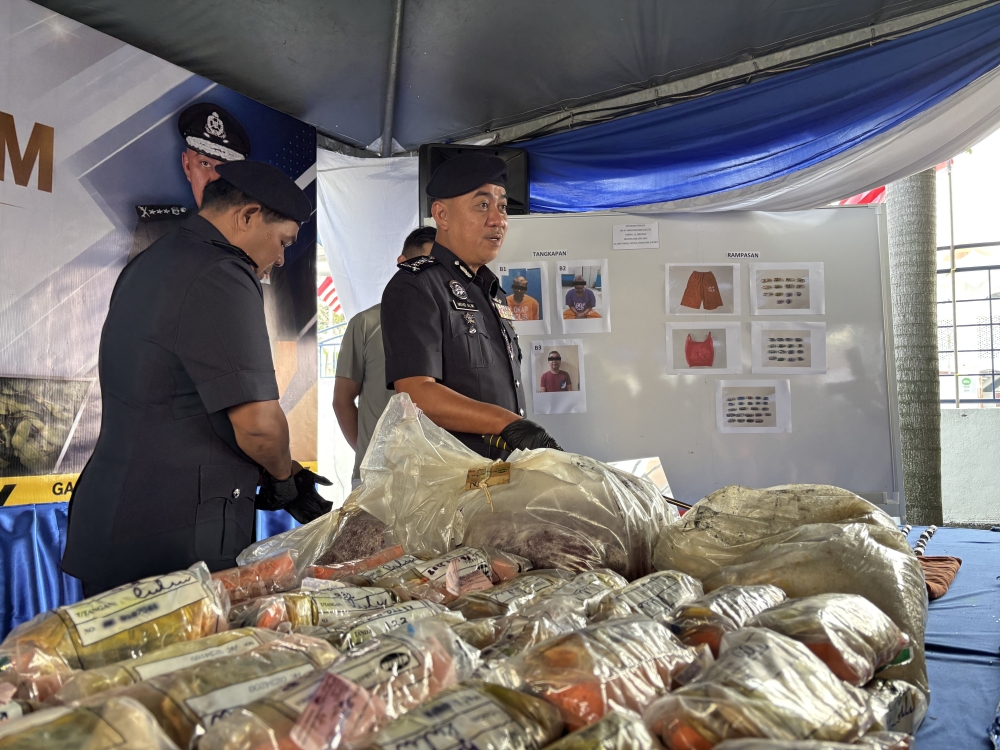
A police constable has been arrested along with two other men following the discovery of an assortment of illegal drugs discovered within a holding cell at Lumut police station in Perak. The seizure, made during an investigation earlier this month, uncovered methamphetamine, heroin and cannabis with a combined street value of RM18,534, prompting an immediate inquiry into how the substances entered a secure police facility.
The incident, disclosed in Ipoh on August 13, represents a troubling security breach that has drawn scrutiny from law enforcement authorities. The presence of narcotics within a police detention area suggests either a significant lapse in facility protocols or possible involvement by persons with access to the holding quarters. The involvement of an officer in uniform adds another layer of concern, as it indicates potential complicity from within the ranks of those entrusted with maintaining order and security.
The recovery of such quantities of dangerous substances raises immediate questions about the supply chain and network through which these drugs were intended to circulate. Methamphetamine and heroin remain among the most destructive narcotics affecting Malaysian communities, while cannabis possession continues to face strict penalties under national law. The fact that these items were found together suggests a coordinated operation rather than isolated possession.
Malaysia has maintained a zero-tolerance approach to drug trafficking and possession, with penalties ranging from substantial fines to lengthy imprisonment depending on the quantities involved. The seizure at Lumut represents part of a broader pattern of law enforcement efforts to intercept narcotics before they reach street level distribution networks. However, the discovery within a police facility itself underscores vulnerabilities that extend beyond typical street-level enforcement.
The involvement of a police officer in this case carries particular significance within Malaysian law enforcement circles. Officers are subject to strict codes of conduct and face enhanced scrutiny compared to civilian suspects. Any breach involving a member of the constabulary calls into question recruitment screening processes, ongoing integrity monitoring, and the effectiveness of internal oversight mechanisms designed to prevent corruption within police ranks.
Institutional safeguards within police detention facilities typically include regular inspections, controlled access to holding areas, and documentation procedures for all items brought into secure zones. The successful concealment and discovery of nearly RM18,500 worth of drugs suggests that either these safeguards were not properly implemented in this instance or were deliberately circumvented. Lumut station, serving the Dindings district in Perak, will likely undergo enhanced security reviews in response to this incident.
The Perak branch of the Royal Malaysian Police has consistently reported significant drug seizures in recent years as organised trafficking networks attempt to route substances through the state toward major urban centres. The state's geography, with access routes to Selangor and the Klang Valley, makes it a strategic point for drug distribution operations. Law enforcement agencies have increasingly focused resources on interdicting supplies at transit points, and police custody facilities represent a critical vulnerability in that security chain.
Detention facilities nationwide have become a focus of attention following previous incidents involving contraband entry. The challenge of preventing smuggling into police stations is compounded by the large number of personnel who require access, the frequency of prisoner transfers, and the presence of visitors including lawyers and family members. Each access point represents a potential vulnerability that organised trafficking networks may attempt to exploit or corrupt.
The case will likely be handled under the Dangerous Drugs Act, which provides stringent penalties for trafficking and possession. The specific charges and sentencing recommendations will depend on the circumstances of the offence, any evidence of distribution intent versus possession for personal use, and the defendant's prior criminal history. The involvement of a police officer may result in parallel investigations by internal affairs and professional standards divisions.
For Malaysian readers concerned with public safety and police integrity, this incident underscores the ongoing challenges that law enforcement faces in maintaining internal discipline while combating external drug trafficking pressures. The ability to prevent corruption and security breaches within police infrastructure is essential to maintaining public confidence in law enforcement institutions. This case will likely prompt a broader review of detention facility protocols across Perak and potentially across other police contingents nationwide.
The broader implications extend to questions about how organised crime networks identify and cultivate relationships with vulnerable officers, the effectiveness of integrity testing and monitoring programs, and whether current resources dedicated to internal investigations match the scale of the problem. For communities in Perak and beyond, cases such as this reinforce the critical importance of maintaining police legitimacy through rigorous internal accountability even as officers work to protect communities from external threats posed by trafficking networks.

