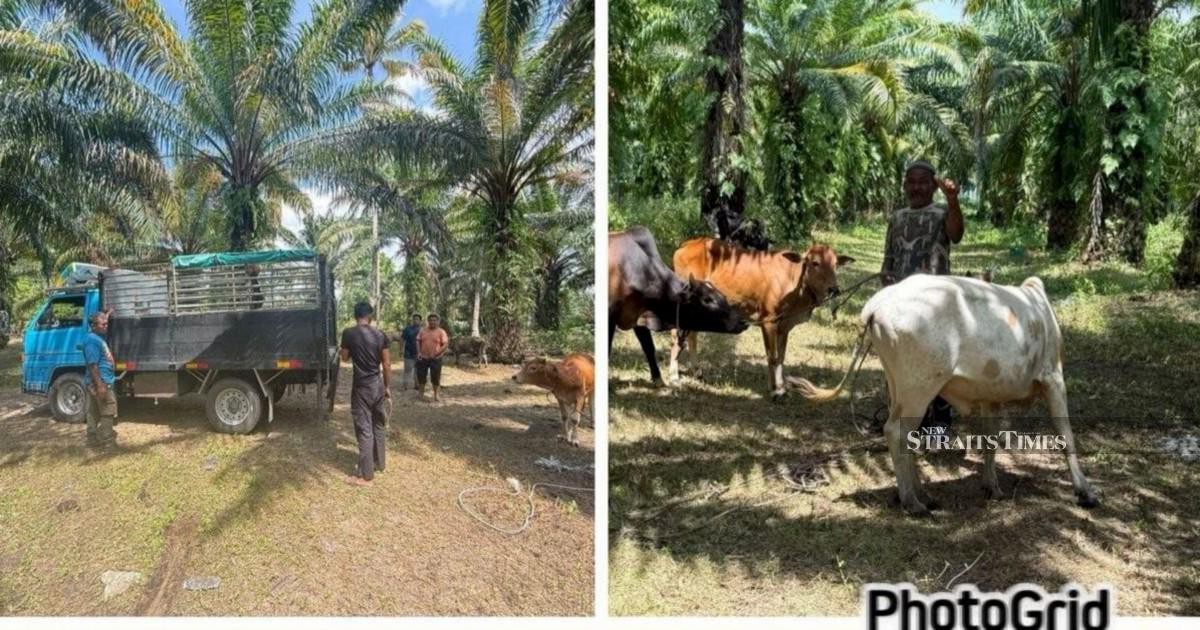
Police have successfully dismantled a coordinated cattle theft operation that had been targeting livestock across the northern states. Following a series of operational raids conducted in both Kelantan and Terengganu, authorities arrested 10 individuals believed to be part of an organised syndicate, with two of the suspects being women. The investigation culminated in the recovery of 32 stolen cattle, representing approximately RM96,000 in recovered assets.
The dismantling of this network represents a significant success for law enforcement in tackling agricultural crime, which has become an increasingly organised form of theft in Malaysia. Cattle rustling operations, once considered a relatively isolated problem, have evolved into sophisticated criminal enterprises involving multiple stages of planning, execution, and distribution. This particular syndicate's operation across two states demonstrates how modern livestock theft has transcended traditional boundaries, requiring coordinated enforcement responses across state lines.
The recovery of such a substantial number of animals in a single operation suggests that the investigation had been comprehensive and meticulously planned by the authorities. The fact that 32 cattle were located and brought back into legitimate custody indicates that investigators had successfully traced the supply chain from the point of theft through to holding locations. This level of success typically requires extensive surveillance work, intelligence gathering from community sources, and cooperation between multiple police units operating in different jurisdictions.
Cattle theft presents particular challenges for Malaysian law enforcement due to the rural and dispersed nature of farming communities, the mobile nature of livestock, and the difficulty in establishing ownership claims without proper documentation. Organised syndicates exploit these vulnerabilities by targeting animals from smallholder farmers and larger commercial operations alike. The involvement of two women in the arrested group suggests that these networks recruit across gender lines, indicating a fully integrated criminal operation rather than an ad hoc group of opportunistic thieves.
For farmers in Kelantan and Terengganu, this operation serves as both reassurance and a reminder of ongoing vulnerability. While the recovery of this particular herd represents a tangible success, the prevalence of organised livestock crime points to systemic weaknesses in farm security and tracking systems. Smallholder farmers, who constitute the majority of livestock producers in these states, often lack formal documentation and security measures that larger commercial operations employ, making them disproportionately vulnerable to theft.
The scale of the operation—involving coordinated raids and the arrest of multiple suspects—demonstrates that police resources have been mobilised effectively to address this form of rural crime. However, the existence of such an organised network in the first place raises questions about how long the syndicate had been operating before being detected. Livestock crime often goes unreported or undocumented, particularly among rural communities with limited access to formal complaint mechanisms or those who prefer to handle disputes through informal channels.
From an agricultural economics perspective, cattle theft directly impacts the viability of livestock farming in Malaysia. Every stolen animal represents not just immediate financial loss but also disrupted breeding cycles, reduced herd productivity, and increased operational costs as farmers invest in security measures. The cumulative effect of such crimes can drive farmers away from livestock production, potentially threatening local food security and rural livelihoods. This is particularly concerning in states like Kelantan and Terengganu, where agriculture remains a significant component of the economy and rural employment.
The successful prosecution of those arrested will depend on the quality of evidence gathered during these raids. Police will need to establish clear connections between the arrested individuals and specific thefts, demonstrate intent to permanently deprive owners of their property, and potentially prove the existence of an organised criminal conspiracy. The involvement of multiple actors across different stages of the operation—from those who conducted the actual theft to those who transported, concealed, or sold the animals—will require careful coordination of evidence and witness testimony.
Regionally, this operation reflects broader patterns of organised rural crime across Southeast Asia. Similar livestock theft syndicates have been identified in neighbouring Thailand and Indonesia, often operating transnationally and exploiting porous borders to move stolen animals. Malaysia's success in disrupting this particular network may have implications for cross-border security cooperation, particularly if investigations reveal international connections or if the stolen cattle were destined for export.
Moving forward, the police operation underscores the need for comprehensive strategies to combat agricultural crime. This includes improving farmer awareness about security measures, establishing better documentation and tracking systems for livestock, facilitating faster reporting of thefts, and developing intelligence networks within farming communities. Technology such as animal identification systems, GPS tracking, and centralised livestock registries could significantly reduce the attractiveness of cattle rustling to criminals.
The arrest of 10 individuals represents a meaningful intervention in a supply chain that thrives on anonymity and dispersal of stolen goods. By cutting off a major operational node in the network, police have disrupted a system that likely victimised multiple farmers over an extended period. For Kelantan's farming community, this action provides immediate relief and demonstrates that organised livestock theft will not be tolerated, potentially deterring other would-be perpetrators from targeting the region's livestock.

