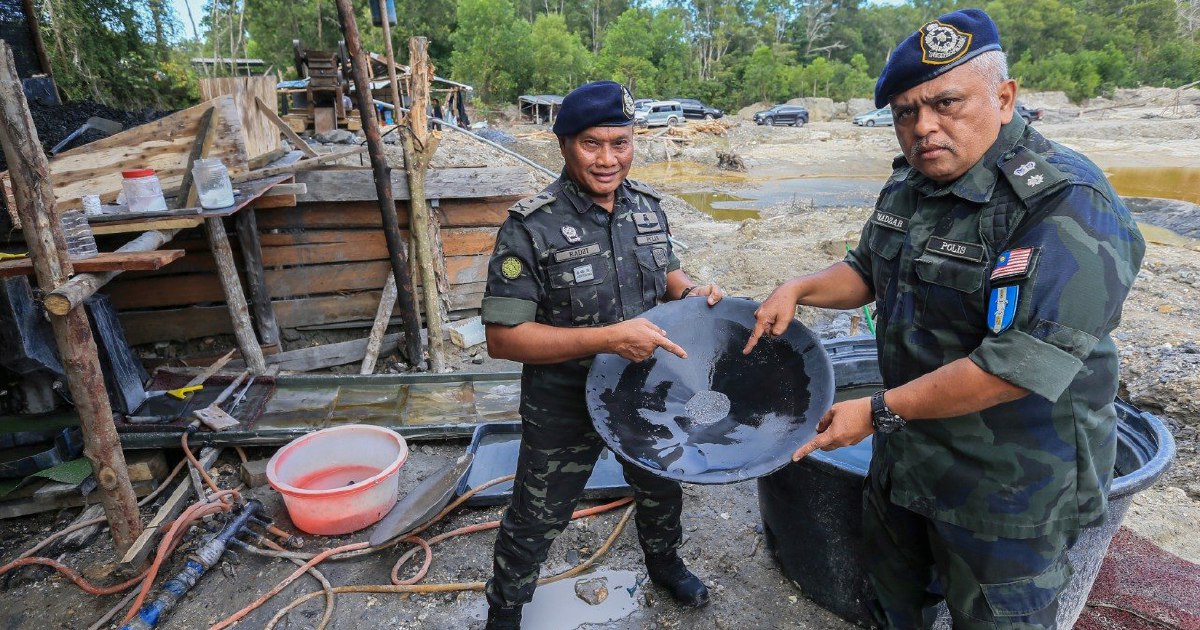
Police in Terengganu have dismantled a sophisticated illegal gold mining operation at Bukit Kor near Marang that authorities believe was netting the syndicate approximately RM13,000 per day. The operation, which residents had dubbed the 'Mak Siti' network after an apparent key operative, came to an end following an enforcement raid that resulted in the detention of 15 individuals suspected of involvement in the extraction and distribution scheme.
The timing of the bust highlights growing concerns among Malaysian law enforcement about the proliferation of unregulated mining activities across the country. Unlike large-scale industrial operations that require proper licensing and environmental assessment, illicit excavation operations function entirely outside regulatory oversight, creating substantial risks to both local communities and the national resource management framework. The Bukit Kor site apparently operated with minimal attempt at concealment, suggesting either significant local tolerance or insufficient patrol presence in the area.
The daily revenue figure of RM13,000 indicates that despite operating without proper permissions or infrastructure, the syndicate had established reliable extraction and sales channels. This profitability margin demonstrates the economic incentive driving such illegal ventures and explains why such operations continue to emerge across Malaysia despite enforcement efforts. The organization's apparent sustainability prior to the raid suggests it had developed established buyer networks and possibly protection arrangements that allowed it to operate overtly enough for the community to assign it a specific nickname.
The involvement of 15 detainees indicates that the operation represented more than a small-scale opportunistic venture. Illegal mining syndicates of this scale typically involve distinct operational roles, from site supervisors and equipment operators to logistics personnel responsible for moving extracted material and individuals managing financial transactions. The structure suggests coordination beyond simple individual prospecting, pointing toward organized criminal involvement rather than unregulated enthusiasm by locals seeking supplementary income.
From a regional perspective, the Terengganu bust connects to broader patterns of precious metal extraction across Southeast Asia. Malaysia's geological formations have historically contained alluvial gold deposits, particularly in areas with specific drainage patterns and historical mining presence. Neighbouring Thailand, Indonesia, and the Philippines have all struggled with similar illicit mining problems, with these operations frequently drawing migrant workers and creating environmental degradation that extends beyond immediate mining sites into surrounding watersheds and agricultural land.
The environmental consequences of unregulated gold extraction warrant attention beyond the criminal aspects. Illegal mining operations typically employ techniques that maximize immediate extraction at the expense of land rehabilitation, often utilizing mercury and cyanide in processing without proper containment. Ground destabilization, water table disruption, and contamination of aquifers can persist for decades after operations cease, creating public health risks that far outlast the temporary criminal enterprise itself.
For Malaysia's resource management policy, such incidents underscore the tension between allowing smallholder economic activity and maintaining comprehensive regulatory control. The relatively modest daily take of RM13,000 might seem insignificant compared to large industrial operations, yet the cumulative effect of numerous small-scale illegal ventures represents substantial unaccounted extraction and revenue loss. More significantly, permitting such operations to continue unchecked gradually erodes the authority of formal licensing systems and creates market competition that legitimate operators cannot match without themselves turning to unregulated practices.
The police action reflects capacity building within Malaysian enforcement agencies, though the need to deploy substantial personnel to address a single site raises questions about resource allocation and preventative strategies. The fact that this particular syndicate required a dedicated operation to shut down suggests that routine patrol and monitoring systems had not successfully deterred or detected the activity earlier. This pattern appears consistent across multiple states, pointing toward either insufficient funding for environmental crime units or geographical challenges in maintaining surveillance across rural areas where such operations tend to locate.
The aftermath of such busts typically reveals whether enforcement represents a permanent disruption or a temporary inconvenience. Historical precedent in the region shows that unless local economic alternatives exist and employment opportunities expand in affected communities, similar operations tend to re-establish themselves relatively quickly. Sustainable solutions require coordination between law enforcement, local government, and economic development agencies to address both the criminal activity and the underlying economic conditions that make such ventures attractive to participants.
Moving forward, the Marang operation highlights the necessity for integrated approaches combining technological solutions such as remote sensing to identify unauthorized excavation sites, community engagement to reduce local tolerance for such ventures, and targeted economic development in resource-rich areas where poverty creates recruitment opportunities for syndicates. The detention of 15 individuals will proceed through the court system, but the broader challenge of stemming such activities remains unresolved without addressing these systemic factors.

