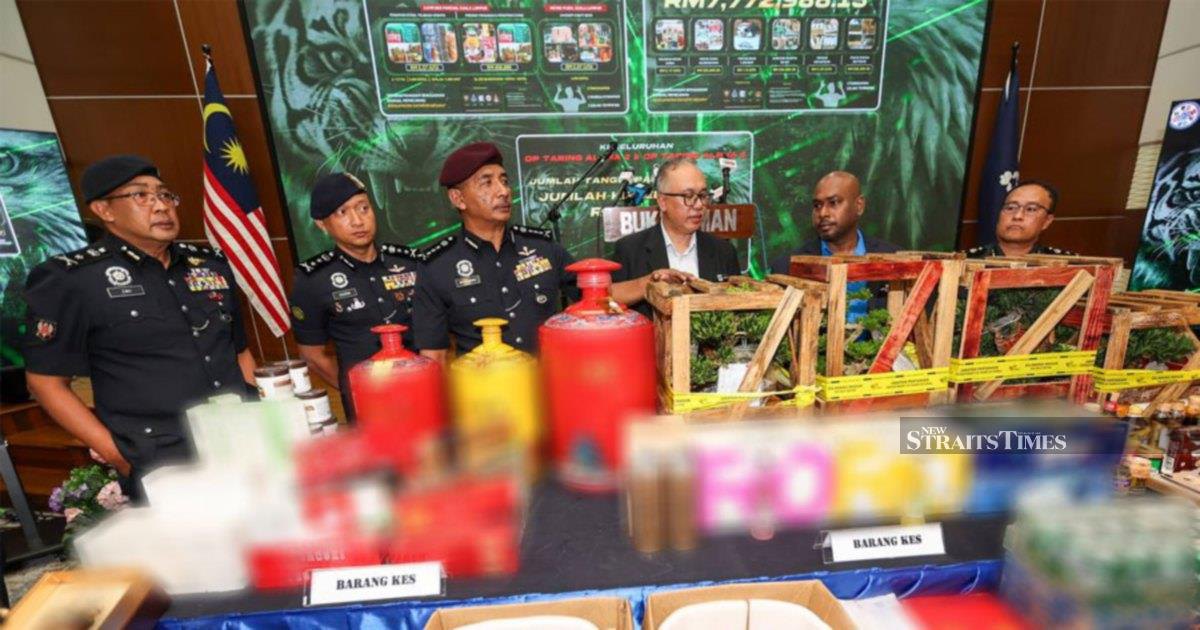
Malaysian police have dismantled what appears to be a significant smuggling operation spanning the greater Kuala Lumpur and Klang areas, detaining five suspects and confiscating illicit goods and materials estimated to be worth RM12.8 million. The dual enforcement operations represent an intensification of efforts by authorities to combat organised smuggling activities that have become increasingly sophisticated in recent years.
The coordinated raids mark a notable victory in the ongoing struggle against black-market trade networks that exploit ports and transportation routes throughout the Klang Valley. These criminal enterprises have long posed challenges to customs agencies and police forces across Southeast Asia, capitalising on the region's complex supply chains and high-volume maritime activity. The operation demonstrates renewed commitment from Malaysian law enforcement to disrupt such networks before contraband reaches local markets.
Smuggling operations in Malaysia typically involve goods crossing from neighbouring countries through established criminal logistics channels. The Klang area, serving as a major gateway for international trade through Port Klang, has historically attracted smuggling syndicates targeting quick-turnaround transactions. The dual operations suggest police intelligence had identified multiple connected distribution points rather than isolated incidents of unlawful trade.
The five detainees now face interrogation aimed at uncovering the broader structure of the smuggling network. Investigators will seek to establish supply routes, identify higher-level organisers, and trace the intended distribution channels for the recovered goods. Such intelligence gathering often leads to additional arrests as authorities map the full extent of criminal operations that may have been active for months or longer.
The RM12.8 million valuation of seized materials underscores the substantial financial incentives driving organised smuggling in Malaysia. Contraband typically yields profit margins far exceeding legitimate trade, motivating criminals to invest considerable resources in security, logistics, and corruption. Law enforcement agencies must compete against well-funded criminal enterprises with international connections and substantial operational budgets.
Goods commonly targeted by smuggling syndicates include electronics, luxury items, alcohol, tobacco products, and pharmaceuticals. Some operations focus on materials destined for regional markets where tariffs or regulations create artificial price premiums. Others handle goods prohibited outright in certain jurisdictions, creating extreme value disparities that incentivise criminal transport. The nature of seized materials will determine whether this operation targeted particular commodity streams or functioned as a general-purpose smuggling network.
The Klang Port and surrounding transportation infrastructure remain priority enforcement zones for Malaysian customs and police authorities. These gateways connect Malaysia to global supply chains while enabling rapid distribution throughout the peninsula. Disrupting operations at such chokepoints yields more significant impact than targeting isolated transactions. The current operation's focus on these dual locations likely reflected intelligence pinpointing major nodes within the smuggling network.
International cooperation increasingly features in Malaysia's anti-smuggling efforts, as organised crime networks operate across borders and utilise third-country transit points. Goods seized in Kuala Lumpur may have originated in Thailand, Singapore, or beyond, transiting through Malaysia toward final destination markets. Police collaboration with foreign counterparts helps authorities disrupt supply chains at multiple points, reducing the efficiency and profitability of smuggling operations.
The broader context of Malaysian port security and border management remains relevant to understanding smuggling challenges. Despite substantial investment in scanning technology, surveillance systems, and personnel training, determined criminal organisations continue discovering vulnerabilities. The sheer volume of legitimate container traffic through major ports creates unavoidable inspection limitations. Criminal enterprises exploit this reality through volume strategies, accepting losses on some shipments while successfully moving larger quantities of contraband through traditional checkpoints.
Local communities in Kuala Lumpur and Klang often experience secondary impacts from smuggling operations. Illicit goods saturate retail markets, undercutting legitimate businesses and eliminating tax revenue that would fund public services. Counterfeit products pose health and safety risks to consumers unaware of authenticity issues. Criminal organisations operating within these areas may engage in violence, extortion, and intimidation affecting neighbourhood safety and business environments.
The police operation reflects broader regional trends in anti-smuggling enforcement. Authorities across Southeast Asia have elevated focus on organised trade-based crime, recognising that smuggling networks fund additional criminal enterprises including drug trafficking and human trafficking. Disrupting smuggling operations yields broader security benefits extending beyond immediate contraband seizure. Financial pressures created by enforcement actions cascade through criminal networks, potentially weakening their capacity to sustain multiple illegal activities.
Moving forward, investigators will assess whether the five detainees represent low-level operatives or higher-ranking members of the smuggling hierarchy. This determination will shape prosecution strategy and reveal the durability of the disrupted network. Well-organised syndicates maintain flexibility to resume operations quickly following arrests of replaceable personnel, while destabilisation of leadership creates longer-lasting disruption. The intelligence gathered will likely inform future enforcement priorities for Malaysian police and customs agencies operating throughout the Klang Valley.

