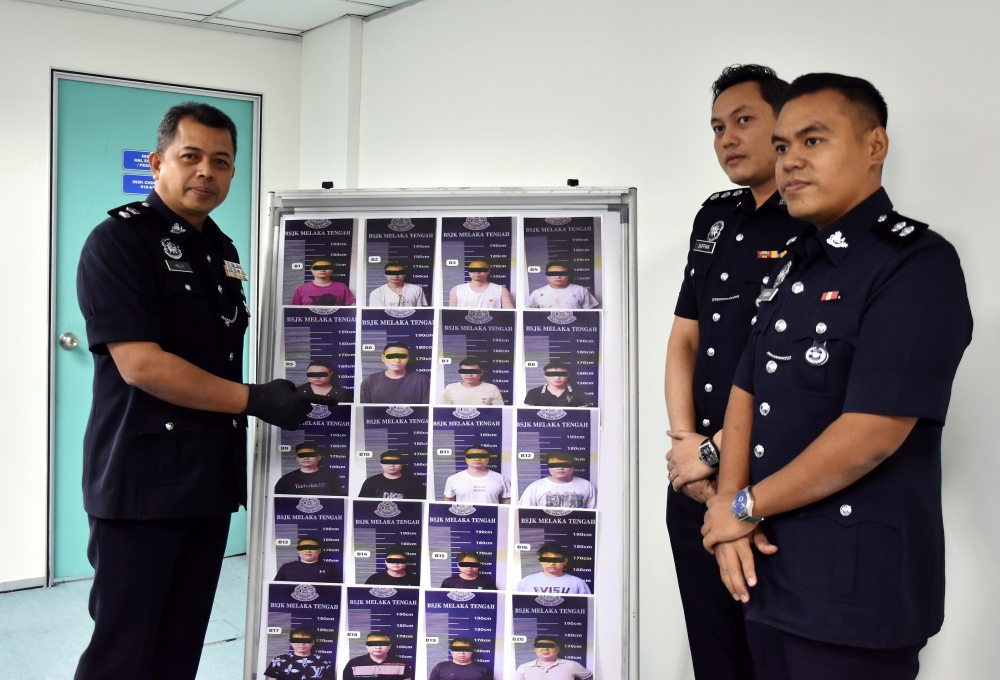
In a significant crackdown on transnational organised crime, Malaysian authorities have arrested 21 Chinese nationals in Melaka suspected of orchestrating an extensive investment scam that victimised residents across multiple states. The coordinated operation marks another chapter in the ongoing battle against sophisticated financial fraud networks that have increasingly targeted the region, exploiting technological advances and cross-border mobility to evade detection.
The syndicate operated by luring potential investors with promises of extraordinary financial returns through investment schemes that existed only in the fraudsters' marketing materials. Victims were systematically approached through various channels and convinced to transfer funds into accounts controlled by the criminal network. The operation appears to have been deliberately structured across state lines, making investigation and victim assistance more complex for authorities attempting to track the flow of illicit money.
The decision to conduct the arrests in Melaka suggests that law enforcement had identified the location as a crucial operational hub where the group coordinated their activities. Such concentration of operations in a single location often indicates that organisers maintained control over subordinates and managed the distribution of stolen funds from a central point. The scale of the operation—involving 21 individuals—points to a hierarchical structure with clear divisions of labour, ranging from recruitment specialists to money handlers and technical coordinators managing digital platforms.
Investment fraud syndicates targeting Southeast Asian markets have become increasingly sophisticated, frequently employing professionally designed websites, fabricated testimonials from purported successful investors, and fake regulatory approvals to establish credibility. The schemes typically operate on a timeline that maximises profit extraction before collapse; early investors may receive partial returns from funds supplied by later victims, creating an illusion of legitimacy that fuels recruitment. This layering mechanism has proven devastatingly effective in accumulating large sums before the deception unravels.
The involvement of Chinese nationals in the syndicate reflects broader patterns in transnational fraud networks, where coordinated groups exploit visa systems, money transfer infrastructure, and language capabilities to operate across multiple jurisdictions. International criminal networks have adapted to Malaysia's regulatory environment and financial systems, often establishing themselves in commercial centres or residential areas where they can maintain a low profile while conducting digital operations targeting individuals across the country.
For Malaysian victims, the implications of this case extend beyond immediate financial loss. Individuals who lost money face the lengthy process of attempting asset recovery, typically complicated by the international dimension of the crimes. Meanwhile, the sophistication demonstrated in this operation underscores how criminal enterprises continue to evolve faster than enforcement capacity can match, utilising encryption, cryptocurrency transfers, and money laundering techniques to obscure the movement of funds.
The arrest operation also highlights the ongoing resource demands placed on Malaysian law enforcement agencies investigating financial crimes. Coordinating investigations across state boundaries, gathering digital evidence, and building cases against multiple accused individuals requires substantial expertise and manpower. The success of this operation suggests that police have developed increasingly effective intelligence-gathering and surveillance capabilities, though the sheer volume of investment fraud cases nationwide indicates that apprehending perpetrators remains a persistent challenge.
The case carries implications for Malaysia's standing in regional efforts to combat cross-border financial crime. As enforcement agencies across Southeast Asia strengthen cooperation mechanisms through organisations such as ASEAN and bilateral agreements, the ability to identify and prosecute organised fraud networks demonstrates commitment to the international framework addressing transnational crime. Malaysian authorities pursuing these cases also signal to potential criminals that the country maintains active investigation and prosecution capabilities.
Moving forward, the investigation into the seized assets and financial records will likely reveal the full extent of victim numbers and total losses. Authorities typically find that initial estimates significantly underestimate the scope of fraud operations, as many victims either do not report their losses or remain unaware they have been defrauded until investigation begins. The coordination between multiple government agencies—including police, financial intelligence units, and potentially banking regulators—will determine how effectively funds can be traced and potentially recovered for legitimate claimants.
For potential investors throughout Malaysia and the broader region, this enforcement action serves as a cautionary reminder of the persistent threat posed by investment fraud syndicates. The case illustrates how criminal networks exploit the trust inherent in personal financial decision-making and the difficulty ordinary individuals face in distinguishing between legitimate investment opportunities and sophisticated fraudulent schemes. Enhanced public awareness, coupled with improved reporting mechanisms and swift law enforcement response, remains essential to disrupting the ecosystem in which such operations flourish and protecting vulnerable populations from financial exploitation.

