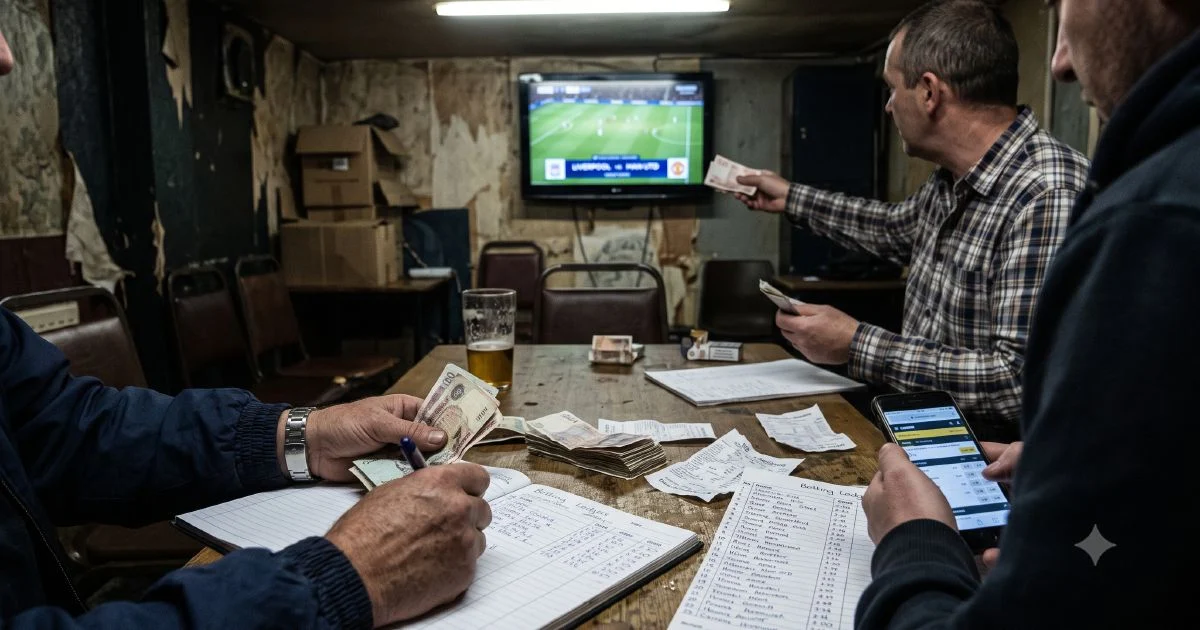
Malaysian authorities have dealt a significant blow to the underground sports betting ecosystem with the arrest of 331 individuals across the country during a sweeping enforcement campaign. The operation, designated Op Soga XI, represents one of the police force's most comprehensive drives against unlicensed wagering in recent memory, with investigators identifying and intercepting betting transactions exceeding RM2.63 million. The scale of the crackdown underscores the extent to which illegal gambling networks have entrenched themselves across the nation, particularly in anticipation of the FIFA World Cup 2026.
The timing of this operation carries particular significance. As the FIFA World Cup 2026 approaches, betting syndicates have been actively recruiting both operators and bettors, sensing the surge in wager volumes that major sporting events inevitably generate. The World Cup remains one of the most wagered-upon international tournaments globally, creating a financial incentive for underground operators to scale up their activities before and during the competition. Malaysian law enforcement recognised this trend and mobilised resources accordingly, making Op Soga XI a preventative strategy as much as it is a reactive enforcement measure.
The structure of modern illegal betting operations in Malaysia reveals the sophistication of criminal syndicates. Rather than relying on traditional bookmakers with physical premises, many unlicensed operations now function primarily through online platforms and messaging applications, making detection and enforcement exponentially more challenging. The RM2.63 million uncovered during Op Soga XI likely represents only a fraction of the actual money flowing through these channels, as much activity occurs through cryptocurrency transactions and peer-to-peer transfers that leave minimal paper trails. This adaptation to digital channels has fundamentally altered the landscape that enforcement agencies must navigate.
The scale of participation in illegal betting networks poses troubling questions about the adequacy of licensed gambling alternatives in Malaysia. The existence of such extensive underground operations suggests that substantial segments of the population believe illegal channels offer advantages—whether perceived or real—compared to regulated options. Some illegal operators advertise higher odds, lower minimum bets, or superior customer service compared to state-sanctioned platforms. Others attract bettors through the allure of anonymity or through relationships built on trust within specific communities. Understanding why individuals gravitate toward illegal betting rather than licensed alternatives remains crucial for developing more effective prevention strategies.
The socioeconomic implications of this underground betting economy warrant consideration. Many of the 331 arrested individuals may themselves be victims of predatory lending or organised crime networks rather than seasoned criminals. Illegal betting syndicates frequently employ vulnerable individuals as collectors, runners, or recruiters, often coercing participation through debt structures that make escape nearly impossible. The enforcement response, while necessary for public order, must be accompanied by rehabilitation and victim support programmes if society hopes to disrupt the cyclical recruitment patterns that sustain these networks.
Regional context provides additional insight into Malaysia's struggle with illegal gambling. Neighbouring countries face similar challenges, and cross-border criminal networks have become increasingly sophisticated at moving money and operations across jurisdictions. Some offshore gambling platforms deliberately market their services to Malaysian citizens despite legal prohibitions, exploiting weak enforcement mechanisms at the international level. This regional dimension means that domestic enforcement efforts, however robust, cannot succeed without coordinated international cooperation and information sharing.
The police operation also highlights the challenge of balancing enforcement with fiscal considerations. Illegal betting operations generate enormous sums that flow into criminal enterprises and syndicates rather than government revenue. Malaysia's federal and state governments rely on regulated gambling activities as revenue sources, making the diversion of betting activity to illegal channels economically damaging. Some economists and policymakers have argued that addressing this dynamic requires not only enforcement but also strategic policy reconsideration regarding what gambling activities should be licensed and under what conditions, though such discussions remain politically sensitive.
Technology continues to be a double-edged sword in enforcement efforts. While law enforcement has increasingly deployed sophisticated surveillance and financial tracking tools to identify betting networks, criminal operators have simultaneously invested in encrypted communications, virtual private networks, and cryptocurrency infrastructure that frustrates investigation. The intelligence gathered through Op Soga XI will likely inform future operations, but enforcement agencies acknowledge that the playing field continuously shifts as syndicates adapt their methods. This perpetual adaptation cycle suggests that enforcement alone cannot eliminate illegal betting—prevention through education and alternative services must complement enforcement efforts.
The FIFA World Cup 2026, to be held across three nations with expanded tournament format, will test Malaysian enforcement capacity at scale never previously encountered. The matches will span an entire month with simultaneous games occurring across multiple time zones, creating unprecedented opportunities for organised betting operations. The insights and operational templates developed through Op Soga XI will presumably inform police preparations for this tournament, though authorities remain cautious about their ability to prevent all illegal wagering. The comprehensive nature of the current operation suggests law enforcement recognises that World Cup season 2026 will present the most formidable challenge to date.

