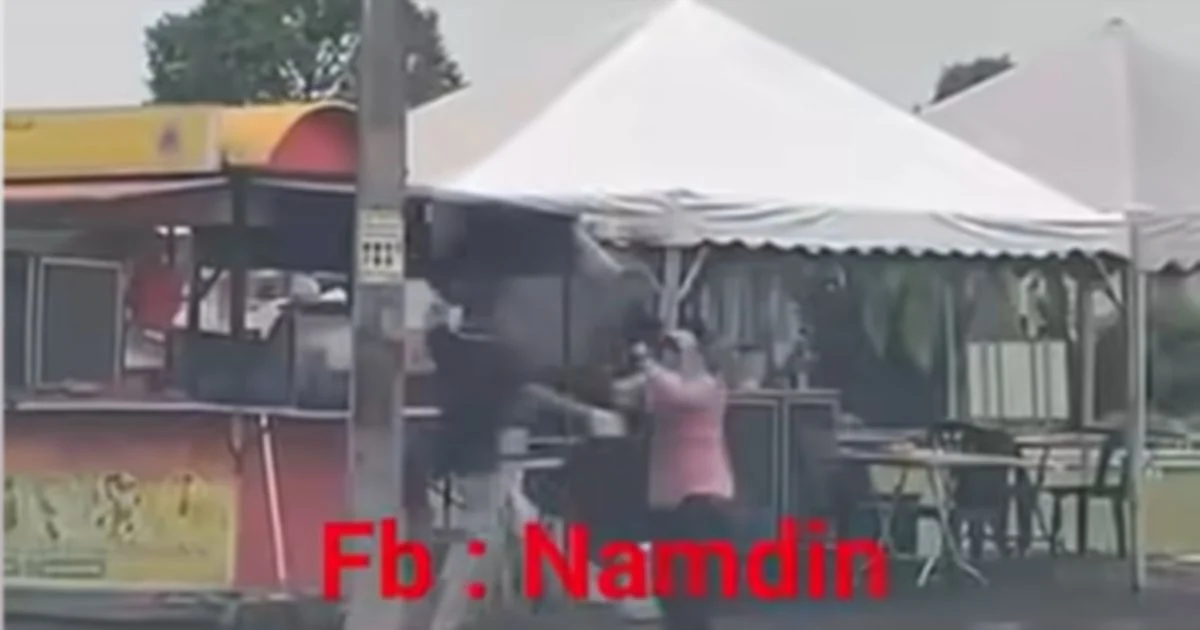
Police in Johor have opened a formal investigation into an assault that took place at a food stall in Gelang Patah, prompted by footage of the incident that rapidly spread across social media networks. The video, which captured a woman being attacked by a man at the food establishment, generated significant public attention and concern within the local community before authorities intervened.
The circulation of the video through messaging applications and social media platforms highlighted growing public awareness of street violence and safety concerns in commercial food establishments across Johor. Such incidents at public venues where residents regularly gather have increasingly drawn scrutiny from community members and law enforcement alike, particularly when visual documentation reaches the broader public domain.
Food stalls and hawker centres throughout Malaysia serve as vital social and economic hubs where families, workers, and friends congregate daily. These spaces, traditionally considered relatively safe community gathering points, have occasionally become sites of confrontation. The incident at Gelang Patah underscores emerging vulnerabilities in maintaining order at these casual dining establishments, where oversight may be limited compared to enclosed commercial restaurants or shopping complexes.
The rapid dissemination of the assault footage through social platforms raises important questions about digital accountability and public participation in crime reporting. When incidents are recorded and shared online before police notification, authorities gain both advantages and challenges—faster public awareness can aid investigations, yet unverified videos may also spread inaccurate information or complicate legal proceedings. The police investigation will need to establish a complete chronology of events, identify all parties involved, and determine the circumstances that precipitated the violence.
Gelang Patah, a densely populated residential and commercial area within Johor Bahru, experiences regular traffic through its food and beverage establishments. The location's accessibility and popularity as a dining destination may have contributed to witnesses being present and subsequently recording the incident. Local businesses in such areas often express concerns about safety and security, recognizing that isolated violent incidents can damage community confidence and affect foot traffic.
Assault investigations in Malaysia typically involve establishing whether the alleged perpetrator acted with criminal intent, whether the victim sustained injuries requiring medical attention, and whether any legal provocation or self-defence claims apply. Authorities will examine whether the incident resulted from personal dispute, random violence, or circumstances arising from the commercial transaction itself. Witness statements and any available closed-circuit television footage from the food stall will provide crucial corroborating evidence alongside the social media video.
The investigation also extends to understanding why the assault occurred in a public venue without immediate intervention. Bystanders at food establishments may hesitate to intervene in altercations due to safety concerns or uncertainty about appropriate responses. The presence of multiple potential witnesses creates investigative opportunities, though locating and interviewing individuals who were present but did not record footage requires systematic police work.
For the victim of this assault, accessing justice and ensuring personal safety represents an immediate priority. Authorities typically provide victim support services through the Royal Malaysia Police, including medical referrals if needed and counselling resources. The psychological impact of public assault, compounded by the knowledge that one's assault was recorded and shared online, requires sensitive handling by investigating officers.
Social media's role in documenting crime has fundamentally altered how Malaysian police handle investigations. Rather than relying solely on direct reports and physical evidence, officers now routinely acquire digital footage from multiple sources. This democratization of evidence collection accelerates certain investigations while creating authentication challenges, as police must verify video authenticity, timestamp accuracy, and whether editing or manipulation has occurred.
The incident resonates with broader Malaysian public discourse about personal safety, particularly concerning women's security in public spaces. Food establishments operating throughout evening and night hours present specific vulnerability factors, as staffing levels may be minimal and visibility from main thoroughfares limited. Many local authorities and business associations have gradually implemented safety measures, from improved lighting to trained personnel protocols for managing disturbances.
Johor Police will pursue multiple investigative avenues, including identifying the accused individual, establishing their whereabouts and movements, and determining any criminal history that might provide context. They will also verify the victim's account, document physical injuries through medical examinations, and collect comprehensive witness testimony. The timeline between incident occurrence and police notification will be relevant, as will any attempts by involved parties to intimidate witnesses or influence the investigation.
Community safety ultimately depends on coordinated efforts between law enforcement, commercial establishment operators, and residents themselves. Food stall operators, hawker centre management, and local authorities continue developing shared safety protocols. This investigation contributes to broader Johor police efforts in maintaining public order across commercial districts where enforcement presence necessarily remains limited compared to shopping malls or controlled venues.