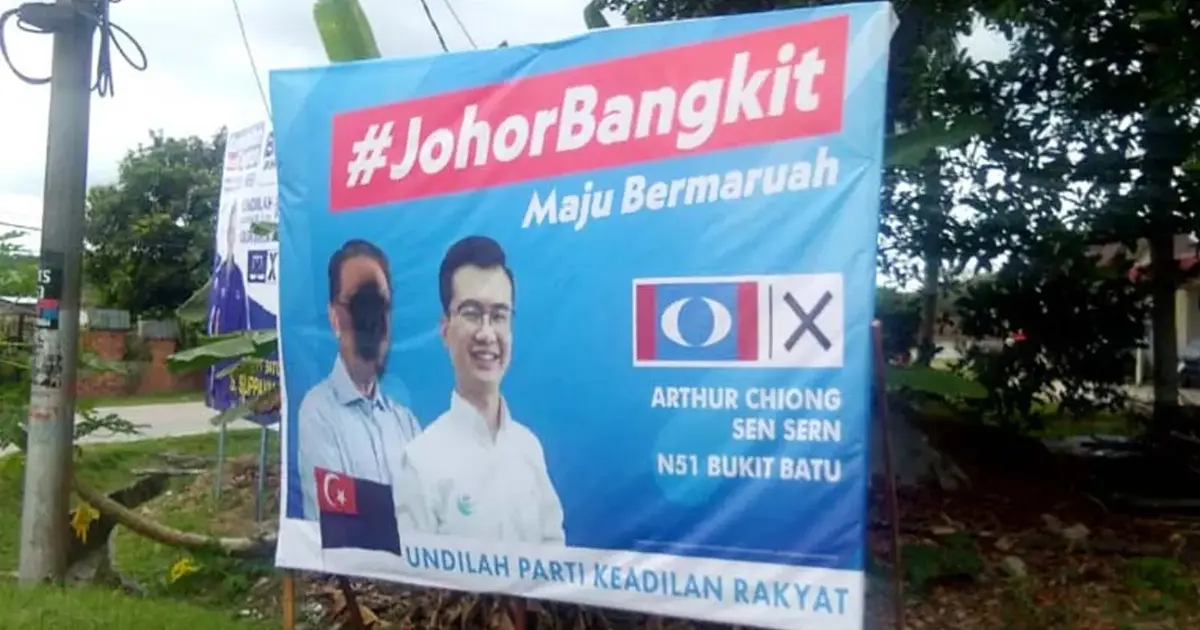
Inspector-General of Police Khalid Ismail has disclosed that law enforcement authorities logged 90 police reports during the ongoing campaign period, with investigators opening 25 separate case files for further examination. The IGP's statement comes as electoral activities reach their peak across the nation, with various compliance and conduct matters requiring police attention during this politically sensitive timeframe.
According to Khalid Ismail, the nature of these complaints predominantly centres on relatively minor infractions rather than serious allegations targeting political parties or their representatives. The breakdown suggests that the vast majority of reported incidents fall into categories such as vandalism, property damage, and similar low-level disturbances that emerge during heated political campaigns when public spaces become focal points for messaging and promotional activities.
The distinction drawn by the IGP carries particular significance for Malaysian electoral politics, where concerns about intimidation, violence, and misconduct by political actors frequently dominate public discourse. By clarifying that most reports involve non-partisan issues, Khalid Ismail appears to be signalling that the campaign period has thus far proceeded without major security incidents or substantive violations directly attributable to contesting parties or their candidates. This assessment suggests a relatively orderly conduct of electoral activities compared to previous cycles.
The 25 investigation papers opened represent a significant filtering mechanism within the police response system. Rather than treating all 90 complaints identically, investigators have prioritised cases warranting deeper scrutiny, indicating a differentiated approach to complaint assessment. This selective openness of formal investigations demonstrates that police authorities are applying judgment about which matters require sustained investigative effort versus those that may be resolved through simpler administrative or advisory channels.
For Malaysian voters and observers monitoring electoral integrity, these figures provide mixed signals. The relatively low number of reports involving direct party or candidate misconduct could reflect genuine compliance with electoral regulations, or alternatively, it might suggest that not all violations are being reported or that enforcement mechanisms are not uniformly capturing all infractions. The challenge of distinguishing between genuine order and potential underreporting remains a persistent feature of Malaysian electoral commentary.
The emergence of vandalism as a primary complaint category aligns with patterns seen in previous campaigns, where campaign materials, public spaces, and infrastructure become subjects of dispute. Political messaging often spills beyond designated areas onto private and public property, creating friction with property owners and local authorities. Such incidents, while technically breaching regulations, typically receive lower prioritisation than offences involving physical harm or electoral fraud.
Regional context matters significantly here. Across Southeast Asia, campaign periods frequently generate substantial security challenges, ranging from communal tensions to organised intimidation. Malaysia's experience with 90 reports during a campaign cycle suggests a relatively stable electoral environment, though this baseline itself reflects the country's particular regulatory framework and enforcement capacity rather than an absolute measure of campaign conduct quality.
The IGP's proactive communication about these figures appears designed to project confidence in police management of electoral security. By publicly disclosing complaint volumes and investigation statistics, authorities are demonstrating transparency about their operational response to campaign-related issues. However, such disclosure also invites scrutiny regarding which complaints are being pursued, which dismissed, and whether enforcement applies evenly across political actors of different sizes and influence levels.
Looking forward, the 25 open investigation papers will shape perceptions of campaign propriety throughout the remaining electoral period. Should any of these cases yield significant findings—particularly those touching on party conduct or candidate behaviour—the narrative around campaign integrity could shift substantially. Conversely, if investigations conclude that most matters involved isolated incidents without systemic party involvement, Khalid Ismail's current framing about minor issues unrelated to political contestants would be reinforced.
For Malaysian stakeholders invested in electoral credibility, including civil society organisations, media outlets, and international observers, the police response to campaign-period incidents serves as one indicator among many regarding democratic health. The relatively modest scale of complaints and the IGP's characterisation of issues as primarily minor suggests the system is functioning without acute dysfunction, even as broader questions about enforcement consistency and political balance in policing remain live subjects of debate within Malaysian democratic discourse.

