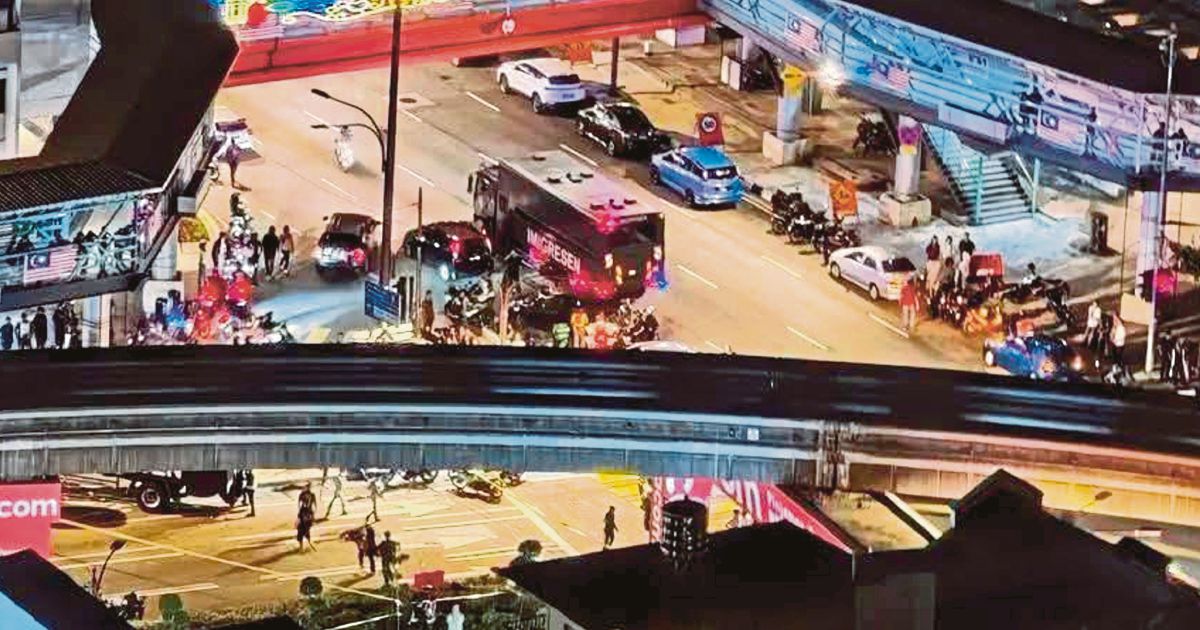
The Royal Malaysia Police have launched a comprehensive forensic review of visual evidence collected from the scene of a deadly traffic collision involving a government-owned lorry operated by the Immigration Department. The incident, which occurred on Jalan Sultan Ismail in Kuala Lumpur in the early hours of yesterday, has claimed the lives of three individuals: a father and his two daughters. Investigators are methodically examining dashcam recordings and feeds from fixed CCTV cameras positioned along the busy thoroughfare to reconstruct the sequence of events that led to the tragedy.
The use of multiple visual sources represents a standard investigative approach in Malaysia's most serious traffic incidents. Dashcam footage, increasingly prevalent on Malaysian roads, often provides crucial perspective from vehicles directly involved or near the scene. Such recordings capture real-time dynamics that would otherwise be difficult to verify, including vehicle speeds, road conditions, traffic signal states, and the precise moment of impact. Meanwhile, CCTV systems installed along Jalan Sultan Ismail—a major arterial route through central Kuala Lumpur—offer fixed-point surveillance that complements mobile footage by showing broader spatial context and any events occurring before vehicles entered the immediate collision zone.
Investigators will be looking for critical details that explain how the Immigration Department lorry came to strike the family's vehicle with such fatal consequences. The analysis will examine whether the government vehicle was appropriately maintained, whether the driver was operating within speed limits, and whether any mechanical failures contributed to the loss of vehicle control. The footage will also reveal whether visibility conditions, road markings, or traffic signals played any role in the incident. Police will cross-reference multiple video sources to identify any discrepancies and establish an authoritative timeline of events.
For Malaysian road safety advocates, this incident highlights the persistent dangers posed by heavy vehicles operating on urban routes. Government lorries and commercial trucks navigating congested city streets represent a particular hazard, given their greater momentum, longer braking distances, and reduced manoeuvrability compared to passenger cars. The family's involvement in this collision underscores how civilian commuters remain vulnerable despite being in ordinary vehicles. Each year, Malaysia records hundreds of traffic fatalities involving heavy vehicles, with occupants of smaller vehicles bearing disproportionate injury and mortality rates.
The Immigration Department's involvement adds another dimension to this tragedy. As a government agency responsible for border and immigration affairs, the department operates various vehicles for operational purposes. This incident will likely trigger internal reviews of the department's fleet maintenance protocols, driver training standards, and vehicle deployment procedures. Questions may arise regarding whether the driver had received appropriate defensive driving instruction and whether the lorry had undergone recent safety inspections. Such internal examinations are commonplace following serious accidents involving government vehicles, reflecting institutional accountability mechanisms.
The location of the accident—Jalan Sultan Ismail in central Kuala Lumpur—is a significant factor in understanding traffic hazards in the capital. This route experiences considerable daily traffic volumes, including substantial numbers of heavy vehicles serving the commercial and industrial areas of central Kuala Lumpur. The early morning timing suggests the vehicle may have been travelling during the pre-dawn period, when visibility is reduced and traffic volumes are typically lighter, potentially allowing higher speeds. Such conditions sometimes contribute to severity of collisions, as vehicles may be travelling faster than they would during peak congestion periods.
Police investigations into fatal traffic accidents typically extend beyond the initial scene examination. Following the visual evidence analysis, authorities will likely conduct autopsies, interview any available witnesses, and review maintenance records for the Immigration Department lorry. The charge laid against the driver will depend on findings from this comprehensive investigation. In Malaysia, fatal traffic accidents can result in charges ranging from causing death by rash or negligent act to more specific traffic violations, depending on the determined cause.
The fatal injury to all three family members—including two children—has resonated particularly deeply within communities where such tragedies are recognised as preventable. Public safety organisations in Malaysia have repeatedly emphasised that adherence to speed limits, vehicle maintenance, and driver vigilance could prevent the majority of fatal accidents. This incident serves as a sobering reminder of the consequences when any of these protective factors fail.
The investigative process unfolding now will consume considerable resources and attention from specialist traffic investigation units within the police force. These units employ accident reconstruction techniques, physics calculations, and evidence analysis to determine precisely how collisions occurred. The dashcam and CCTV footage analysis forms the foundation upon which all subsequent investigative findings will rest. Authorities will present their conclusions to prosecutors, who will determine whether charges should be filed and what level of culpability to attribute to those involved.
For Malaysian road users, this tragedy underscores the importance of defensive driving practices, particularly when sharing roads with larger vehicles. Awareness of heavy vehicle blind spots, maintaining safe following distances, and remaining vigilant during lower-visibility periods can reduce collision risks. The investigation's findings, when ultimately released, may inform public safety campaigns and potentially lead to recommendations for improved traffic management on Jalan Sultan Ismail or similar high-risk routes throughout Kuala Lumpur.

