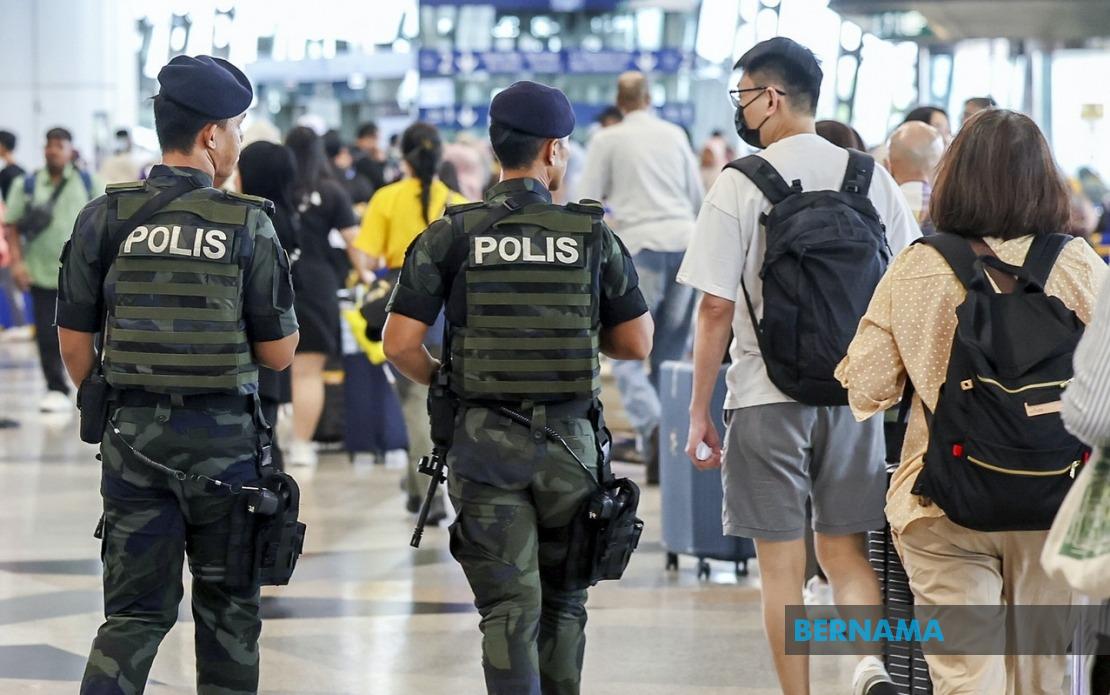
The Malaysian government is taking swift action to reinforce airport security by stationing Royal Malaysia Police personnel within the Aviation Security unit, a significant operational shift announced by MADANI Government spokesman Datuk Seri Fahmi Fadzil on Tuesday. The decision comes in direct response to the arrest of a 39-year-old Malaysian pilot in Indonesia, who was apprehended at Soekarno-Hatta International Airport in Jakarta while allegedly attempting to smuggle a substantial quantity of narcotics through the terminal.
The immediate deployment of police officers to the Aviation Security division marks a departure from the current staffing model, which relies primarily on auxiliary police personnel to manage airport security operations. During a weekly press briefing in Putrajaya, Fahmi explained that the Home Ministry and Transport Ministry jointly recommended this change after presenting their assessment to the Cabinet. The recommendation underscores growing concerns about potential vulnerabilities within Malaysia's existing airport security framework, particularly given recent incidents involving aviation personnel.
The arrested pilot was detained following the discovery of drug packages at Jakarta's main international airport. According to the Indonesian National Police, inspectors uncovered fifteen packages containing more than 70,000 ecstasy and methamphetamine capsules, valued at approximately RM45 million at Indonesian street prices. The quantity and nature of the seizure have raised alarm bells across regional aviation authorities about how such contraband might navigate through airport security checkpoints.
Beyond the immediate redeployment of personnel, the government is implementing a comprehensive review of existing security protocols. Malaysia Aviation Group, the country's primary aviation holding company, has been directed to strengthen background screening procedures and medical assessment requirements for all pilots and co-pilots. This expanded scrutiny reflects recognition that traditional vetting processes may have failed to identify or prevent involvement in criminal activity by personnel entrusted with significant responsibilities.
The Royal Malaysia Police and the Malaysian Border Control and Protection Agency have been tasked with conducting a thorough examination of current security systems to identify structural weaknesses or procedural gaps. Fahmi emphasized that this review must be conducted urgently, with corrective measures implemented without delay. The objective is to close potential loopholes that could be exploited for smuggling operations or other security breaches before additional incidents occur.
Regarding the possibility of establishing a dedicated investigation task force, Fahmi adopted a cautious approach, noting that the government would await detailed reports before committing to any special investigative body. He acknowledged receiving only preliminary briefings from senior ministry officials and stressed the complexity of the situation, given that Indonesian authorities are actively investigating the case within their jurisdiction. The government's measured stance reflects diplomatic sensitivity surrounding the incident, as well as the need to understand the full scope of potential involvement by other parties.
The incident raises critical questions about how aviation personnel, who occupy positions of significant trust and access within airport operations, can be compromised or recruited into smuggling networks. The sheer volume of drugs involved suggests this was not a minor or opportunistic crime, but rather part of an organized trafficking operation. Understanding the recruitment pathway and identifying potential co-conspirators within Malaysia's aviation sector has become a priority for security officials.
For Malaysian travelers and the aviation industry more broadly, the government's response signals heightened security consciousness at a time of growing concern about transnational drug trafficking through Southeast Asia. The region has become increasingly prominent in global narcotics distribution networks, with airports serving as critical chokepoints where organized criminal groups attempt to move contraband across borders. Malaysia's geographic position and developed aviation infrastructure make it a target for traffickers seeking to exploit any systemic weaknesses.
The deployment of regular police personnel rather than auxiliary officers may yield operational improvements, given that police training typically exceeds that of auxiliary forces. However, the effectiveness of this change will ultimately depend on adequate resourcing, proper training in aviation security protocols, and sustained commitment to enforcement. Simply changing personnel without addressing underlying systemic issues could prove insufficient to prevent determined smuggling attempts.
The incident also highlights the potential vulnerability of trusted professionals within the aviation sector. Pilots occupy elevated social and professional status, which can create psychological blind spots among colleagues and supervisors regarding their potential involvement in illicit activities. Enhanced medical assessments and background checks must therefore be sufficiently rigorous to identify behavioral red flags or financial pressures that might indicate vulnerability to recruitment by criminal organizations.
For other Southeast Asian nations, Malaysia's response provides a cautionary example of security gaps that may exist within their own aviation systems. The Association of Southeast Asian Nations has long recognized the need for harmonized security standards across member states, yet implementation remains inconsistent. This incident underscores the cross-border implications of security lapses in one country's airports, as contraband successfully moved through Malaysian systems before detection in Indonesia.
The government's commitment to comprehensive measures suggests that additional security enhancements beyond police deployment may be forthcoming. These could include upgraded scanning technology, enhanced personnel vetting procedures, or revised protocols for monitoring aviation staff movements and access within secure airport areas. The full scope of recommendations will likely emerge once detailed reports from both ministries have been analyzed.
Ultimately, this incident serves as a reminder that airport security depends on multiple layers of protection, from personnel reliability to technological systems to institutional procedures. The government's swift response demonstrates recognition of this principle, though the true measure of effectiveness will be whether these measures succeed in preventing future trafficking attempts. For Malaysian citizens and the broader regional aviation community, close monitoring of implementation will be necessary to assess whether the announced measures deliver meaningful security improvements.

