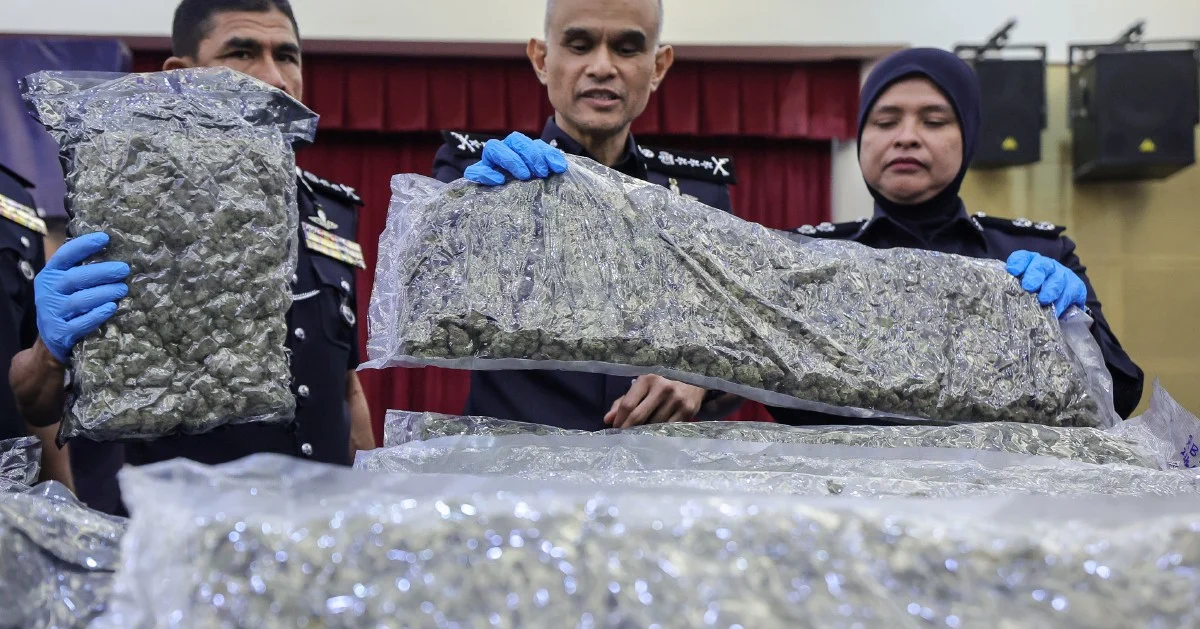
Police have uncovered a substantial international drug smuggling operation centred on Kuala Lumpur International Airport, culminating in the seizure of 650 kilograms of cannabis buds and the arrest of 38 individuals since the beginning of the year. The operation represents one of the most significant drug interceptions at the nation's primary international gateway, highlighting the persistent challenge of narcotics trafficking through Malaysia's borders despite enhanced security measures.
The buds, which constitute the flowering component of the cannabis plant containing the highest concentration of psychoactive compounds, represent a particularly lucrative commodity on regional black markets. The quantity confiscated—equivalent to approximately 650,000 grams—underscores the scale of commercial-grade smuggling rather than personal consumption, suggesting an organised international network rather than opportunistic trafficking. Such seizures typically command premium prices in Southeast Asia, where cannabis remains strictly prohibited and enforcement remains rigorous across most jurisdictions.
Among the 38 detained individuals are several foreign nationals, indicating that the conspiracy extends beyond Malaysian borders and likely involves coordinated networks spanning multiple countries. The inclusion of international participants points to professional smuggling operations with established distribution channels across the region. Foreign involvement in such networks typically suggests participation from source countries with significant cannabis cultivation, potentially in the Indian subcontinent or parts of Central Asia, routes that have become increasingly common for contraband destined for Southeast Asian markets.
The investigation's scope reveals the sophisticated nature of contemporary drug trafficking at major transportation hubs. KLIA, handling millions of passengers and thousands of cargo shipments annually, presents both vulnerability and opportunity for smugglers who exploit the volume of movement to conceal illicit goods. The sustained seizure effort since January indicates that authorities have implemented targeted interdiction strategies, possibly involving intelligence-led operations and enhanced screening of high-risk routes and shipping methods.
This enforcement action carries significant implications for Malaysia's counternarcotics posture within the region. The nation's airport security agencies have progressively strengthened detection protocols, deploying advanced scanning technology and expanding canine units trained to identify drug scents. However, the sheer quantity intercepted suggests that smugglers continue adapting their methods, possibly employing concealment techniques designed to evade conventional detection systems or exploiting particular vulnerabilities in the screening process.
The involvement of 38 suspects reflects the comprehensive approach Malaysian authorities are adopting, pursuing not merely the interception of goods but the dismantling of the entire operational infrastructure. Investigation and prosecution strategies now typically target the entire supply chain—from source procurement through to final distribution—rather than focusing exclusively on frontline seizures. This approach aims to disrupt the economic viability of trafficking networks by eliminating key personnel and severing logistical capabilities.
For regional observers, the KLIA seizure underscores Malaysia's continuing utility as a transit point within international drug trafficking corridors. The country's geographic position, extensive port and airport infrastructure, and integration into global trade networks make it an inevitable target for smugglers routing contraband between production zones and consumption markets. This reality demands persistent investment in border security and intelligence capabilities, as does the transnational nature of the criminal networks involved.
The penalties for cannabis trafficking in Malaysia remain among Asia's strictest, with possession of quantities exceeding 200 grams presumed to indicate trafficking intent, carrying mandatory minimum sentences of imprisonment and potential capital punishment in cases meeting specific trafficking criteria. These severe consequences reflect the nation's zero-tolerance drug policy, yet seizures of this magnitude continue, suggesting that the potential profits justify the criminal risks for sophisticated organisations.
The investigation's outcome will likely provide Malaysian authorities with valuable intelligence regarding trafficking methodologies, border vulnerabilities, and the identities and operational patterns of criminal networks. Such information informs strategic planning for law enforcement agencies across the region, contributing to collaborative efforts within ASEAN frameworks for addressing transnational organised crime. Intelligence sharing between Malaysian authorities and counterparts in neighbouring countries can amplify the disruption of trafficking networks operating across multiple jurisdictions.
This seizure also highlights the particular challenges posed by cannabis trafficking in contemporary Southeast Asia, where rising demand and relaxation of penalties in some global markets have incentivised increased supply-side activity. While some countries have reconsidered cannabis prohibition, Malaysia maintains strict enforcement, positioning it as an attractive enforcement priority for agencies committed to preventing drug dissemination. The 650-kilogram seizure thus represents not merely a single enforcement success but evidence of ongoing operational capacity and commitment to interdicting contraband at critical chokepoints in the region's transportation infrastructure.