A prominent figure in Pahang's UMNO Youth hierarchy has died in a devastating accident that claimed three other family members, marking a significant loss for the state's political establishment. Mohd Radzi Rahimi, 40, was travelling with his wife Nuriani Mohammad Jafri, 36, his five-year-old son Muhammad Rizz Hazim, and his brother-in-law Mohammad Nizam Mohammad Jafri, 35, when their four-wheel-drive vehicle was crushed by a falling tree along the old Kuala Lumpur-Bentong road near Janda Baik on August 3 at approximately 1 pm. The tragedy unfolded as the family returned to Maran following their participation in a motorcycle programme organised for youths in the district, which had taken place in Pulau Pangkor, Perak.
Mohd Radzi had built a lengthy and dedicated involvement with UMNO's youth wing that spanned more than a decade. His father, Rahimi Abd Samad, 63, described his son's unwavering commitment to party work and grassroots political engagement. Beginning his political career in the Maran UMNO Youth division, where he devoted approximately ten years to the organisation, Mohd Radzi progressed through the ranks to eventually secure election as the divisional Youth chief. His trajectory within party structures culminated in his appointment as Treasurer of Pahang UMNO Youth, a position reflecting his trusted standing among senior party members and his demonstrated capacity to manage organisational affairs.
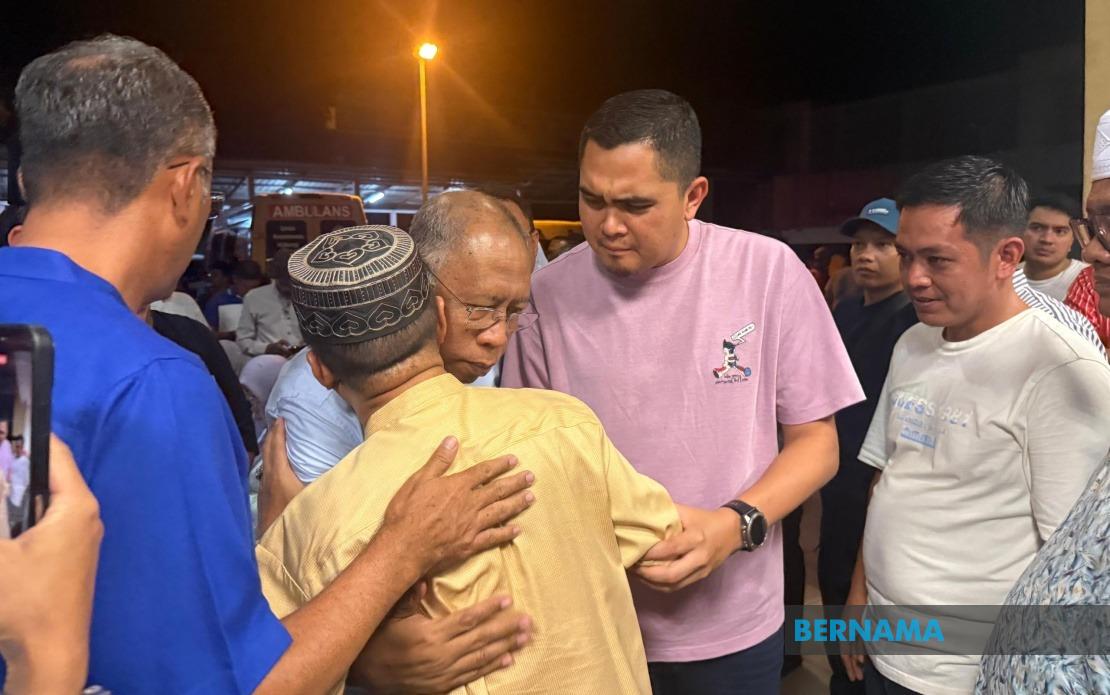
The magnitude of respect Mohd Radzi commanded within UMNO circles became evident in the immediate aftermath of the incident. Speaking at the Sultan Haji Ahmad Shah Hospital Forensic Unit in Temerloh, his father reflected on the widespread affection his son had cultivated among party members over his years of active service. The turnout of high-ranking officials who came to pay their respects underscored his significance within the party hierarchy. Among those who visited the family were UMNO Youth chief Datuk Dr Muhammad Akmal Saleh, who made a point of honouring the deceased, alongside UMNO Supreme Council member Datuk Seri Shahaniza Shamsuddin, who serves as Maran UMNO division chief, and Kuantan UMNO division chief Datuk Seri Ab. Hamid Nazahar. Such high-level representation at the hospital reflected Mohd Radzi's deep networks and the esteem in which he was held across multiple levels of the party structure.
Rahimi provided touching details about the final moments before his son's departure for what would become a fatal journey. Speaking to journalists at the hospital's forensic unit, he recalled last seeing his son on Thursday before the latter left for Pangkor. The conversation had been unremarkable in its ordinariness, with Mohd Radzi simply mentioning his intention to join a motorcycle convoy with friends heading to the island destination. There had been no indication of impending tragedy, no premonition of the disaster that would befall the family within days. The ordinariness of that farewell—a father watching his son prepare for what was meant to be a routine recreational activity—was rendered devastating by subsequent events.
The accident claimed not only Mohd Radzi but also his wife and young child, compounding the human tragedy. The family unit was fractured in a single moment when weather or other environmental conditions caused a tree to fall across their vehicle. The force of the impact proved fatal for four occupants, though not all. Mohd Radzi's other son, Muhammad Rizz Haziq Mohd Radzi, survived the incident but sustained severe head injuries that necessitated continued medical care at HoSHAS. His recovery remained uncertain as the family grappled with the loss of multiple loved ones while their youngest son fought for his life.
Post-mortem examinations on the four deceased were concluded by 9 pm on the day of the incident, allowing funeral arrangements to proceed according to Islamic custom. The remains were to be transported to Masjid Kampung Paya Luas in Temerloh for the ritual washing and shrouding, which represents the first stage of Islamic funeral rites. Following these preparations, the bodies would be moved to Masjid As-Syakirin in Maran, where funeral prayers would be conducted before interment at Taman Sri Chendung Muslim cemetery. These arrangements reflected the family's adherence to their faith and the community's support for conducting dignified final rites.
The tragedy represents a significant loss for Pahang's political landscape, removing from active service an experienced administrator who had dedicated his adult life to party work and youth engagement. UMNO's strength in Pahang has long relied on a cadre of dedicated grassroots organisers working within the Youth wing, and Mohd Radzi exemplified this tradition. His progression from divisional operative to state-level treasurer represented the kind of career trajectory that sustained the party's organisational machinery. The sudden removal of such a figure raises questions about succession planning and the vulnerability of party structures to unexpected losses of institutional knowledge and personal relationships.
For Southeast Asian readers, this incident illustrates broader themes concerning political commitment and the intertwining of personal life with public service in Malaysian political culture. The fact that Mohd Radzi was engaged in youth political activities at the time of the accident—attending a motorcycle programme designed to engage young voters and party members—demonstrates how Malaysian politics operates across multiple registers simultaneously. Youth engagement activities, recreational outings, and formal political work blur into a seamless continuum that defines the lived experience of party operatives at local and state levels.
The loss also highlights the vulnerabilities of Malaysian road infrastructure during the monsoon season when fallen trees and flooding present hazards along major routes. The old Kuala Lumpur-Bentong road near Janda Baik, while serving as an established transportation corridor, proved unable to protect the family from environmental hazards. Road safety concerns, particularly in rural and semi-urban areas connecting major cities with hill stations and recreational destinations, remain pertinent issues for Malaysian policymakers.
As the political establishment mourned Mohd Radzi's passing, his legacy within Pahang UMNO's Youth wing became a matter of broader reflection. His father's accounts of his son's dedication, coupled with the official recognition from senior party figures, created a narrative of a committed public servant whose political life was cut short in circumstances entirely beyond his control. The accident transformed what began as an ordinary family outing into a defining tragedy that would reverberate through Pahang's political circles for months to come.

