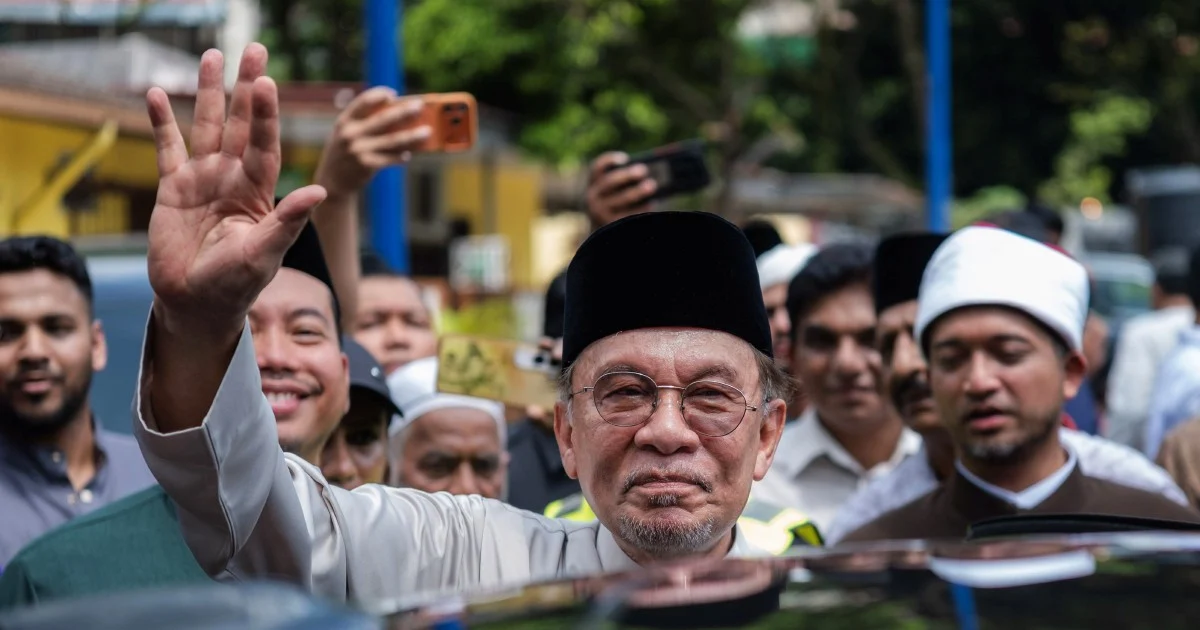
The Johor state election is entering its decisive phase with a high-profile mobilisation of Malaysia's top political leadership converging on the southern state this weekend. Prime Minister Anwar Ibrahim and Deputy Prime Minister Ahmad Zahid Hamidi, along with other senior party officials, are expected to fan out across Johor for an intensive slate of campaign engagements and public addresses aimed at energising grassroots support.
The simultaneous appearance of multiple heavyweight figures reflects the strategic importance that Malaysia's major coalitions place on Johor. As one of the most populous states and a traditionally significant electoral battleground, control of Johor carries implications not just for regional representation but for the broader balance of power in national politics. The convergence of leaders signals that both Pakatan Harapan and opposition coalitions view this contest as consequential enough to justify deploying their most senior and visible figures.
Ceremahs—public rallies featuring speeches and direct engagement with voters—have emerged as a cornerstone campaign tactic across Malaysian politics. These events allow leaders to present unfiltered messages to supporters, build emotional connection with constituents, and project momentum heading into polling day. The weekend schedule suggests an orchestrated effort to capture media attention and demonstrate organisational capacity.
Anwar Ibrahim's participation as Prime Minister carries particular weight. His presence validates the current federal government's record and provides a platform to defend Pakatan Harapan's governance agenda before a Johor audience. For supporters, his attendance reinforces the coalition's commitment to the state; for critics, it offers a focal point for challenging the administration's performance and policy direction.
Similarly, Zahid's involvement as Deputy Prime Minister underscores the stakes for Barisan Nasional and its coalition partners. Johor holds historical significance for Umno, the senior component of Barisan, and mobilising the deputy premier signals the coalition's determination to maintain or recapture ground in a state where it traditionally held considerable influence.
The timing of this leadership push reflects the election calendar's progression. Early stages of campaigns often feature ground-level organising and local candidate introductions, while later phases typically bring national figures into play to amplify messaging and consolidate voter coalitions. This weekend's events suggest the contest is reaching the stage where top-level political capital becomes strategically valuable.
Such gatherings also serve a secondary function within party structures. They provide opportunities for leaders to assess ground sentiment, identify logistical challenges, and demonstrate party unity to supporters and party members alike. The visible commitment of senior figures can energise cadres and volunteer networks across constituencies.
Johor's electorate comprises diverse voter demographics spanning urban professionals, rural agricultural communities, industrial workers, and suburban middle-class families. Addressing these varied constituencies requires messaging strategies that national leaders can articulate more effectively than local candidates alone. The coalition leaders' weekend visits allow tailoring of rhetoric to different audience segments across multiple locations.
The convergence also reflects evolving campaign dynamics in Malaysian politics. Digital media and traditional mobilisation strategies increasingly coexist, with physical rallies serving to generate social media content and news coverage that amplifies reach beyond immediate attendees. The presence of prominent leaders creates news value that extends campaign messaging into news cycles.
For Southeast Asian observers, Malaysia's electoral cycles demonstrate how coalition-based political systems require sustained resource deployment and high-level engagement to maintain competitive positioning. The willingness of federal leaders to invest time in state-level contests underscores the interconnected nature of Malaysian federalism, where state elections can shift momentum ahead of national contests.
The weekend campaign push also occurs against the backdrop of Malaysia's broader political landscape, where coalitions have experienced significant reshuffling in recent years. Demonstrating electoral viability in substantial states like Johor becomes crucial for coalitions seeking to establish narrative momentum and claim mandate for governance approaches.
As the campaign intensifies, voters across Johor will evaluate not merely which coalition deserves power, but the substantive policy differences between competing visions for the state's development. Leaders' appearances this weekend will attempt to frame these choices while mobilising supporters to overcome inevitable polling day logistics and turnout challenges.
The concentration of political leadership descending on Johor this weekend signals the election has entered its consequential final phase, where the gap between abstract policy rhetoric and concrete electoral outcomes narrows considerably.

