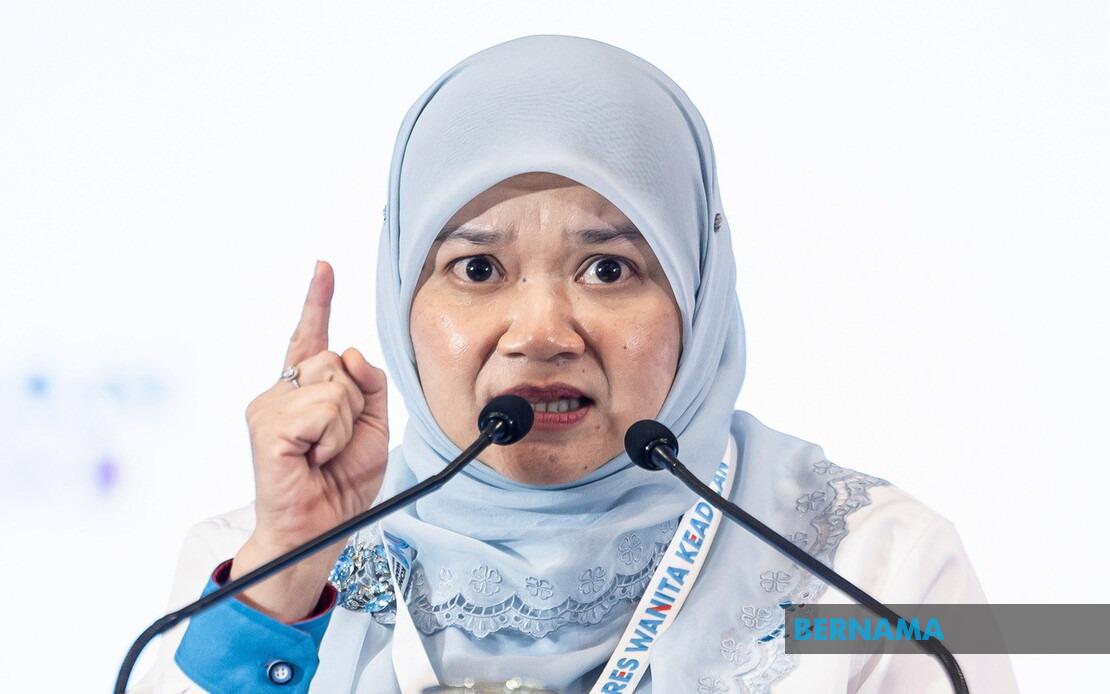
Speaking at the 2026 Wanita PKR National Congress in Melaka, Wanita PKR chief Fadhlina Sidek has drawn a line in the sand over how Malaysia's political parties should conduct themselves during electoral contests. Her message is unambiguous: religious faith should remain off-limits as a tool for partisan advantage, and the substance of political competition ought to centre on which party can genuinely deliver better outcomes for ordinary Malaysians.
The remarks reflect growing concern within PKR about campaign tactics employed across the political spectrum. Fadhlina argued that faith-based appeals and the deliberate incitement of voters along religious lines represent a degradation of democratic discourse and ultimately undermine public trust in institutions. Rather than marshalling divisive rhetoric, she contended, parties should invest energy in articulating coherent policy platforms and demonstrating concrete capacity to address the challenges facing communities.
This positioning carries particular significance within the Malaysian context, where religion intersects with ethnicity, constitutional arrangements, and historical grievances in complex ways. By explicitly cautioning against the weaponisation of faith during elections, Fadhlina is essentially calling for an elevation of political standards and a return to principle-based competition. The appeal suggests that PKR, as an inclusive multiracial coalition, sees strategic advantage in promoting a more secular framework for political contestation—one where ideas about economic management, healthcare delivery, education quality, and social mobility can be debated on their merits.
Beyond campaigning norms, Fadhlina's address emphasised the importance of party leaders maintaining authentic connections with voters and communities. She directed PKR functionaries at all levels to deepen their understanding of grassroots concerns by engaging directly with residents, observing their circumstances, and responding to genuine needs. This approach contrasts sharply with the transactional politics of election season, when politicians often materialise in constituencies only when votes are being sought. Instead, Fadhlina advocated for continuous, embedded presence and attentiveness.
The emphasis on reconnection with ordinary people also speaks to broader anxieties about political alienation in Malaysia. As urbanisation accelerates and economic pressures mount, many voters feel disconnected from leaders who seem distant or focused primarily on factional struggles within their parties. Fadhlina's call for PKR members to examine their neighbours' circumstances, understand unmet needs, and take concrete action to help addresses this legitimacy gap. Such engagement, she suggested, should form the bedrock of PKR's relationship with the electorate.
Fadhlina also underscored the need for party cohesion and sustained commitment to PKR's broader project, particularly as the organisation navigates various internal and external pressures. She reminded members that loyalty to the party's vision and willingness to persevere through difficult periods are essential prerequisites for building durable political strength. Without this foundational unity and resolve, she implied, even the most sophisticated policy platforms and grassroots networks will prove insufficient.
The call for ideological rather than religious competition has practical implications for Malaysian politics. If adopted more widely, such a framework could shift electoral campaigns toward substantive debates about government performance, economic policy, and social programmes. This would be a departure from recent trends in which religious identity and constitutional protections for Islam have featured prominently in campaign messaging, particularly among opposition parties seeking to mobilise conservative-leaning Malay-Muslim voters.
Fadhlina's remarks also reflect PKR's positioning as a secular-leaning, multiracial party operating within an increasingly competitive political landscape. By staking out principled ground against the exploitation of religion for electoral gain, PKR signals to its core constituency—which includes significant numbers of non-Muslim and urban voters—that the party will not resort to divisive tactics. This differentiation matters for political positioning and coalition-building in post-election scenarios.
Moreover, her emphasis on local engagement and understanding community needs chimes with international best practices in political organising. When parties develop genuine institutional capacity to listen to constituents, respond to problems, and demonstrate concrete improvements in service delivery, they build resilience against anti-incumbent sentiment and strengthen their electoral prospects. PKR's focus on grassroots revitalisation thus serves both democratic and organisational imperatives.
The Wanita PKR congress speech also carries symbolic weight within party structures. As the chief of the women's wing—a crucial mobilising force in Malaysian politics—Fadhlina's pronouncements shape how party activists and leaders interpret official direction. By framing political competition in terms of ideas and community service rather than religious or ethnic appeals, she is encouraging a particular model of activism and engagement that emphasises inclusivity and substantive problem-solving.
Looking ahead to the 2026 electoral cycle and beyond, Fadhlina's intervention suggests PKR intends to distinguish itself through principled positioning and authentic grassroots connection. Whether other parties will heed similar calls for elevating campaign standards remains uncertain, but her message establishes a clear benchmark for how Malaysian political competition might evolve if democratic norms and civic engagement take precedence over divisive identity politics.

