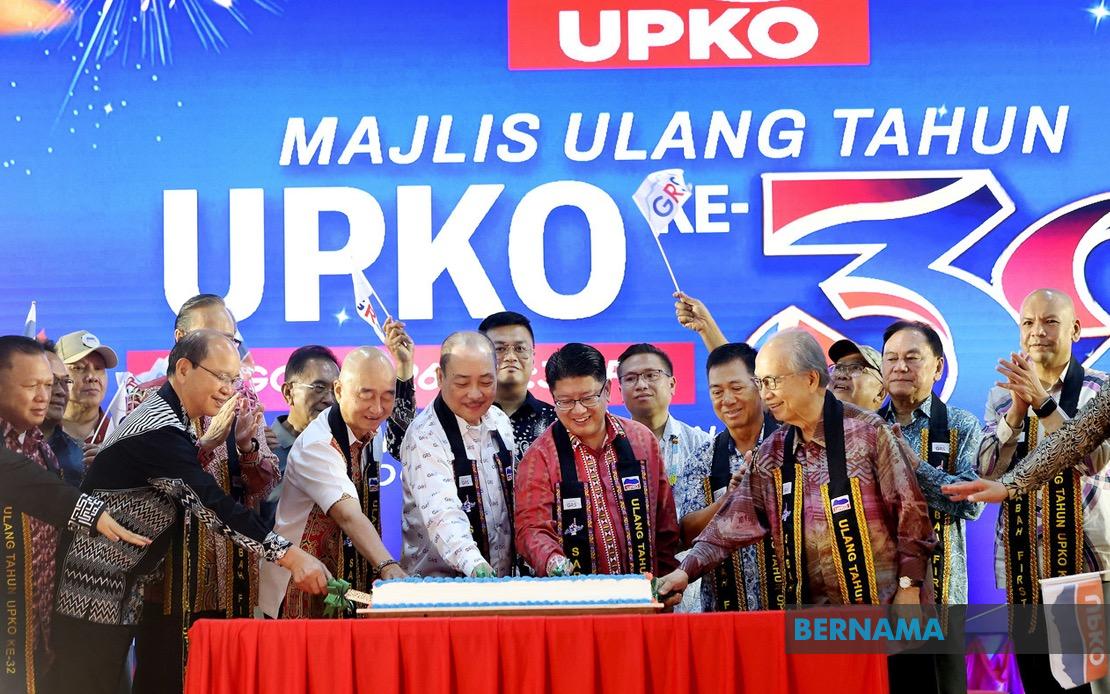
Maintaining political stability stands as a prerequisite for the Sabah administration to concentrate on development initiatives, economic expansion and infrastructure projects, according to Sabah Chief Minister Datuk Seri Hajiji Noor. Speaking at the 32nd anniversary celebration of the United Progressive Kinabalu Organisation (UPKO) and the opening of its 17th Triennial Delegates Conference in Kota Kinabalu, the Gabungan Rakyat Sabah (GRS) chairman underscored the connection between a unified government and tangible progress for the state's residents.
Hajiji emphasised that despite the diverse political backgrounds and founding principles of the six component parties now within GRS, their shared commitment to Sabah's welfare must take precedence. The metaphor he employed—of standing under the same roof and sharing the same sky—reflected an attempt to frame political coalition management not merely as a transactional arrangement but as a unified household bound by common purpose. This framing is significant in Sabah's context, where coalition politics has historically been fragile, with numerous realignments affecting governance continuity.
The composition of GRS underwent expansion when UPKO formally joined the coalition on June 18, elevating the membership to six parties. In addition to UPKO, the alliance now includes Parti Gagasan Rakyat Sabah, Parti Bersatu Sabah, Liberal Democratic Party, Parti Harapan Rakyat Sabah and Parti Cinta Sabah. This expansion carries strategic implications for state governance, as broader coalitions can enhance legislative stability but also complicate decision-making processes and resource allocation among multiple parties with sometimes competing interests.
UPKO's incorporation into GRS represents a calculated move to consolidate support among Sabah-based political movements. The party, which draws significant backing from certain ethnic and regional constituencies within the state, brings additional seats and organisational capacity to the governing coalition. For Hajiji, securing UPKO's membership helps insulate his administration against potential defections or alternative coalition arrangements that could undermine his position as Chief Minister. In Malaysian state politics, such coalition mathematics directly determine executive stability and legislative authority.
EWON Benedick, the UPKO president and Sabah Deputy Chief Minister III, occupies a position that mirrors the broader integration strategy. His concurrent roles—leading UPKO while holding ministerial portfolios for Industrial Development, Entrepreneurship and Transportation—exemplify how coalition agreements typically distribute executive positions among partner parties. This distribution serves both to bind parties to the coalition through shared stake in government and to ensure that diverse regional interests gain ministerial representation.
Hajiji's call for UPKO leaders and members to work collectively toward realising the "Sabah First, Sabah United, Sabah Forward and Sabah Prosper" vision encapsulates the aspirational framing that often accompanies coalition consolidation. These articulated goals reflect standard development priorities—regional focus, unity, progress and prosperity—but their effectiveness depends on whether coalition members perceive genuine advancement in constituencies they represent. For Malaysian readers following Sabah politics, such rhetoric frequently precedes either successful periods of calm governance or, conversely, internal bickering over resource distribution.
The timing of UPKO's accession and Hajiji's emphasis on unity suggest awareness of underlying vulnerabilities in the coalition structure. Sabah has experienced numerous government changes in recent years, with shifting alignments among local and peninsular-based parties reshaping the political landscape. By securing additional coalition members and publicly reinforcing the harmony message, Hajiji seeks to project an image of consolidated authority capable of delivering on development promises. However, coalition stability in Malaysian state politics historically depends less on rhetorical commitment than on tangible benefits flowing to coalition members and their constituents.
For Sabah's development trajectory, the distinction between stability achieved through genuine consensus-building versus stability imposed through electoral mathematics carries material consequences. A coalition that fragments frequently cannot implement long-term infrastructure projects, economic initiatives or policy reforms effectively. Conversely, a coalition bound primarily by short-term patronage calculations may deliver neither stability nor coherent development strategy. Hajiji's emphasis suggests awareness that Sabah requires the former model, though institutional factors often determine which emerges in practice.
The expansion of GRS to six component parties also reflects broader patterns in Malaysian coalition politics, where Peninsular-dominated structures increasingly incorporate state-based movements. UPKO's position as a Sabah party within a broader coalition structure highlights the ongoing negotiation between state-level political identities and national political alignments. This dynamic has intensified as both Barisan Nasional and Pakatan Harapan seek influence in East Malaysia, treating state-level coalitions as crucial to national political calculations.
For investors and businesses monitoring Sabah's investment climate, political stability does correlate with project continuity and policy predictability. A fragmented government frequently struggles to implement economic policies, approve major developments or maintain consistent regulatory frameworks. Hajiji's emphasis on GRS unity can therefore be read partly as reassurance to both domestic and international stakeholders that the state government possesses sufficient cohesion to pursue development agendas consistently. Whether the coalition can translate this reassurance into actual results will significantly impact perceptions of Sabah's governance quality and investment attractiveness across the region.
Moving forward, the test of GRS's durability will emerge not from anniversary speeches or public declarations of unity, but from how the coalition manages resource distribution, policy disagreements and pressure from opposition parties seeking to exploit any fractures. Sabah's political history suggests that maintaining broad coalitions requires constant negotiation and adjustment. The true measure of Hajiji's coalition management will be whether GRS can sustain itself through the inevitable disputes and challenges that characterise Malaysian state politics while simultaneously advancing the development priorities he has articulated.

