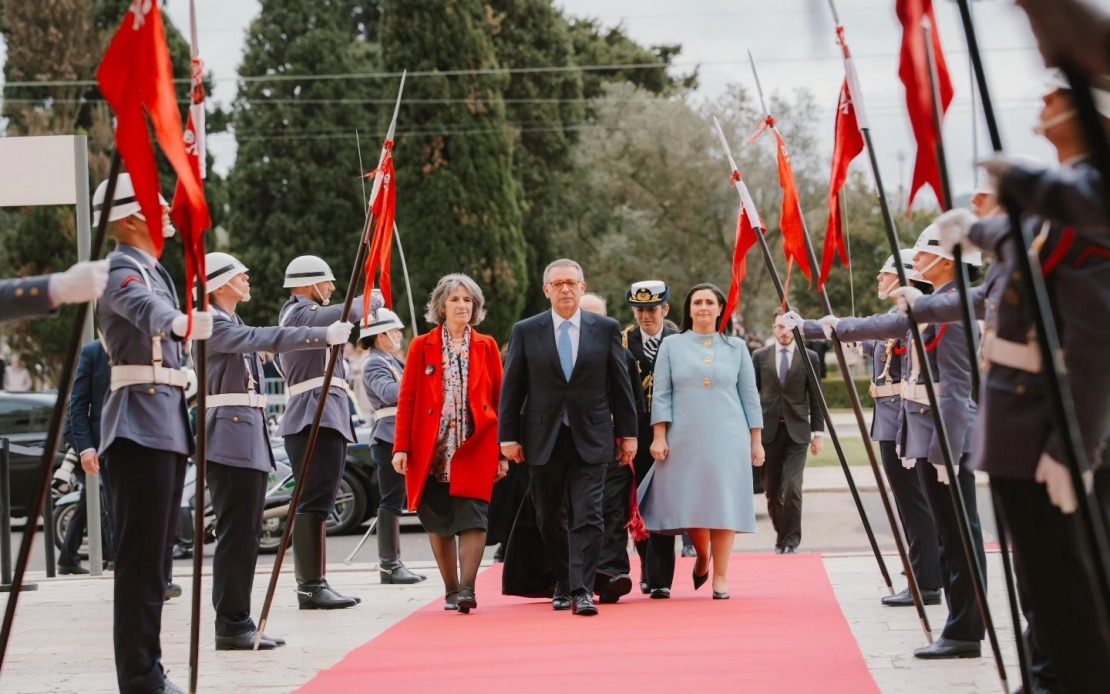
Portugal has become the latest European country to restrict face coverings in public places, following President Antonio Jose Seguro's decision to sign the measure into law on Tuesday. The legislation, which originated from proposals put forward by the right-wing Chega party, represents a significant policy shift in the Iberian nation and reflects broader tensions across the continent regarding identity, security, and religious freedom.
According to a statement released by Belem Palace, the presidential residence in Lisbon, Seguro determined that parliamentary amendments introduced during the legislative process had adequately addressed his initial concerns, prompting him to endorse the controversial measure. The President framed his decision within the context of what he characterised as issues of profound social and cultural importance to Portuguese society, though the move immediately sparked debate among civil liberties advocates and religious communities.
In articulating the rationale behind the ban, Seguro emphasised three interconnected justifications: the advancement of social integration, the elimination of discriminatory practices, and the maintenance of public security safeguards. He further referenced established jurisprudence from the European Court of Human Rights, which has previously examined questions surrounding face coverings in democratic societies. This invocation of European legal precedent signals an attempt to position Portugal's legislation within a broader continental framework rather than presenting it as an isolated or exclusionary policy.
The presidential statement elaborated on the philosophical underpinnings of the restriction, asserting that facial visibility constitutes a fundamental element of social cohesion within Portuguese culture. The argument rests on the proposition that authentic community life depends upon mutual recognition and the capacity for unmediated human interaction between citizens. By this logic, the concealment of facial features undermines the foundations of interpersonal trust that sustain democratic societies.
Particularly striking was the administration's gendered analysis of the legislation. The statement explicitly condemned what it termed an inherent asymmetry in face-covering practices, contending that restricting such coverings exclusively to women contradicts principles of gender equality and human dignity that characterise modern European democracies. This framing attempts to reposition the ban as a feminist protection measure rather than a restriction on religious or cultural expression, though this characterisation remains hotly contested.
However, Amnesty International Portugal has forcefully rejected this interpretation, issuing a public condemnation of the law as fundamentally discriminatory. The human rights organisation contends that the legislation represents a threat to the autonomy and religious freedoms of Muslim women who consciously choose to wear face coverings as an expression of their faith and personal identity. This clash between security-focused and rights-based perspectives reflects a deeper ideological fault line running through European policy-making.
Portugal's adoption of the ban positions it alongside an increasingly long list of European Union member states that have implemented comparable restrictions. France, Belgium, Austria, Denmark, and the Netherlands have all introduced either comprehensive or partial prohibitions on face coverings in public settings. This clustering of similar policies across diverse national contexts suggests the emergence of a European consensus around limiting facial concealment, despite significant variation in the specific scope and enforcement mechanisms of individual national laws.
For Malaysian observers, this development carries particular significance given Southeast Asia's substantial Muslim populations and the region's ongoing dialogue with European nations on matters of religious practice and state regulation. The Portuguese precedent demonstrates how European democracies are navigating the intersection of security concerns, social cohesion narratives, and individual religious freedoms—tensions that resonate within the Malaysian context as well. Malaysia's own constitutional protections for Islam and its multicultural framework position it differently from European secular democracies, yet the underlying questions about how pluralist societies accommodate religious expression remain fundamentally analogous.
The Portuguese case also illuminates broader questions about the relationship between cultural integration and legal accommodation in diverse societies. Whether face-covering bans genuinely advance social integration or instead marginalise communities and reinforce perceptions of exclusion remains deeply contested among social scientists and policy analysts. Evidence from other European jurisdictions suggests mixed outcomes, with some research indicating that restrictive legislation can strengthen group identity and social alienation rather than promote assimilation.
The international trajectory of face-covering restrictions reflects evolving attitudes toward security threats, particularly following terrorist incidents in European cities. However, critics argue that such policies conflate religious practice with security risk in ways that lack empirical justification and that unfairly burden Muslim women who constitute the overwhelming majority of those affected. This tension between security imperatives and civil liberties protections represents one of the defining policy challenges for contemporary democracies.
Portugal's legislative path also underscores the role of nationalist and populist political movements in driving immigration and integration policy across Europe. That the initial proposal originated from Chega, characterised as right-wing, indicates how such parties have successfully placed identity-focused issues onto mainstream political agendas. The eventual support from the presidential office demonstrates how these initially fringe positions have achieved mainstream legitimacy within European political establishments.
As Portugal implements its new restrictions, the practical consequences for affected communities remain to be seen. Questions regarding enforcement mechanisms, penalties for violations, and exceptions for particular contexts such as medical or safety requirements will shape the law's actual impact on daily life. Meanwhile, legal challenges based on European human rights law appear likely, potentially setting precedents that could influence other pending face-covering restrictions across the continent.

