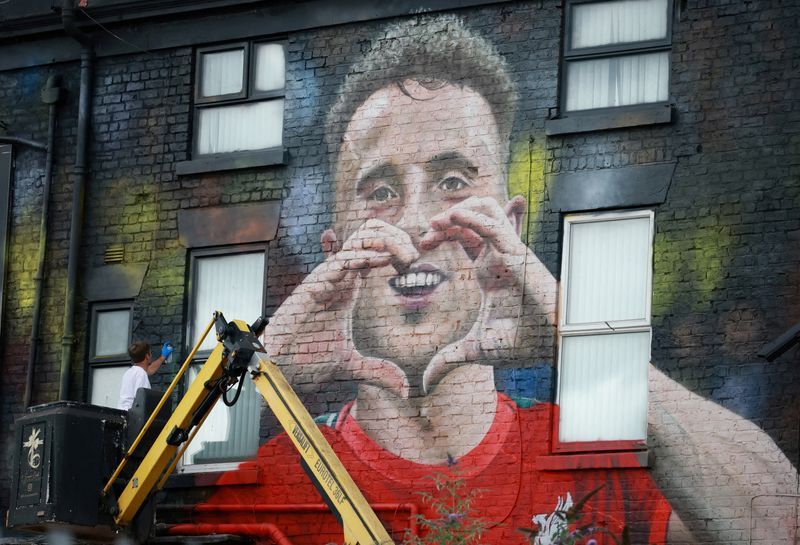
Portugal's clash against Croatia in the World Cup round of 32 will unfold amid deeply personal significance for the national team. While the match takes place on Thursday in Toronto, the calendar back in Portugal will have already turned to July 3—marking exactly one year since Diogo Jota, the Liverpool forward and one of the nation's most cherished footballers, died in a car accident in northwestern Spain. The 28-year-old and his brother André Silva were killed when their Lamborghini left the road and caught fire, an event that sent shockwaves through the global football community and left an indelible mark on Portuguese sport.
The timing creates a poignant backdrop for Thursday's encounter. As the match kicks off in Toronto's afternoon, midnight will pass in Portugal, crossing into the date that has become permanently etched into the collective memory of Portuguese football. For the players, coaching staff, and supporters gathering around screens across the country and the diaspora, the dual consciousness of sporting competition and personal mourning will weigh heavily. This is not merely a crucial tournament fixture; it is a moment of collective remembrance transformed into athletic motivation.
Portuguese football authorities and team management have ensured that Jota's presence permeates the tournament experience in ways both visible and symbolic. Roberto Martinez, Portugal's manager, has publicly described the late forward as "our light" and made the extraordinary decision to name Jota as an honorary member of the World Cup squad. This gesture extends beyond sentiment—it formally acknowledges his enduring place within the national team structure, even in absence. The decision reflects how deeply integrated Jota had become within the fabric of Portuguese football, a player whose contributions transcended statistics to touch the emotional core of the nation's sporting identity.
The commemorations have taken multiple tangible forms. Rúben Neves, the midfielder who shared a close friendship with Jota, wears the number 21 shirt in his honour throughout the tournament. Prime Minister Luís Montenegro gifted the entire squad wristbands bearing Jota's name, transforming a simple accessory into a statement of national solidarity. During Portugal's opening World Cup match against DR Congo in Houston, Jota's parents, Isabel and Joaquim Silva, watched an emotional tribute from the stands, their visible emotion a reminder that behind the institutional remembrance lies genuine family grief that remains raw and unhealed despite the passage of a year.
Teammates have spoken openly about the additional layer of motivation the anniversary provides. Vitinha, the defensive midfielder, expressed the sentiment succinctly on Wednesday, acknowledging that beyond the competitive drive to advance in the tournament, the players carry the weight of honouring Jota's memory. He framed the motivation as extending outward—for their families, for the late forward, for the entire nation. This language reveals how Portuguese football has collectively processed the tragedy by channelling grief into purpose, transforming private loss into shared national endeavour.
Jota's impact extended beyond the Portuguese squad to affect other national teams at the tournament. Andy Robertson, the Scotland captain and Jota's Liverpool teammate and close friend, experienced an immediate emotional response when Scotland qualified for the World Cup in November. The connection between the two players was sufficiently profound that Robertson's thoughts immediately turned to his lost friend upon securing qualification. This cross-border mourning demonstrates how Jota's influence rippled through football's interconnected global community, touching lives well beyond Portuguese borders.
Rute Cardoso, Jota's widow, reached out to Robertson when the tournament began, offering a deeply moving message that transmuted personal sorrow into something transcendent. Her words—"When you step on to the pitch, Diogo will be with you in your thoughts, in your steps, in your heart"—articulated a philosophy of grief transformed into strength. She thanked Robertson for "turning the pain of loss into strength and into something so beautiful," suggesting that the broader football community's collective remembrance has helped convert tragedy into a force for inspiration rather than despair alone.
Jota's playing record underscores what Portugal has lost. Across 49 appearances for the national team, he scored 14 goals, establishing himself as a crucial offensive asset during a period when Portugal maintained its position among European football's elite nations. Had injury not sidelined him during the 2018 World Cup qualification period, he would almost certainly have featured in that tournament as well. His absence from Russia was circumstantial; his absence from the 2026 campaign is permanent and irreplaceable. The statistics, however, capture only a fraction of what he represented—a trusted figure in the dressing room, a player whose technical ability was matched by his commitment to collective success.
For the Portuguese-Canadian community gathered in Toronto, particularly those in the Little Portugal neighbourhood, the match carries additional resonance. Miguel De Silva, owner of Amigos da Dundas Sports Bar in the area, observed that Jota's memory will provide Portuguese players with "one more reason to win the game." This perspective from the diaspora captures how tragedy, when processed through the lens of sport, can become a unifying force that extends across geographic boundaries. The community will watch not merely as fans of a national team, but as people for whom the match represents a collective moment of mourning and remembrance on behalf of someone whose life touched their community.
The fundamental tension running through Portugal's World Cup campaign is the simultaneous necessity of competitive focus and emotional processing. Football moves relentlessly forward; tournaments cannot pause for grief. Yet the dates, the rituals, and the personal connections ensure that Jota's presence will be felt throughout Thursday's match. When the whistle blows in Toronto and Portugal takes the field against Croatia, they will carry with them not only tactical preparations and tournament ambitions, but the weight of memory and the collective determination to honour a teammate whose absence has become as defining to their campaign as any player currently wearing the national colours.

