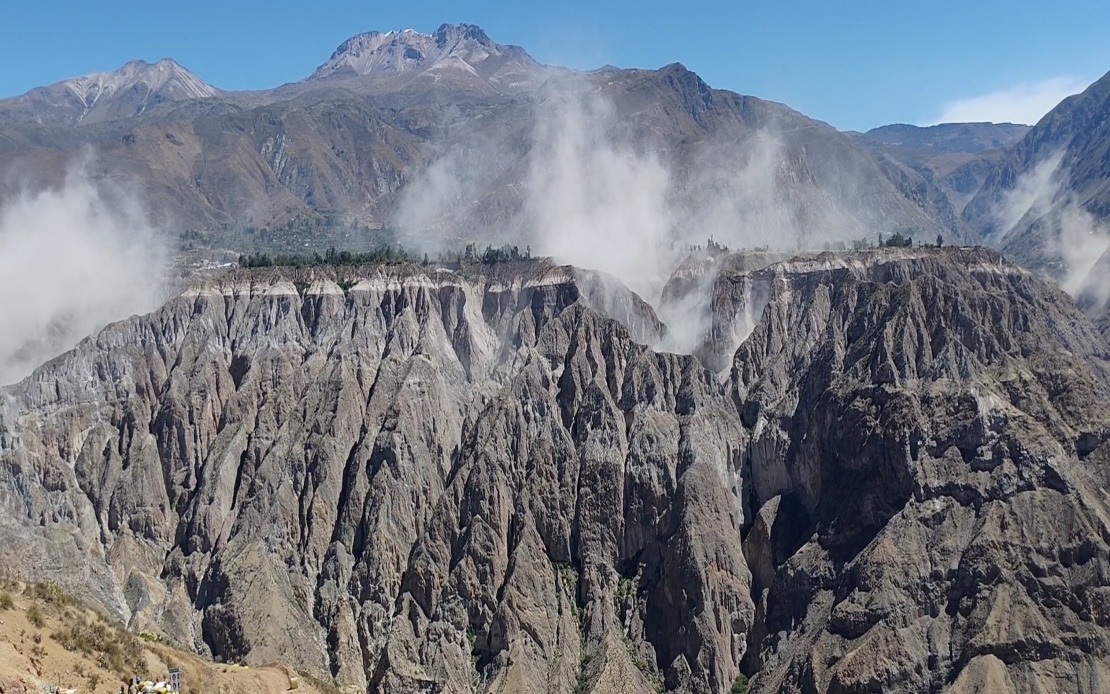
A substantial 6.7 magnitude earthquake struck southern Peru on Thursday afternoon, according to the US Geological Survey, with seismic monitoring agencies confirming the event and triggering precautionary alerts throughout the nation. The Geophysical Institute of Peru (IGP) recorded the tremor at 1 pm local time, initially measuring 7.2 on its own scale, and pinpointed the epicentre approximately 35 kilometres north of Coracora in Parinacochas province within Ayacucho department. The incident underscores Peru's vulnerability to seismic events, a reality that resonates throughout the Pacific Ring of Fire region and carries implications for disaster preparedness across Southeast Asia's own earthquake-prone zones.
The depth at which this tremor originated played a crucial role in limiting surface damage. Occurring at an intermediate depth of 108 kilometres beneath the earth's surface, the earthquake's energy dissipated considerably before reaching populated areas, resulting in what seismologists classify as a Mercalli intensity rating of III-IV—indicating light to moderate ground shaking rather than violent ruptures. This depth-related mitigation explains why Peruvian authorities and disaster management agencies reported an absence of immediate fatalities or significant structural damage despite the high magnitude readings.
The shaking was nevertheless perceptible across a broad geographic area, with residents reporting tremors not only in southern Peru but also throughout central regions and as far north as the capital city of Lima. This extensive reach demonstrates the power of intermediate-depth earthquakes to propagate seismic waves across considerable distances, a phenomenon that seismologists closely monitor in countries like Malaysia and Indonesia where similar geological structures exist. The widespread nature of the alerts and public awareness generated by the event reflects both the effectiveness of Peru's early warning systems and the cultural preparedness that emerges from living in a seismically active region.
This particular seismic event arrives amid a pattern of elevated tectonic activity across Peru's northern and southern territories, prompting renewed concern among geological experts and emergency planners. The clustering of tremors over recent months suggests ongoing adjustment along major fault systems, a condition that demands sustained vigilance from both authorities and the general public. For neighbouring South American nations and regional observatories, the activity provides valuable data about subduction zone behaviour along the Pacific coast.
The IGP's response included specific public guidance intended to enhance community resilience. Officials urged residents to remain alert, review evacuation procedures at household and workplace levels, and maintain readily accessible emergency supply kits containing essentials for situations where access to services becomes temporarily disrupted. These recommendations reflect a comprehensive approach to disaster risk reduction that acknowledges both the inevitability of seismic events in tectonically active regions and the capacity of informed citizens to minimize harm through preparation and swift response.
Historical context underscores the genuine hazards posed by powerful earthquakes in Peru. The 2007 earthquake that struck the Ica region, measuring 7.9 in magnitude, resulted in nearly 600 deaths and extensive property destruction, serving as a sobering reminder of what can occur when seismic forces strike populated areas without adequate protective measures. That catastrophic event reshaped Peru's approach to earthquake preparedness, building codes, and public education campaigns—lessons that have proven valuable in subsequent decades as the nation has implemented increasingly sophisticated monitoring and response systems.
For Malaysian audiences, Peru's experience offers instructive parallels regarding earthquake management in tectonically sensitive regions. While Malaysia's seismic risk remains comparatively lower than nations directly positioned along major subduction zones, the country faces occasional tremors emanating from regional sources. Peru's institutional framework—centred on the IGP and its National Seismological Centre (CENSIS)—demonstrates the importance of dedicated, well-resourced geological monitoring agencies capable of rapid data analysis and public communication.
The technological sophistication evident in Peru's response also merits attention. The USGS collaboration with local agencies, the rapid calculation of epicentre location and depth, and the swift dissemination of information to the public represent best practices in seismic monitoring. Countries throughout Southeast Asia increasingly recognize that investment in such capabilities yields significant returns in terms of life preservation and economic resilience, as accurate early warnings enable evacuations and protective actions that might otherwise prove impossible.
Peru's continued emphasis on public education and emergency preparedness reflects a mature understanding that seismic risk management extends far beyond the technical domain of geophysics. Social resilience—encompassing household preparedness, community awareness, and institutional coordination—determines survival outcomes during actual earthquakes. The IGP's recent directives exemplify this integrated approach, recognizing that scientific knowledge achieves its protective value only when effectively translated into citizen behaviour and organizational readiness.
The distribution of seismic activity across Peru's northern and southern regions, combined with the nation's position astride the Pacific Ring of Fire, confirms that earthquake preparedness constitutes a permanent feature of Peruvian civil society rather than a temporary concern. This normalization of seismic awareness has produced cultural practices and institutional capabilities that continue evolving in response to the geological realities that define the country's position on the Pacific coast. For regional observers, Peru's experience demonstrates both the challenges inherent in managing seismic risk and the progressive improvements in monitoring, prediction, and public response that emerge from sustained investment and institutional commitment.

