The Farmers' Organisation Authority (LPP) is embarking on an ambitious nationwide modernisation programme to transform 90 corporately-operated Farmers' Outlets (PO) belonging to the Agricultural Farmers' Organisation (PPK) into competitive retail destinations capable of rivalling major food and beverage chains. The initiative, unveiled during the 51st Farmers, Breeders, and Fishermen's Day celebration in Arau, represents a strategic shift towards professionalising smallholder agriculture retail in Malaysia and strengthening the direct-to-consumer supply chain.
According to Marlina Mohd, director of the LPP's Economic Development Division, the authority has already successfully upgraded 30 outlets, with improvements spanning visual branding, product presentation, promotional strategies, and inventory management systems. The modernisation framework addresses fundamental retail challenges that have historically limited farmer-operated outlets' ability to compete against established commercial retailers. Through standardised Stock Keeping Unit (SKU) systems and cohesive brand identity, these outlets can present a unified, professional appearance that appeals to contemporary consumer expectations.
The authority's roadmap calls for an additional 30 outlets to receive similar upgrades within the coming operational period, positioning the total modernised network at 60 facilities—representing two-thirds of the nationwide footprint. This phased implementation strategy acknowledges both budgetary constraints and the practical need to monitor and refine the upgrade process based on real-world performance metrics. The systematic approach contrasts with rushed, wholesale transformation attempts that might encounter implementation difficulties or fail to address site-specific operational requirements.
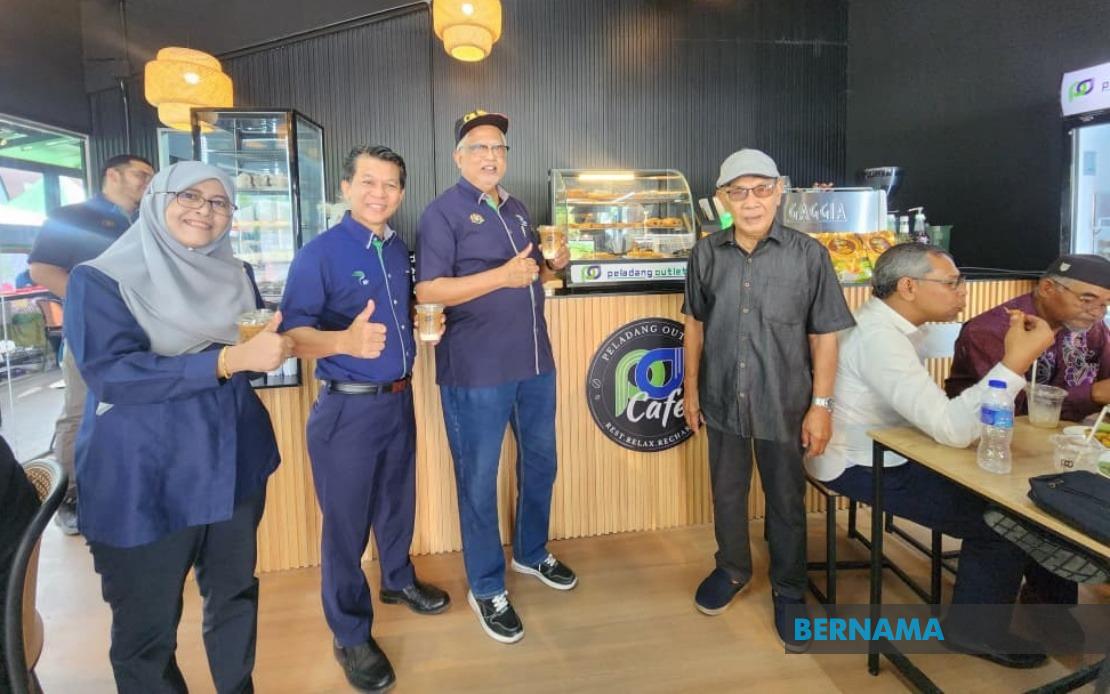
The Padang Siding PPK outlet in Perlis exemplifies the programme's early success. Following its inauguration by LPP chairman Datuk Mahfuz Omar during the HPPN celebration, the facility has attracted over 20,000 visitors since commencing operations in April 2024. This foot traffic demonstrates measurable community acceptance of the concept and validates the market proposition underlying the broader initiative. The outlet functions as a consolidated retail space aggregating quality agricultural commodities from local farmers, enabling consumers to access diverse farm products at economically rational price points without intermediary markups.
For Malaysian consumers and the broader agricultural sector, this initiative addresses longstanding structural inefficiencies in farm-to-retail distribution. Historically, smallholder farmers have relied on fragmented distribution networks, wholesalers, and informal channels that eroded profit margins and complicated product standardisation. By establishing professionally-managed, branded retail outlets, the PPK creates direct market access for farmers while offering consumers transparency regarding product provenance and quality assurance. This vertical integration reduces wastage and price volatility inherent in conventional supply chains.
The modernisation programme reflects regional economic trends visible across Southeast Asia, where governments increasingly recognise agricultural value addition as essential for rural income sustainability. Malaysia's approach—focusing on retail presentation, consumer experience, and digital inventory management—mirrors successful models implemented in neighbouring countries. As urbanisation accelerates and agricultural demographics shift toward ageing farmer populations, creating attractive, efficient retail venues becomes critical for retaining younger cohorts within farming communities.
Marlina's statement regarding future nationwide expansion suggests the authority envisions scaling the outlet network beyond the current 90 facilities should early results demonstrate financial viability and operational sustainability. The expansion trajectory could eventually encompass hundreds of upgraded facilities positioned strategically across urban and semi-urban centres, fundamentally reshaping how Malaysian consumers access locally-produced agricultural goods. Such scaling would require sustained government commitment and potentially private sector partnerships to finance infrastructure development and technological systems.
From a policy perspective, the initiative aligns with Malaysia's broader agricultural modernisation agenda and support for the Bumiputera business community, who constitute a significant proportion of PPK membership. The programme implicitly acknowledges that competitive agricultural sectors require professional retail infrastructure, not merely improved farm-level productivity. By investing in downstream retail capabilities, the authority recognises that farmer prosperity depends equally on market access and product presentation as on cultivation excellence.
The competitive positioning outlined by Marlina—enabling upgraded outlets to stand alongside leading brands—reflects realistic market dynamics where consumers increasingly demand convenience, product variety, and assured quality regardless of retailer type. Farmers' outlets competing without such attributes face inevitable erosion of market share to supermarket chains and specialised retailers. The branding, signage, and promotional enhancements represent tangible investments in consumer perception and purchasing behaviour modification.
For regional observers and policymakers, Malaysia's farmers' outlet modernisation programme offers instructive insights into agricultural retail transformation. The emphasis on phased implementation, performance monitoring, and incremental scaling reflects pragmatic governance rather than ideologically-driven wholesale restructuring. Whether the initiative ultimately achieves its ambition of creating 90 fully-competitive agricultural retail destinations will depend substantially on sustained funding, consistent management quality, and whether consumer demand sustains sufficient transaction volumes to ensure operational profitability beyond the initial attraction phase.

