President Prabowo Subianto's ambitious free nutritious meals initiative has hit another significant hurdle, with the head of the National Nutrition Agency (BGN) stepping down just weeks into her tenure. Nanik Sudaryati Deyang announced her resignation through Facebook on Wednesday, citing severe health complications that she attributed partly to the overwhelming stress of managing the programme's enormous budget. Her departure represents the third leadership upheaval for the initiative in recent months and underscores deepening institutional fractures within what was meant to be a flagship government priority.
Nanik's decision came after she disclosed in a post the previous evening that doctors had discovered a blockage in one of her coronary arteries. She connected her deteriorating health condition directly to the psychological burden of overseeing multitrillion-rupiah public expenditure, describing the experience as producing "acute trauma". The agency head's candid remarks about the pressure reveal troubling dynamics within the administration—she explained that her fear of mismanaging such vast sums led her to refuse signing off on matters independently and to question every policy decision repeatedly. This defensive posture, while well-intentioned, suggests the agency lacks the institutional robustness expected of an organisation managing resources destined to feed tens of millions of Indonesians.
Nanik's tenure lasted less than two months. She had been appointed as a stabilising figure following the arrest of her predecessor, Dadan Hindayana, who was detained along with two deputies in early June amid a corruption probe into procurement irregularities and financial mishandling. Before assuming the top role, Nanik had served as Dadan's deputy, positioning her as someone with institutional memory but also potentially tied to earlier governance lapses. The rapid turnover at leadership level signals not merely personnel changes but reflects systemic instability that threatens public confidence in how the programme operates.
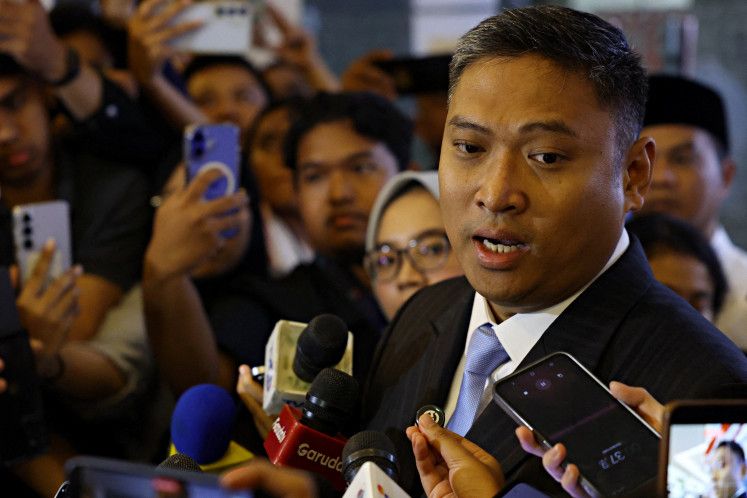
Prabowo moved swiftly to fill the vacancy, announcing the appointment of Sudaryono, the Deputy Agriculture Minister, within hours of accepting Nanik's resignation. Sudaryono, a member of Prabowo's Gerindra Party who previously served as an aide to the President during the 2010s, brings political proximity to the executive but raises questions about whether technocratic credentials matter most for an agency battling governance perceptions. At his inauguration ceremony at the State Palace in Jakarta on Wednesday, Sudaryono pledged to restore institutional transparency and strengthen accountability mechanisms. He committed to digitising manual processes and ensuring that operational decisions occur openly rather than behind closed institutional doors—remarks that implicitly acknowledged previous shortcomings without detailing specific corrective measures.
The free meals scheme, formally launched in early 2025 as a signature campaign commitment by Prabowo, has endured relentless operational difficulties since inception. The programme has confronted persistent criticism over food quality standards, alongside multiple incidents of mass food poisoning affecting beneficiaries across various regions. These public health incidents damaged government credibility and prompted substantive agency reviews. Under Nanik's brief leadership, the BGN imposed a moratorium on establishing new kitchen facilities while subjecting nearly 28,000 existing kitchens nationwide to comprehensive evaluation. The suspension, while ostensibly necessary for quality assurance, triggered extensive protests from tens of thousands of prospective kitchen operators who had invested significantly in establishing facilities and faced financial uncertainty.
The governance challenges have prompted the government to fundamentally recalibrate the programme's ambitions and financial allocation. The BGN announced on Tuesday that it had reduced the provisional 2026 budget allocation to Rp229 trillion (US$12.8 billion), representing a substantial cut from the previously planned Rp268 trillion. The downward revision extends to beneficiary targets as well. The initial projection for 2026 envisioned allocating Rp335 trillion to serve 82.9 million people, encompassing schoolchildren, infants, and pregnant women. The agency has now reset its 2026 target to 62.7 million beneficiaries, a reduction reflecting explicit acknowledgment that expansion at the previous pace was unsustainable given operational constraints.
BGN deputy chief Agustina Arumsari articulated the strategic reorientation during Tuesday's announcement, emphasising that improving service quality now takes precedence over expanding numerical reach. She indicated the agency would operate without fixed beneficiary quotas temporarily, prioritising system strengthening over growth metrics. This represents a philosophical shift from the original rollout trajectory, suggesting that political promises may need tempering against operational realities. For ordinary Indonesians relying on the meals programme, particularly vulnerable populations including children and pregnant mothers, such recalibrations create uncertainty about access and consistency of service.
The succession of crises has drawn analytical attention from Indonesian observers tracking institutional competence. Political analyst Wasisto Raharjo Jati characterised the recurring problems as rooted in inadequate foundational planning despite the political salience Prabowo invested in the initiative. Wasisto argued that the free meals programme exemplifies a broader pattern whereby ambitious political commitments receive priority consideration while the requisite technocratic groundwork, institutional capacity-building, and administrative preparation receive insufficient attention during design phases. The distinction between politically-driven initiatives and administratively sound policy implementation emerges as central to explaining the BGN's trajectory.
For Malaysian observers tracking regional governance patterns, Indonesia's experience offers instructive lessons about the challenges inherent in rapidly scaling ambitious social welfare programmes. The free meals initiative, conceptually sound and politically popular, has stumbled upon fundamental operational hurdles—food safety protocols, procurement transparency, financial controls, and logistics coordination. These are technical domains where institutional capacity and preparatory work directly determine success or failure, regardless of political will. The high turnover in agency leadership, coupled with corruption investigations, reveals how insufficient institutional architecture can undermine even well-intentioned policy objectives.
Looking forward, Sudaryono inherits an agency requiring simultaneous damage control and fundamental reform. The political pressure to demonstrate competence is considerable, given Prabowo's investment in the programme as a defining presidency achievement. Yet the recent history suggests that appointing new personnel, however politically connected, without addressing deeper institutional deficiencies risks perpetuating cycles of disruption. The reduced 2026 budget and beneficiary targets may prove pragmatic, allowing the BGN breathing space to establish stable operations. However, such retrenchment also means that millions of Indonesians initially promised coverage under the scheme will not receive it, creating a gap between political promise and delivery that shapes public perception of government effectiveness. The coming months will reveal whether Sudaryono can convert pledges of transparency and accountability into tangible institutional improvements capable of sustaining the programme through its critical consolidation phase.

