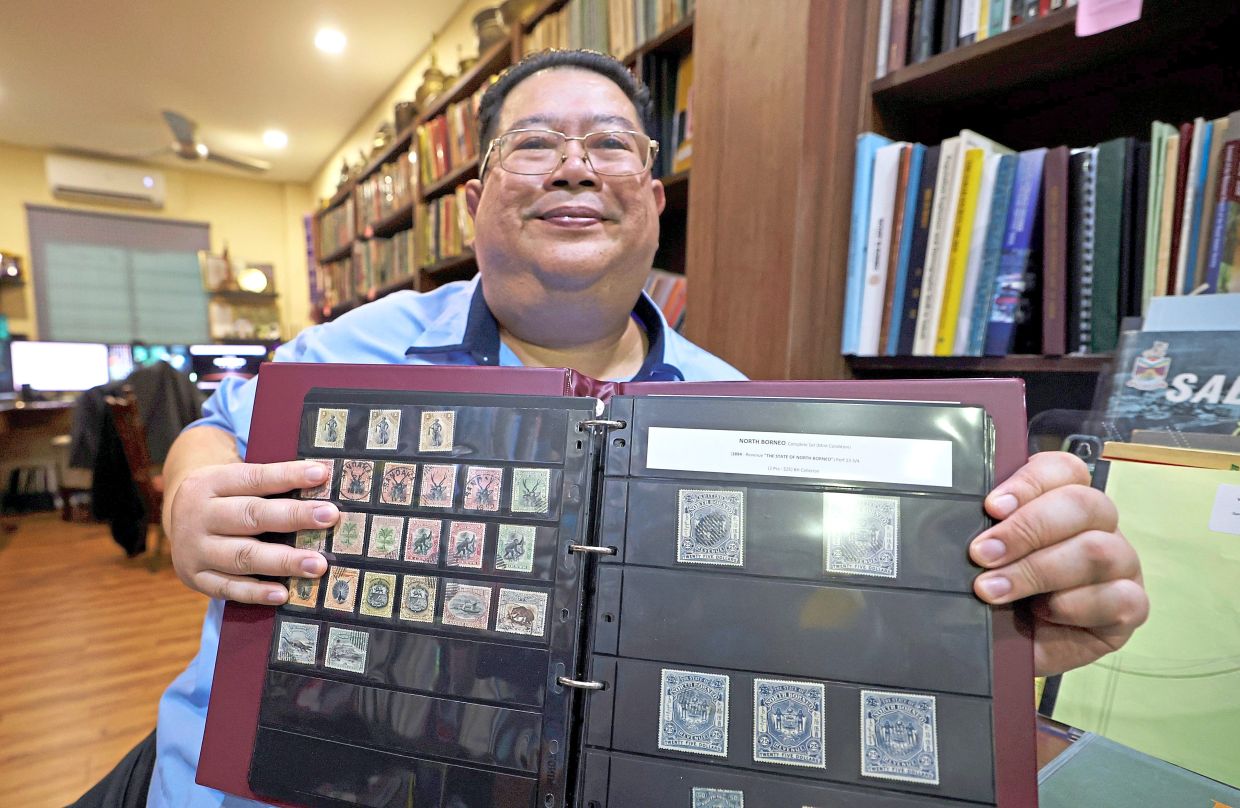
The preservation of North Borneo stamps has emerged as an urgent concern as these century-old philatelic treasures become progressively harder to locate. Dr Shari Jeffri, a 56-year-old historian and founder of the Borneo History Association, champions the cause of safeguarding stamps issued throughout the territory's colonial period, from 1883 to 1963, characterizing them as a crucial "living archive" deserving protection and transmission to future generations. His advocacy comes at a time when interest in stamp collecting has waned considerably, leaving fewer enthusiasts committed to maintaining these historical records.
The declining appeal of philately among younger Malaysians poses a genuine threat to the preservation of these artefacts. Jeffri observed that contemporary generations have had minimal exposure to stamp collecting compared to earlier decades, with only a dedicated minority maintaining active collections. As interest diminishes, the community of passionate collectors continues to contract, raising concerns about whether future custodians will value these historical documents. This generational shift mirrors broader changes in how societies document and commemorate their past, with digital communication largely displacing the written correspondence that once necessitated the daily use of postage stamps.
Antique dealers in Kota Kinabalu report that North Borneo stamps have become increasingly scarce in the marketplace. When specimens do surface, their market values fluctuate significantly based on multiple variables including their age, physical condition, and rarity. Recent surveys uncovered examples such as a six-cent stamp from the 1954-1961 period featuring Queen Elizabeth II alongside a Dusun woman, and a ten-cent denomination depicting logging operations—both representing important visual documentation of Sabah's mid-twentieth-century economy and cultural symbols.
Jeffri's personal journey into philately began through inheritance rather than initial enthusiasm. His late grandfather, who worked at the Recreation Club Jesselton during the 1920s, developed a passion for stamp collecting after observing British colonial officers pursuing the hobby. The grandfather envisioned inspiring similar interests in succeeding generations through his curated collection. Though Jeffri was introduced to stamps at age seven, he only became an active and systematic collector during secondary school, subsequently dedicating himself to preserving the family's holdings while conducting deeper historical research into North Borneo's postal history and stamp design evolution.
Among Jeffri's most treasured possessions are two two-cent stamps from North Borneo's inaugural 1883 issue, distinguished by their brown sailing boat design and complete postmark cancellations. For serious philatelists, these earliest issues represent an essential component of any comprehensive collection, functioning far beyond their utilitarian purpose as proof of postage. Each stamp encapsulates a specific historical moment, revealing details about the territory's administrative structures, economic activities, and international relations during a formative period of colonial development.
The British North Borneo Chartered Company introduced these stamps in 1883, maintaining them in circulation for approximately 52 years before the territory's administrative reorganization. During this extended period, stamp designs underwent significant evolution, reflecting changing priorities in how authorities chose to represent the territory internationally. The 1935 series represented a watershed moment in this visual narrative, featuring designs that more explicitly emphasized Sabah's distinctive identity and appearing in denominations ranging from two cents to one dollar. These later iterations demonstrated a conscious shift toward highlighting the region's unique characteristics rather than purely imperial symbolism.
The earliest North Borneo stamps employed European heraldic imagery and regional wildlife symbols, including lions, boats, and tigers, combined with the Latin motto Pergo et Perago, meaning "I undertake and I achieve." This deliberate iconography served a strategic function, introducing the territory to international audiences and establishing its identity within global trade networks. Beginning in 1894, designers fundamentally restructured the aesthetic approach, transitioning toward imagery celebrating Borneo's distinctive natural environment, indigenous flora, and endemic wildlife. This shift reflected growing recognition of the region's ecological uniqueness and represented an early attempt to create distinctive brand identity through postal imagery.
The technical challenges of preservation remain substantial for contemporary collectors and institutions. Jeffri emphasized that maintaining stamps in acid-free albums proves essential to preventing color fading and chemical deterioration. The paper composition and adhesive properties of stamps serve as critical authenticity indicators, helping specialists distinguish genuine examples from later reproductions. Stamps bearing complete postal cancellations—those displaying full dates, post office names, times, and locations—command particular value among serious collectors because they constitute detailed postal records, allowing historians to reconstruct communication patterns and administrative structures from specific periods.
To develop his expertise, Jeffri studied under accomplished Singaporean philatelic specialists Voon Kyam Foh and Tan Chun Lim, broadening his knowledge through interaction with regional experts. He also consulted authoritative reference materials including the Commonwealth & British Empire Stamps catalogue, grounding his work in internationally recognized standards. This combination of personal mentorship and systematic scholarly research demonstrates the depth of knowledge required for serious philatelic work, particularly when engaging with colonial-era stamps whose historical significance extends well beyond their monetary value.
The shift from letter-writing to digital communication represents a fundamental transformation in how societies generate and preserve historical documents. North Borneo's antique stamps, however, retain extraordinary value as tangible witnesses to Sabah's colonial past, commercial development, and cultural identity during a period of profound historical transformation. These small but resilient artefacts contain more information than their modest dimensions suggest, encoding details about governance, economic organization, indigenous cultures, and international relations. Ensuring their preservation through systematic collection and conservation practices becomes essential not merely for philatelic enthusiasts but for Malaysian historians seeking to understand Sabah's complex trajectory from chartered company territory to modern Malaysian state.

