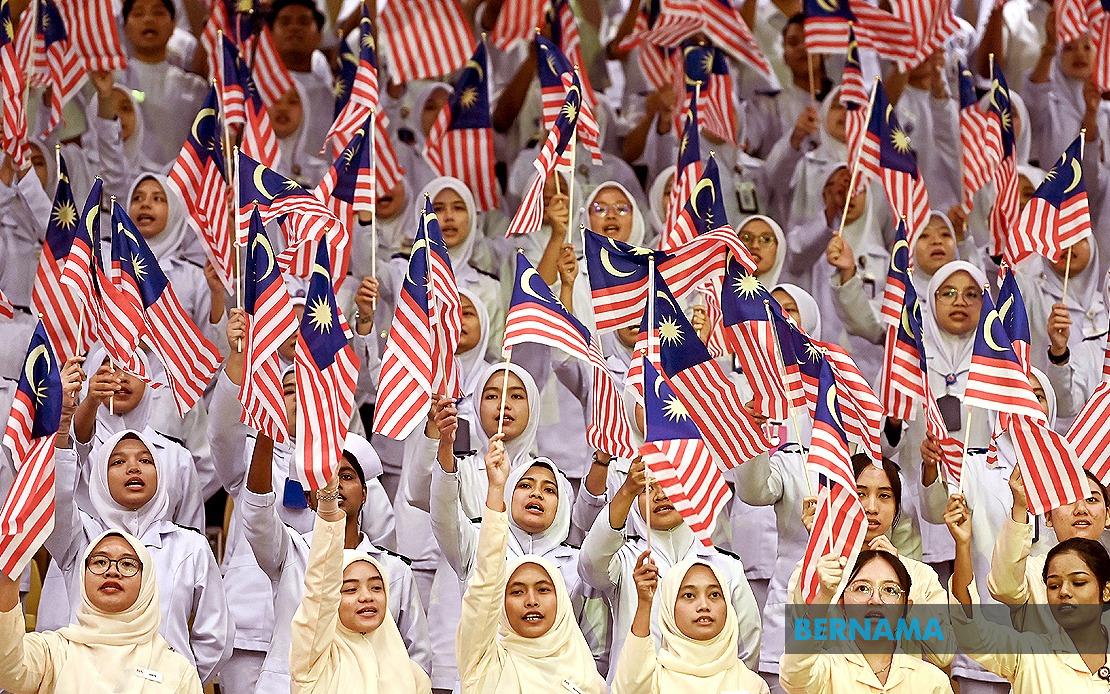
Prime Minister Datuk Seri Anwar Ibrahim will officiate the launch of the 2026 National Month and Fly the Jalur Gemilang Campaign tomorrow morning, marking the formal beginning of Malaysia's annual patriotic observance season. The ceremony, scheduled to commence at 10 am at Dewan Sri Perdana, Sultan Azlan Shah, at the Ministry of Health Training Institute in Tanjung Rambutan near Ipoh, is anticipated to draw approximately 3,000 Malaysians representing diverse segments of society. This launch event serves as the centrepiece for mobilising national sentiment across the country as Malaysians prepare for National Day celebrations on August 31 and Malaysia Day festivities in Sarawak on September 16.
The ceremonial proceedings will include a symbolic gesture in which the Prime Minister hands the Jalur Gemilang to a nine-member Royal Malaysian Navy team tasked with raising a flag measuring six by twelve feet. This flag-raising component, accompanied by the national anthem Negaraku and the recitation of the Rukun Negara pledge, represents a return to tradition following its absence from launch programmes for two consecutive years due to logistical constraints at previous venues. The restoration of this ceremonial element underscores the organisers' commitment to reinstating tangible symbols of national pride within official proceedings.
Communications Minister Datuk Seri Fahmi Fadzil and Perak Menteri Besar Datuk Seri Saarani Mohamad will also participate in the launch ceremony. Notably, the 2026 campaign has adopted what organisers describe as a modest and closed-door approach, departing from larger-scale public gatherings of previous years. Nevertheless, accessibility remains a priority through multimedia channels, with live streaming available via Radio Televisyen Malaysia, Malaysian National News Agency social media platforms, and the Facebook Live pages of Merdeka360, the Communications Ministry, and the Information Department, ensuring that Malaysians nationwide can participate virtually in the proceedings.
Preceeding the main launch ceremony, the inaugural Patriot Merdeka Run will take place earlier in the morning, with the flag-off expected from Communications Ministry secretary-general Datuk Abdul Halim Hamzah. The running event anticipates attracting approximately 2,000 participants, combining fitness activities with patriotic expression and establishing an energetic prelude to the official launch. This integration of community sporting participation reflects a broader strategy of weaving nationalist sentiment into everyday activities rather than confining celebrations to formal state occasions.
The thematic framework for the 2026 celebrations centres on "Malaysia MADANI: Kesejahteraan Dinikmati," a concept emphasising shared prosperity and inclusive development. The official Malaysia MADANI logo will continue as the celebration's visual identity through 2026, providing continuity with the broader governmental agenda of advancing civilisational prosperity across the nation. The theme song for the National Day and Malaysia Day celebrations will be performed by a prominent local musician who composed the piece, introducing a contemporary artistic dimension to traditional patriotic observance.
The ceremonial atmosphere will be enriched through a specialised medley of patriotic compositions performed by the ILKKM choir, comprising approximately 200 trainees from the health training institute. This large-scale choral performance transforms the venue into a vessel of collective national sentiment, with young voices embodying the transmission of patriotic values across generations. The integration of institutional choirs and community participation mechanisms reflects an understanding that national identity is reinforced through shared cultural expression and intergenerational engagement.
Throughout the National Month period leading to National Day, multiple complementary programmes will unfold under the overarching framework. The 1Rumah 1 Jalur Gemilang initiative will organise interactive community-level activities spanning nine clusters encompassing industry, education, security, health, government agencies, higher education, community groups, and two newly incorporated sectors addressing places of worship and sporting organisations. This expanded cluster approach acknowledges that patriotic sentiment operates across institutional and communal boundaries, requiring coordinated engagement strategies tailored to diverse social constituencies.
Additional programming includes Kembara Bahasa Hari Kebangsaan and RIUH Merdeka initiatives operating within the broader Kira Detik countdown framework towards the National Day celebration centred at Dataran Putrajaya on August 31. The sequencing of these activities creates a sustained narrative arc building momentum towards the apex celebration, ensuring that patriotic engagement extends across weeks rather than concentrating on single ceremonial moments. Malaysia Day will receive distinct recognition through a national-level celebration in Sarawak on September 16, emphasising the foundational significance of Malaysian federation and regional particularities within the broader national framework.
Public participation in digital spaces has been encouraged through social media engagement mechanisms, with Malaysians invited to adopt the Jalur Gemilang as profile pictures and disseminate celebration-related content utilising designated hashtags including #HKHM2026, #MalaysiaMADANI, #KesejahteraanDinikmati, and #Merdeka360. This digital dimension recognises that contemporary patriotic expression increasingly manifests through online platforms, permitting decentralised participation and enabling Malaysians across geographical dispersal to contribute symbolically to collective national observance. The hashtag strategy facilitates conversation aggregation and creates visible demonstrations of nationwide engagement with official messaging.
For Malaysian readers, the 2026 campaign represents an opportunity to engage with evolving approaches to national commemoration that balance tradition with contemporary accessibility. The emphasis on virtual participation through livestreaming acknowledges changing patterns of public engagement whilst maintaining ceremonial solemnity. The expansion of thematic clusters to encompass faith communities and sporting organisations signals an inclusive interpretation of national identity that transcends narrow state-centric frameworks, potentially offering pathways for diverse constituencies to express patriotism within culturally meaningful contexts.
The modest, closed-door format contrasts notably with some previous years' larger public assemblies, potentially reflecting post-pandemic preferences for controlled, streamlined events or budgetary considerations. This shift raises questions about the relationship between scale and impact in patriotic campaigns, and whether concentrated, high-quality ceremonial experiences generate equivalent or superior national sentiment compared to larger dispersed public gatherings. For regional observers, the Malaysian approach offers a case study in balancing ceremonial formality with inclusivity and accessibility during an era of rapid institutional adaptation.

