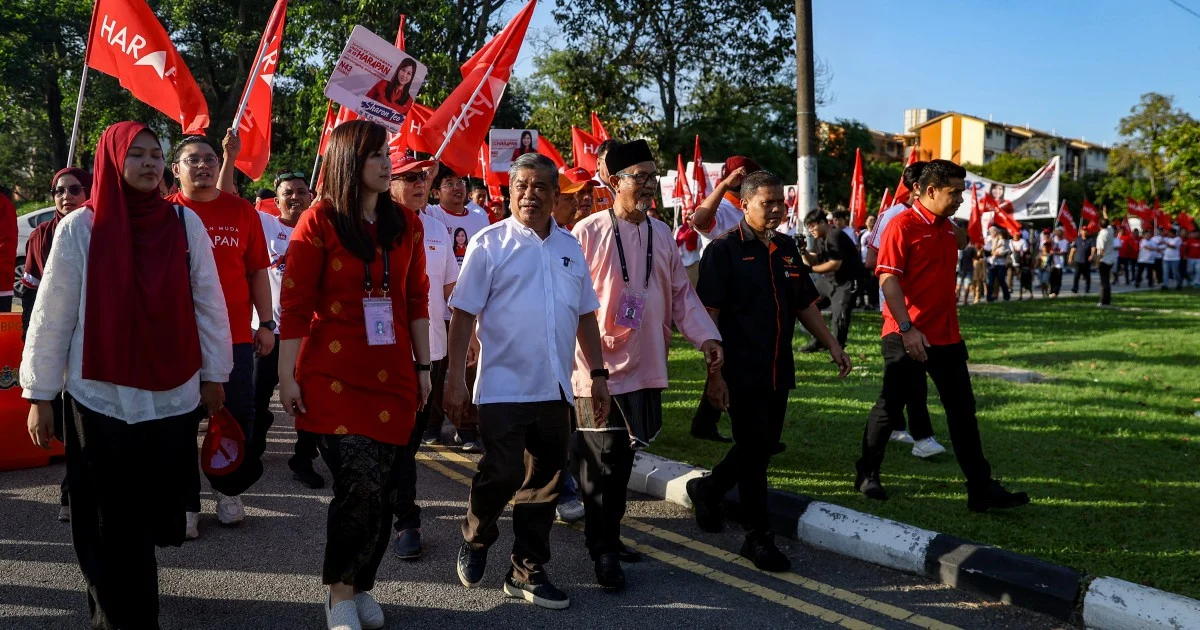
Sharon Teo's arrival at the Permas state constituency nomination centre in Pasir Gudang this week was marked by enthusiastic crowds who rallied behind Pakatan Harapan's electoral push across Johor. The gathering at Dewan Muafakat Taman Mawar underscored growing momentum for the opposition coalition in a state where political fortunes have shifted considerably over recent years, signalling potential headwinds for the traditionally dominant Barisan Nasional establishment.
The chanting of "Johor undi Pakatan Harapan" — "Johor votes Pakatan Harapan" — represented more than symbolic support. It reflected a strategic mobilisation effort by the opposition to consolidate voter backing ahead of what promises to be a fiercely contested state election. Johor's political landscape has become increasingly competitive since the 2018 federal election, when Pakatan Harapan first breached the national coalition's iron grip on power, though the state machine remained under Barisan control. Understanding the reception Teo received requires examining how Johor has become a crucial battleground where demographic shifts, economic anxieties, and shifting urban-rural voting patterns are reshaping traditional alliances.
Permas itself is a diverse constituency encompassing parts of Pasir Gudang and surrounding areas, traditionally a mix of industrial, residential, and semi-rural zones. The presence of a substantial working-class population, along with growing numbers of younger voters and urban professionals, has made constituencies like Permas unpredictable. These demographic segments have proven responsive to opposition messaging around cost-of-living concerns, transparency in governance, and economic opportunity — issues that cut across traditional ethnic and religious voting blocs that once guaranteed Barisan dominance.
Teo's nomination as the coalition candidate signals Pakatan Harapan's determination to contest this seat competitively rather than conceding ground. The choice reflects strategic calculations about which constituencies offer the best prospects for gains, and where the coalition believes its message resonates most strongly. Grassroots enthusiasm, as evidenced by the crowd gatherings, matters significantly in close electoral contests where turnout and volunteer mobilisation can determine outcomes.
Johor's political trajectory over the past five years has been volatile. The state government has remained under Barisan leadership, yet the 2022 federal election saw Pakatan Harapan secure substantial support even in Johor, demonstrating that the state is no longer a solid Barisan stronghold. Urban centres particularly have shown receptiveness to opposition parties, while rural areas have remained more traditionally aligned. This mixed political geography means that campaigns targeting specific constituencies like Permas can yield meaningful results if messaging and ground organisation are executed effectively.
The coalition's mobilisation at Teo's nomination reflects broader strategic decisions about resource allocation. Rather than spreading efforts thinly across all constituencies, Pakatan appears focused on competitive battlegrounds where demographic composition and previous electoral performance suggest realistic prospects for victory. Johor state elections typically feature lower voter turnout than federal polls, making ground-level enthusiasm and volunteer networks disproportionately important. Crowds gathering spontaneously — or through organised mobilisation — signal to party strategists which areas deserve concentrated campaigning.
For Malaysian voters monitoring the opposition's capacity to mount credible challenges to long-entrenched power structures, such scenes carry symbolic weight. Pakatan Harapan's ability to generate enthusiasm and draw crowds has fluctuated since its 2018 breakthrough, with internal coalition tensions and governance challenges in federal and state administrations sometimes dampening grassroots energy. Renewed signs of mobilisation suggest the coalition is working to rebuild momentum that had dissipated in some areas.
Teo's selection as a candidate in Permas also reflects broader diversity efforts within Pakatan Harapan, particularly regarding women's representation in candidate selection. Women comprise roughly half the electorate yet have historically been underrepresented among parliamentary and state assembly candidates across Malaysian politics. Coalition parties have moved incrementally toward stronger gender representation, though progress remains contested and uneven.
The reception at the nomination centre also occurs within the broader context of Johor's economic significance. The state generates substantial economic activity and remains strategically important for any government seeking to consolidate national support. Electoral outcomes in Johor ripple across national politics, influencing perceptions of coalition strength and government legitimacy. Pakatan's push to expand its foothold in the state carries implications beyond Johor itself, affecting how political leaders assess coalition viability for future federal contests.
Looking ahead, the intensity of competition in constituencies like Permas will likely intensify as nomination periods conclude and formal campaigning accelerates. Voter sentiment regarding economic management, corruption, and governance quality will determine outcomes more decisively than crowd enthusiasm alone, yet grassroots energy and visible campaign momentum influence voter perceptions and participation rates. The chants supporting Teo reflected present sentiment, though translating enthusiasm into actual votes remains the crucial challenge facing both coalition and establishment parties contesting Johor.

