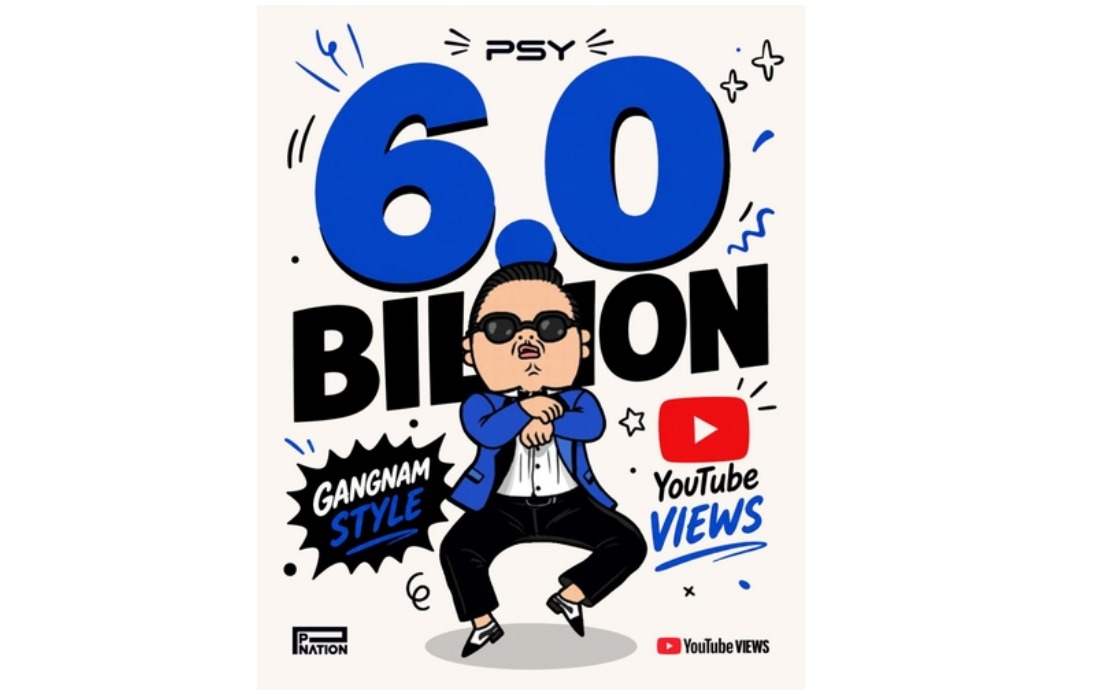
South Korean megastar Psy's iconic "Gangnam Style" has crossed the 6 billion view threshold on YouTube, solidifying its position as the most-watched K-pop music video in the platform's history. The milestone was reached on Friday, nearly 14 years after the song's original release in July 2012, according to announcements from P Nation, Psy's entertainment agency. This extraordinary achievement reflects not merely the passage of time but the sustained global appetite for the track that once defined an entire era of pop culture.
The journey to 6 billion views has been remarkably consistent. The music video first broke the 5 billion barrier in December 2023, meaning it accumulated roughly 1 billion additional views over a seven-month period. Such sustained viewership across more than a decade underscores a phenomenon rarely seen in the music industry: a single track that transcends its original moment of release to become a permanent fixture in global popular consciousness. P Nation's statement emphasised that this milestone represents more than a numerical achievement, describing it as symbolic of K-pop's broader cultural penetration and the enduring magnetism of content that appeals across geographical and generational boundaries.
Psy marked the occasion by celebrating with fans during a concert performance on Sunday, where he expressed gratitude for their continued support and announced plans to upload new video content to YouTube as a token of appreciation. Such direct engagement with audiences reflects how contemporary artists maintain momentum and relevance in the streaming era, turning milestone moments into opportunities for renewed connection rather than mere statistical announcements.
The track's ascendancy to global prominence was fuelled by several interconnected elements that proved remarkably resilient across time. The song's infectious beat and instantly recognisable melody created an accessible entry point for audiences worldwide, transcending language barriers that typically limit the international reach of non-English music. Beyond its musical qualities, "Gangnam Style" carried a layer of satirical social commentary, offering a tongue-in-cheek critique of the ostentatious wealth culture surrounding Seoul's Gangnam district, one of Asia's most exclusive and expensive neighbourhoods. This combination of entertainment value and underlying substance prevented the track from feeling trivial or disposable.
The signature horse-riding dance move became perhaps the track's most visible export, spawning countless public performances, institutional recreations, and amateur interpretations across virtually every continent. From corporate offices to military bases, from public squares to university campuses, the dance became a universally recognisable gesture of participation in a shared cultural moment. This participatory aspect transformed "Gangnam Style" from passive consumption into active engagement, multiplying its cultural impact far beyond what streaming numbers alone suggest.
From a commercial and critical standpoint, "Gangnam Style" achieved unprecedented success for K-pop at the time of its release. The track peaked at number two on Billboard's Hot 100 chart, the highest position ever attained by a Korean-language song at that point, marking a watershed moment for Asian pop music's mainstream penetration of the American market. More significantly, its music video became the first K-pop video ever to accumulate 1 billion YouTube views, breaking through a psychological and commercial barrier that positioned Korean popular culture as a genuinely global phenomenon rather than a regional success story.
The broader context of "Gangnam Style's" enduring success becomes even more striking when considered against the trajectory of the K-pop industry itself. In 2012, when Psy released the track, Korean pop music occupied a far more marginal position in global consciousness than it does today. The subsequent rise of BTS, BLACKPINK, NewJeans, and numerous other acts has built upon foundational work that artists like Psy performed in internationalising Korean popular music. "Gangnam Style" served as a crucial bridge moment, demonstrating that Korean content possessed genuine crossover appeal rather than merely satisfying diaspora audiences or dedicated niche fans.
For Malaysian and Southeast Asian audiences particularly, the sustained popularity of "Gangnam Style" reflects broader patterns of Korean cultural consumption across the region. K-pop concerts regularly sell out major venues throughout Malaysia, Thailand, Indonesia, and the Philippines, while streaming services report consistently high engagement with Korean content. The trajectory of Psy's record-breaking video illustrates how strategic entertainment exports have positioned South Korea as a leading soft power player in Asia, a status that translates into commercial opportunities, diplomatic influence, and cultural prestige.
The 6 billion milestone also prompts reflection on how digital platforms have fundamentally altered the economics and longevity of popular music. Unlike previous eras when hit songs had defined commercial lifespans measured in months or a few years, YouTube's algorithm-driven recommendation systems and the permanence of digital archives ensure that quality content can generate revenue and accumulation indefinitely. "Gangnam Style" exemplifies this shift, continuing to attract millions of views annually from viewers discovering the track for the first time, teenagers experiencing nostalgia, and performers seeking inspiration for their own creative work.
As Psy moves forward with fresh content and continued engagement with his fanbase, the legacy of "Gangnam Style" appears secure. The track has transcended the typical lifecycle of novelty hits to become a cultural artefact, referenced and recognised across generations and cultures. For aspiring artists and industry observers throughout Southeast Asia, the track's journey offers instructive lessons about the potential for regionally-rooted content to achieve genuine global resonance when combining musical quality, cultural authenticity, participatory appeal, and strategic distribution. The 6 billion view milestone represents not an endpoint but rather a marker of how thoroughly "Gangnam Style" has embedded itself within contemporary global culture.

