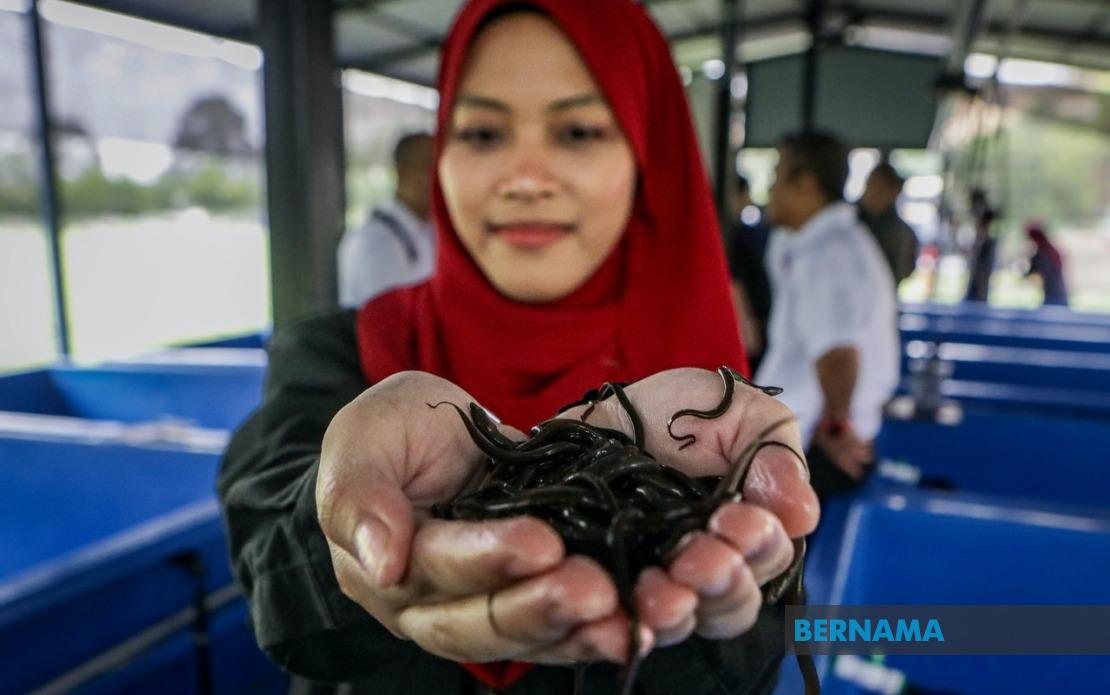
Politeknik Tuanku Syed Sirajuddin (PTSS) in Arau has taken on a significant role in steering the Projek Penternakan Belut Komersial Geran Sejati MADANI, a development initiative that showcases how Malaysia's vocational education sector extends well beyond producing job-ready graduates. The project, launched on July 1, demonstrates a practical fusion of educational expertise with grassroots economic empowerment—a model increasingly valued as policymakers seek tangible outcomes from technical institutions.
Khairul Anuar Ishak, PTSS director, framed the initiative as evidence that Technical and Vocational Education and Training institutions possess untapped potential to reshape communities through direct knowledge transfer and technological application. Rather than confining instruction to classroom settings, the project embeds students in authentic entrepreneurial scenarios where theoretical learning translates into productive enterprise. This pedagogical shift benefits both learners, who gain experiential grounding in aquaculture operations, and participating communities, which gain structured access to professional guidance and modern farming techniques.
The RM500,000 venture encompasses five communities across Perlis, each receiving 15,000 eel seeds as the foundation for commercial breeding operations. This scale of intervention—delivering both biological inputs and technical capacity simultaneously—represents a comprehensive approach to agricultural development. Rather than distributing seeds and leaving communities to fend for themselves, PTSS assumes full responsibility for a structured six-month implementation period that addresses every operational dimension: infrastructure construction, equipment procurement, husbandry training, and financial management systems.
The partnership structure itself merits attention for regional observers. By linking the Prime Minister's Department's Implementation Coordination Unit (ICU JPM), represented at the launch by Azlan Abdul Samat, with a vocational polytechnic and targeted communities, the project creates vertical integration rarely seen in local development work. This coordination across federal agencies, educational institutions, and grassroots organisations suggests a deliberate strategy to leverage existing institutional capabilities rather than creating parallel structures.
Projected production metrics reveal ambitions grounded in realistic agricultural timelines. Each community is expected to harvest approximately 5,000 kilogrammes of eels within five to six months—a timeframe aligned with eel biology rather than administrative convenience. This production target, if achieved across five sites, yields 25,000 kilogrammes of marketable product annually, representing meaningful economic output for rural households typically constrained by limited livelihood options.
The contract farming approach selected for marketing these eels addresses a persistent challenge in small-scale aquaculture: market access. Individual farmers operating in isolation struggle to meet bulk buyer requirements or negotiate competitive prices. By aggregating production through contractual arrangements, the initiative protects participating communities from exploitative middlemen while providing purchasers with reliable supply. This mechanism has proven effective in other Malaysian agricultural ventures, particularly in commodity production where quality consistency and timely delivery matter to industrial buyers.
For the broader TVET ecosystem in Malaysia, this project signals evolving institutional purpose. Vocational colleges historically concentrated on workforce preparation—training mechanics, electricians, and technicians for existing industries. The Perlis eel farming initiative redefines institutional mission to encompass community development, enterprise creation, and sustainable rural transformation. This evolution aligns with Southeast Asian trends where education institutions are expected to anchor local development initiatives rather than merely supply labour to established sectors.
The financial sustainability architecture embedded in PTSS's six-month management period deserves scrutiny. By maintaining institutional oversight during the critical startup phase—when operational errors prove most costly—the college mitigates failure risk that plagues community-led projects elsewhere. The planned transition to community self-management after initial establishment provides continuity benefits: communities inherit not just assets but also operational knowledge and established systems, substantially improving long-term viability compared to projects that withdraw support prematurely.
From a regional development perspective, the Perlis initiative offers a replicable template for states seeking to diversify rural economies. Malaysia's peninsular states, like Thailand, Indonesia, and Vietnam, face persistent agricultural income constraints as traditional crop farming becomes increasingly marginal. Aquaculture expansion—particularly species like eels that command premium prices—represents a viable pathway toward agricultural modernisation without requiring wholesale abandonment of farming livelihoods. The involvement of educational institutions as implementation anchors distinguishes this approach from conventional agricultural extension programmes.
Community income generation remains the ultimate metric of success. If indeed implemented as designed, five communities gaining reliable annual income streams from eel farming would constitute substantial progress in rural economic inclusion. For participating households, this additional income source may enable investment in education, healthcare, and housing—triggering broader development cascades. Monitoring frameworks that track not just production volumes but household-level income changes, asset accumulation, and local economic multiplier effects would provide essential insights for refining this model for broader application across Malaysia's TVET network.

